The landscape of surface materials is undergoing a significant transformation. For fabricators and industry professionals, staying ahead means understanding emerging trends and adapting to new standards. One of the most critical shifts involves the move towards silica-free and low-silica surfaces.
Traditional engineered quartz, while popular, contains high levels of crystalline silica. Fabrication processes like cutting and grinding release fine dust. This dust poses serious health risks to workers [1]. Therefore, the industry is now prioritizing safer alternatives. These new materials are not just a trend; they represent a fundamental change in how surfaces are produced and handled.
This article will explore why silica-free and low-silica surfaces are essential for the future of fabrication. We will delve into the health implications, regulatory pressures, and the undeniable benefits these innovative materials offer to the industry.
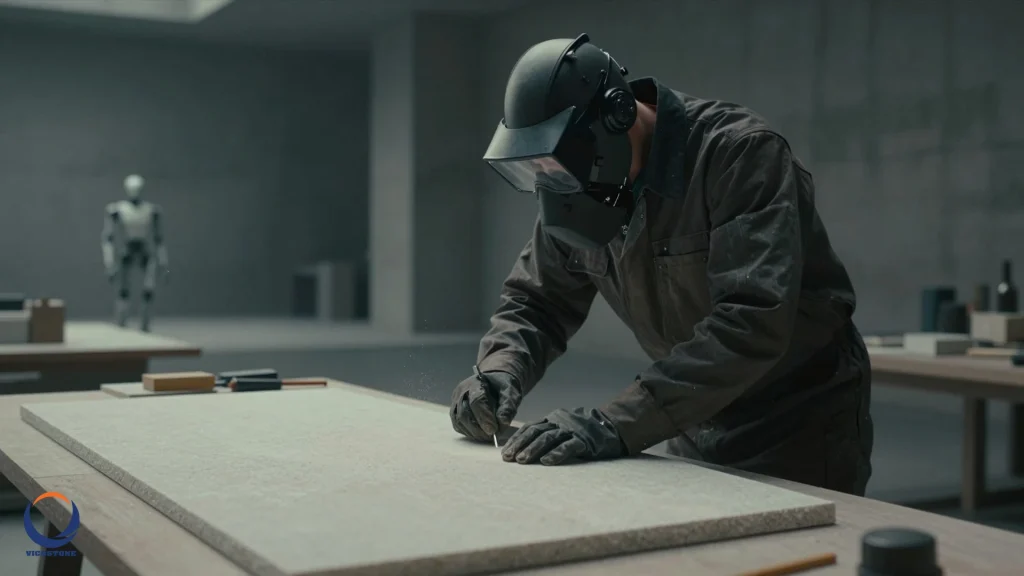
Understanding the silica challenge in surface fabrication
Crystalline silica is a natural mineral. It is commonly found in rocks, sand, and soil. In engineered quartz, silica is the primary component. It gives the material its signature hardness and durability [1].
However, this natural strength comes with a significant health hazard. During fabrication processes, such as cutting, grinding, or polishing, tiny respirable crystalline silica particles become airborne. Inhaling these particles over time can lead to severe lung diseases. Silicosis is the most well-known of these conditions. It is a serious and sometimes fatal lung disease [4].
This issue is globally recognized. Responsibility extends from contractors to manufacturers themselves [1]. Without strict safety controls, workers face significant risks. These controls include ventilation systems, wet cutting techniques, and specialized protective gear. The real issue, therefore, centers on fabrication risk [2]. The industry must prioritize solutions that mitigate this danger at its source.
The evolving regulatory landscape and industry shift
Growing health concerns have prompted governments to take decisive action. Many markets are implementing new regulations and restrictions on crystalline silica exposure. Australia, for instance, is leading the way. They have a nationwide ban on engineered stone containing crystalline silica, effective July 1, 2024 [4]. This ban covers production, import, and installation.
In the United States, California has introduced emergency safety rules. These rules target engineered stone fabrication. A broader ban is also under consideration [4]. The United Kingdom and European Union countries are also actively reviewing regulations. They are issuing warnings to fabricators, with tighter rules expected soon [4]. This global shift means fabricators and distributors must adapt. They must explore safer alternatives to ensure compliance and worker safety.
The pressure is mounting for businesses to reconsider the materials they use. This is not just about compliance. It is also about reducing fabrication risks. At the same time, it is crucial to maintain stable slab performance for various applications [2]. This regulatory push is a major driver for the adoption of low-silica and silica-free surfaces.
Defining silica-free and low-silica surfaces
To understand the alternatives, it is important to distinguish between different material compositions. Traditional quartz slabs typically contain between 90% and 95% crushed natural quartz. This is a form of crystalline silica [4]. While safe in its finished form, its fabrication releases harmful dust.
Low-silica quartz slabs represent a significant step forward. They typically contain less than 40% crystalline silica [4]. Some formulations even control content below 50% [1]. This reduced composition significantly lowers the risk of harmful dust during cutting, grinding, or polishing. It provides a safer working environment for fabricators.
Silica-free surfaces go even further. These materials are engineered to contain little to no crystalline silica [4]. Manufacturers achieve this by replacing natural quartz with alternative mineral fillers [2]. For example, some zero-silica collections use advanced FRIT material [5]. This keeps exposure levels within or even below the limits set by emerging regulations. It is important to note that not all products labeled "non-silica" are fully silica-free. Buyers should always verify technical data and not rely solely on labels [2].
Key benefits for fabricators and industry professionals
The shift to silica-free and low-silica surfaces offers a multitude of advantages for fabricators. Firstly, and most critically, these materials provide enhanced safety. They significantly reduce the risk of silicosis and other respiratory illnesses. This directly improves working conditions for skilled teams [1].
Secondly, these materials ensure regulatory compliance. As safety standards become stricter globally, adopting low-silica options helps businesses meet current and future requirements. This proactive approach helps fabricators avoid potential fines and legal complications. It also future-proofs their operations in an evolving market. Future-proof interiors with silica-free surface solutions are becoming a necessity, not just an option.
Furthermore, using safer materials boosts a company's reputation and demonstrates social responsibility. It shows a commitment to worker well-being. This ethical business practice can attract and retain skilled labor. It also positions the company as a leader in innovation. Manufacturers like VinaQuartz emphasize their commitment to protecting fabrication partners through their low-silica initiatives [1].
Finally, embracing these surfaces offers a significant market advantage. Fabricators can stay ahead of trends. They can offer clients safer, more sustainable options. This reflects innovation and a proactive response to market demands [4]. Many manufacturers are investing in advanced technology to produce these next-generation surfaces [1]. This ensures that performance and aesthetics are not compromised.
Performance and aesthetics: no compromise on quality
A common question arises when discussing reduced silica content: does it compromise product quality? The answer from leading manufacturers is a resounding "absolutely not" [1]. Thanks to advanced manufacturing technology, silica-free and low-silica products continue to meet and exceed strict industry standards. They offer proven durability and hardness [2].
Next-generation binders and additives play a crucial role. They ensure that these materials maintain their structural integrity and performance. This means they retain excellent resistance to scratching, chipping, and abrasion [3]. They are also impervious to heat and are non-porous. This makes them unaffected by liquids, acids, and oils. Consequently, they are much easier to clean and maintain, without the need for regular sealing [3].
Aesthetically, these surfaces offer consistent colors and patterns. This is a unique advantage over natural stone [3]. Designers can create cohesive and uniform looks in any interior space. Whether it's for kitchen countertops, bathroom walls, or commercial applications, the beauty and performance remain paramount. For example, Alpha Quartz's Zero-Silica collection maintains premium designs and technical standards [5]. This proves that safety and style can coexist beautifully.
Sustainability and the future of construction
Beyond safety and performance, silica-free surfaces align with the growing demand for sustainability in construction. Manufacturers are making significant strides in reducing their environmental impact. They are prioritizing eco-friendly production standards and ethical sourcing practices [3]. This commitment extends to the entire lifecycle of the product.
Many modern formulations incorporate recycled materials into their designs. This is done without sacrificing performance or longevity [3]. The durability and long lifespan of engineered quartz also contribute to sustainability. Unlike other materials, it does not need frequent replacement. This saves energy and resources that would be required for natural alternatives [3]. By minimizing waste and resource usage, these surfaces promote a more sustainable future.
The growing demand for sustainable architectural materials means fabricators must offer environmentally conscious options. Low-silica quartz is a sustainable surface material for modern interiors [3]. It offers a choice that benefits both people and the planet. This makes it a crucial consideration for any forward-thinking fabrication business. The industry is moving towards a greener, healthier future, and silica-free surfaces are at the forefront of this movement. For instance, EON Tech is exploring innovative ways to integrate these sustainable practices into their fabrication workflows, further cementing their commitment to environmental stewardship.
Choosing the right supplier and product
For distributors and fabricators, the choice between traditional quartz and non-silica engineered stone requires careful consideration. It should not be based on silica content alone [2]. Material stability, fabrication performance, and supplier manufacturing control are equally important. Buyers should always verify technical data. Labels alone may not tell the full story [2].
Evaluating supplier capability is crucial. Slab stability, hardness, and edge quality depend heavily on production control [2]. Not all non-silica slabs will perform like traditional quartz. Therefore, asking smart questions for safe and strategic sourcing is essential [4]. This involves understanding the manufacturer's commitment to quality and safety.
Forward-looking manufacturers are responding to global trends. They are investing in safer production methods and diversified product lines. For example, Vietnamese manufacturers are becoming competitive alternatives. They offer quality, consistency, and improved communication for international buyers [4]. This ensures that fabricators have access to high-quality, safe materials. Ultimately, responsible quartz begins at the source [4]. Partnering with reputable suppliers committed to low-silica and silica-free solutions is key.
The wave of innovation: embracing a safer future
The movement towards silica-free and low-silica surfaces is more than just a regulatory response. It represents a significant wave of innovation in the industry [1]. Manufacturers are actively developing new formulations and technologies. These advancements ensure that safety does not come at the expense of performance or aesthetic appeal. This commitment to safer quartz surfaces is a breakthrough for people [1].
For fabricators, embracing these materials means being at the forefront of this change. It means offering clients products that are not only beautiful and durable but also ethically produced and safe for everyone involved. This includes the workers who craft them and the families who live with them. The industry is evolving, and those who adapt will thrive.
The next generation of fabrication will be defined by a commitment to health, safety, and sustainability. Silica-free and low-silica surfaces are integral to this vision. They offer a path to a healthier, more responsible, and ultimately more successful future for the entire industry. Non silica engineered stone is gaining attention for good reason. It is time for every professional to consider these vital alternatives.
Conclusion
The imperative for silica-free surfaces marks a paradigm shift in the fabrication industry. The health risks associated with traditional high-silica materials are undeniable. However, innovative solutions now offer a safer path forward. These new materials protect fabricators from serious lung diseases. They also help businesses comply with tightening global regulations.
Furthermore, these advanced surfaces do not compromise on quality or aesthetics. They offer the same durability, beauty, and ease of maintenance that clients expect. By adopting silica-free and low-silica options, fabricators enhance their reputation. They demonstrate a strong commitment to ethical practices and worker well-being. They also position themselves at the cutting edge of sustainable construction.
The choice is clear for the next generation of fabrication. Embracing silica-free surfaces is a strategic decision. It leads to a healthier, more responsible, and more innovative industry. It is a choice that benefits workers, businesses, and the environment alike. This is the future of surface fabrication.
More Information
- Crystalline Silica: A natural mineral found in rocks, sand, and soil. In engineered quartz, it provides hardness but can release harmful respirable particles during fabrication, leading to lung diseases like silicosis.
- Silicosis: A serious and potentially fatal lung disease caused by inhaling tiny respirable crystalline silica particles over time. It is a major health concern for fabricators working with high-silica materials.
- Low-Silica Quartz: Engineered quartz formulations designed with significantly reduced crystalline silica content, typically below 40-50%. This minimizes health risks during fabrication without compromising performance or aesthetics.
- Silica-Free Surfaces: Advanced engineered stone products formulated with little to no crystalline silica. They use alternative mineral fillers to achieve durability and aesthetic appeal, keeping worker exposure levels very low.
- Fabrication Risk: The health hazards associated with manufacturing processes like cutting, grinding, and polishing engineered stone. These processes can release respirable dust, necessitating safety protocols or safer material compositions.