The kitchen is often called the heart of the home. For families and wellness-focused homeowners, it is much more. It's a sanctuary for nourishment, a space for connection, and a hub for daily life. Therefore, the design of this vital area profoundly impacts our health and well-being.
Modern kitchens are evolving beyond mere functionality. They are becoming reflections of contemporary lifestyles, emphasizing simplicity, practicality, and timeless aesthetics [3]. This shift includes a deeper look at the materials used. We now consider their impact on our health and the environment.
Gone are the days when sustainability was just about composting. True health-conscious design is embedded in the very bones of the space [1]. Every surface, tool, and routine can align with both beauty and responsibility. Prioritizing durability, non-toxicity, and circularity in material choices is key.
Why a health-conscious kitchen matters for your family
Your kitchen is a living system. Its health starts with the philosophy behind every material you bring in [1]. Materials can significantly affect indoor air quality. They also influence the safety of everyone in your home [2].
Many common kitchen materials can off-gas harmful chemicals. These are known as volatile organic compounds (VOCs). Long-term exposure to VOCs can lead to respiratory issues and other health problems. Therefore, choosing low-VOC or VOC-free materials is crucial for family wellness.
Moreover, the kitchen is where food is prepared. Surfaces that are easy to clean and naturally antimicrobial can prevent bacterial growth. This reduces the risk of foodborne illnesses. A healthy kitchen supports a healthy family.
The foundation: rethinking materials from the ground up
True sustainability and health demand a deeper look at materials. Ask yourself: Where did this come from? Who made it? What happens when it's worn out [1]? These questions guide you toward better choices.
Many "eco-kitchens" stop at the surface. They might feature bamboo cutting boards. They use reusable produce bags. These are good habits, but they are superficial if the cabinets off-gas formaldehyde [1]. A truly health-conscious kitchen integrates low-impact materials, energy-conscious appliances, and mindful daily habits.
Think in cycles when selecting materials. Choose items that belong to closed-loop systems. These are things that can be disassembled, reused, or composted [1]. This approach minimizes waste and environmental impact.
Key considerations for health-conscious surface materials
Selecting kitchen surfaces involves more than just style. It's a decision that impacts health, durability, and environmental responsibility [2]. Here are essential factors to consider.
Non-toxicity and low VOCs
Harmful chemicals and VOCs can linger in your home environment. They affect air quality and health. Look for materials certified to be free from these substances [2]. Certifications like Blue Angel, CARB2, and Golden M indicate a commitment to minimizing harmful chemicals [5].
Many modern materials are engineered with health in mind. They ensure a healthier environment both in your home and during production. This is a primary concern for wellness-focused homeowners.
Durability and longevity
A durable kitchen is a sustainable kitchen. Materials that withstand the test of time reduce the need for frequent replacements [5]. This saves resources and money. Real durability comes from materials that age with grace [1].
Consider surfaces resistant to heat, scratches, and stains. Such materials provide long-lasting performance with minimal maintenance [2]. They maintain their appearance and functionality for many years.
Ease of cleaning and hygiene
Kitchen surfaces must be easy to clean. They should also resist bacterial growth. Non-porous materials are ideal for this. They prevent food residues from trapping in tiny pores [2]. This helps maintain a hygienic cooking environment.
Naturally antimicrobial materials also offer an advantage. They contribute to a cleaner, safer kitchen. This is especially important for families with young children or those with allergies.
Sustainability and circularity
Prioritize materials with a low environmental impact. Look for those that can be recycled, reused, or composted at the end of their life [1]. This supports a circular economy.
Choosing sustainable materials reflects social responsibility and values [5]. It minimizes harm to the environment. This trend is particularly relevant in the kitchen, where the health of loved ones is paramount.
Spotlight on modern health-conscious surface materials
The market offers many innovative materials for health-conscious kitchens. Each presents unique benefits and considerations. Understanding these options helps homeowners make informed decisions.
Engineered stone: balancing aesthetics with health concerns
Quartz countertops are popular in modern kitchens [2]. They offer a sleek look and are known for durability and low maintenance. However, recent health studies raise concerns about silica dust generated during manufacturing [2]. This dust can lead to silicosis, a serious respiratory condition for workers.
While quartz is marketed as non-porous, it has some porosity. This can make it challenging to keep completely hygienic over time [2]. Tiny pores can trap food residues, increasing bacterial growth potential. Therefore, selecting certified options and staying informed is crucial [2].
Innovations in surface technology are addressing these concerns. For instance, EON Tech is developing advanced engineered surfaces that prioritize both aesthetic appeal and worker safety. These new materials aim to provide the benefits of traditional engineered stone without the associated health risks. You can explore future-proof interiors with silica-free surface solutions for safer alternatives.
Natural and recycled materials: timeless and responsible choices
Natural materials offer inherent beauty and often boast excellent health properties. Soapstone, for example, is dense, cool to the touch, and naturally antimicrobial [1]. It ages gracefully, gaining character over time.
Reclaimed wood butcher block is another excellent option. Oiled with plant-based finishes, it adds warmth and character. It also reduces demand for new timber [1]. Surfaces made from recycled materials, like recycled glass terrazzo, transform waste into beautiful, functional elements [1].
These materials embrace the raw beauty of nature. They combine clean lines with organic textures [4]. This creates a warm and inviting space. Modern organic kitchens often feature these elements.
Innovative options: pushing the boundaries of wellness and design
Some brands are pioneering truly health-conscious materials. Velacucina countertops, for instance, are crafted from unique, environmentally friendly materials. They are free from harmful chemicals and VOCs [2]. These surfaces also offer exceptional resistance to heat, scratches, and water.
A standout feature of some innovative surfaces is integrated invisible induction technology [2]. This embeds cooking zones seamlessly beneath the countertop. It allows the workspace to remain smooth and uninterrupted. This technology enhances functionality and contributes to a minimalist, sleek kitchen design [2].
Companies like IXINA prioritize health and environmental protection. They ensure products meet stringent certifications like Blue Angel and CARB2 [5]. This commitment means minimizing harmful chemicals and using sustainable materials. These brands redefine the modern kitchen by focusing on personalized, durable, and healthy solutions.
Designing for wellness: integrating functionality and aesthetics
A health-conscious kitchen extends beyond material selection. It encompasses the overall design and functionality. This creates a space that supports both physical and mental well-being.
Open layouts and natural light
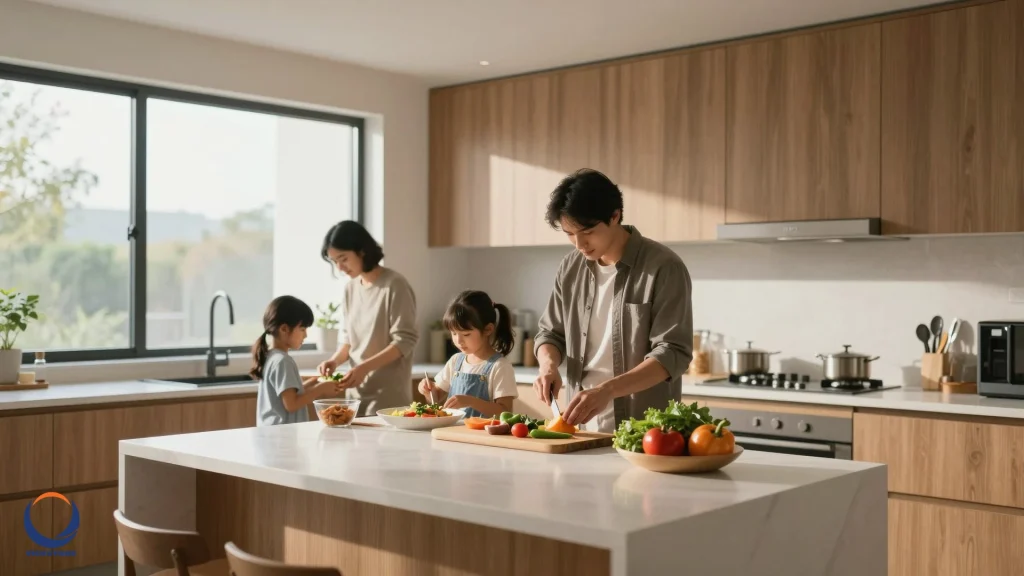
Modern kitchens prioritize open space and natural light [3]. Large windows and skylights keep the kitchen bright and fresh. This helps you feel good while cooking [3]. An open layout also fosters connection. It allows families to interact while preparing meals.
Minimalist design helps eliminate visual heaviness. It makes modern kitchens feel more open [3]. This seamless integration into the rest of the home is ideal for contemporary living. Modern kitchens reflect contemporary living with their emphasis on light and flow.
Smart functions and organization
Behind the clean look of modern kitchens are clever features [3]. Soft-close drawers, smooth rails, and pull-out shelves make tasks easier. Every detail helps keep the kitchen tidy and simple to use [3]. An organized kitchen reduces stress and improves efficiency.
These smart functions contribute to a more pleasant cooking experience. They minimize clutter. This makes daily life smoother for busy families. Consider how to design a luxury kitchen that still feels comfortable and functional.
Personalization and lifestyle integration
Today's consumers seek kitchens tailored to their lifestyles [5]. They desire a space that reflects their family’s preferences and cooking habits. This personalization extends to material choices and storage solutions [5]. It creates a truly unique and functional space.
A modern kitchen is a lifestyle statement [3]. It expresses a way of life. It reflects refined taste, a preference for neatness, and a thoughtful approach to home organization [3]. This personal touch makes the kitchen truly yours.
Practical tips for homeowners
Designing a health-conscious kitchen can feel overwhelming. However, focusing on a few key areas can simplify the process. Here are some actionable tips.
- Research material certifications: Always look for third-party certifications. These verify a material's non-toxicity and environmental impact.
- Prioritize low-VOC products: Choose paints, adhesives, and sealants with low or zero VOC content. This ensures better indoor air quality.
- Consider the entire lifecycle: Think about where materials come from and where they will go. Opt for materials that can be recycled or reused.
- Balance aesthetics with health: You don't have to sacrifice style for health. Many modern materials are both beautiful and safe.
- Embrace natural elements: Incorporate wood, stone, and rattan for warmth and texture [4]. These elements create a calming atmosphere.
- Plan for easy maintenance: Select non-porous and durable surfaces. This reduces cleaning time and effort. A guide on sustainable materials can offer further insights.
Conclusion
Designing a health-conscious kitchen is an investment in your family's well-being. It's about making intentional choices. These choices extend from the foundational materials to the overall layout and functionality. By prioritizing non-toxicity, durability, and sustainability, you create a space that nourishes both body and soul.
Modern surface materials offer exciting possibilities. They combine aesthetic appeal with advanced health and environmental benefits. Embrace these innovations. Build a kitchen that is not only beautiful and functional but also a true sanctuary for health and happiness.
More Information
- Volatile Organic Compounds (VOCs): Organic chemicals that have a high vapor pressure at ordinary room temperature. They can be found in many building materials and household products, contributing to indoor air pollution and potential health issues.
- Silicosis: A serious, irreversible lung disease caused by inhaling crystalline silica dust. It is a concern for workers involved in the manufacturing, cutting, and polishing of materials like engineered quartz.
- Closed-Loop Systems: An industrial system designed to eliminate waste by continuously reusing resources. Materials are collected, recycled, and repurposed, minimizing environmental impact and maximizing resource efficiency.
- Antimicrobial: A property of a substance that kills or inhibits the growth of microorganisms, such as bacteria, fungi, or viruses. In kitchen surfaces, this helps maintain hygiene and reduces the spread of germs.
- Blue Angel Certification: The oldest environmental label in the world, originating in Germany. It signifies that products and services meet high standards for environmental and health protection.