Engineered stone, particularly quartz, has become a cornerstone material in modern construction and interior design. Its unique blend of aesthetic appeal and robust performance makes it a preferred choice for many professionals [3]. While often associated with residential kitchen countertops, its versatility extends far beyond this traditional application. Commercial developers are increasingly recognizing the immense potential of engineered stone in various high-traffic and specialized environments.
This material offers a compelling solution for projects demanding both visual sophistication and enduring functionality. Understanding its broader applications can unlock new design possibilities and operational efficiencies for commercial ventures. Indeed, the demand for high-performance surfaces continues to surge across diverse sectors.
What is engineered stone?
Engineered stone is a man-made composite material. It consists primarily of natural quartz grits, typically around 90%, combined with polymer resins and pigments [3]. This careful composition creates a surface that marries the inherent beauty of natural stone with enhanced performance characteristics. The manufacturing process ensures uniform color and pattern consistency throughout each slab [3]. This consistency is especially beneficial for large-scale commercial projects requiring multiple slabs.
Leading manufacturers like New Stone utilize modern factories and advanced technology. They create unique collections that harmoniously blend natural aesthetics with superior durability [2]. Each slab is a culmination of pure materials and strict control processes [2]. This ensures a high-quality product suitable for demanding commercial settings.
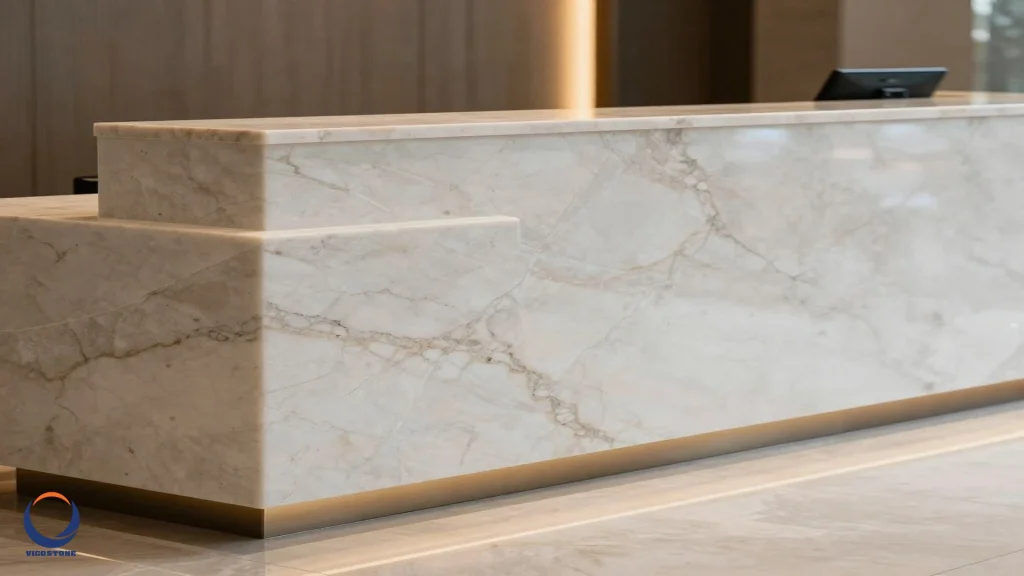
Key advantages for commercial developers
Engineered stone presents several compelling advantages for commercial applications. These benefits directly address the unique challenges faced by developers. They contribute to long-term value and operational efficiency.
- Superior durability: Engineered quartz boasts exceptional resistance to scratches, chips, and cracks [3]. It scores a 7 out of 10 on the Mohs scale. Recent tests show it outperforms granite in impact resistance by up to 30% [3]. This makes it ideal for high-traffic commercial environments.
- Low maintenance: Unlike natural stone, engineered quartz does not require sealing. It is also highly resistant to stains [3]. This translates to easier cleaning and significantly reduced long-term maintenance costs. Studies indicate up to a 50% reduction compared to natural stone alternatives [3].
- Consistency and design versatility: The manufacturing process ensures uniform color and pattern throughout the slab [3]. This is crucial for large projects. It is available in an extensive range of colors and patterns. Engineered stone can mimic natural stone or offer unique designs [3].
- Non-porous surface: Its non-porous composition makes it highly resistant to bacteria and mold growth [3]. This is a critical feature for hygiene-sensitive commercial spaces. Engineered quartz surfaces harbor up to 99.9% fewer bacteria than natural stone countertops [3].
- Cost-effectiveness: While the initial investment might be comparable to some natural stones, the reduced maintenance and longevity offer significant cost savings over the lifespan of a commercial property. Optimizing construction costs is possible with solutions like cut-to-size collections [2].
Expanding horizons: applications beyond the kitchen
The inherent qualities of engineered stone make it suitable for a wide array of commercial applications. These go far beyond the kitchen. Developers can leverage its strengths in various public and private spaces.
Hospitality industry
The hospitality sector greatly benefits from engineered stone's durability and elegant appearance. Quartz countertops are commonly used in hotels, resorts, and restaurants [1]. Their inviting look and resistance to wear make them perfect for high-traffic areas. These include reception desks, buffet counters, and high-end dining establishments [1]. They can withstand heavy use and frequent cleaning without losing their luster [1]. This ensures a consistently premium guest experience. You can learn more about how engineered stone enhances hospitality spaces.
Commercial retail spaces
Retail environments demand surfaces that are both attractive and resilient. Engineered stone benchtops are used in various retail settings. These include clothing stores, jewelry shops, and cosmetic counters [1]. Their resistance to solvents and easy-to-clean surface make them ideal for cashier counters and display areas [1]. They maintain a pristine appearance, even with constant customer interaction and product displays. This contributes to a positive brand image.
Commercial bathrooms and vanity tops
The qualities that make engineered stone ideal for kitchens also apply to commercial bathrooms. Its durability and resistance to moisture make it suitable for vanity tops and sink areas [1]. In commercial restrooms, hygiene is paramount. The non-porous nature of engineered stone inhibits bacterial growth. This ensures a clean and sanitary environment for patrons and employees. It offers a stylish and functional surface for daily grooming and hygiene activities [1].
Wall cladding and flooring
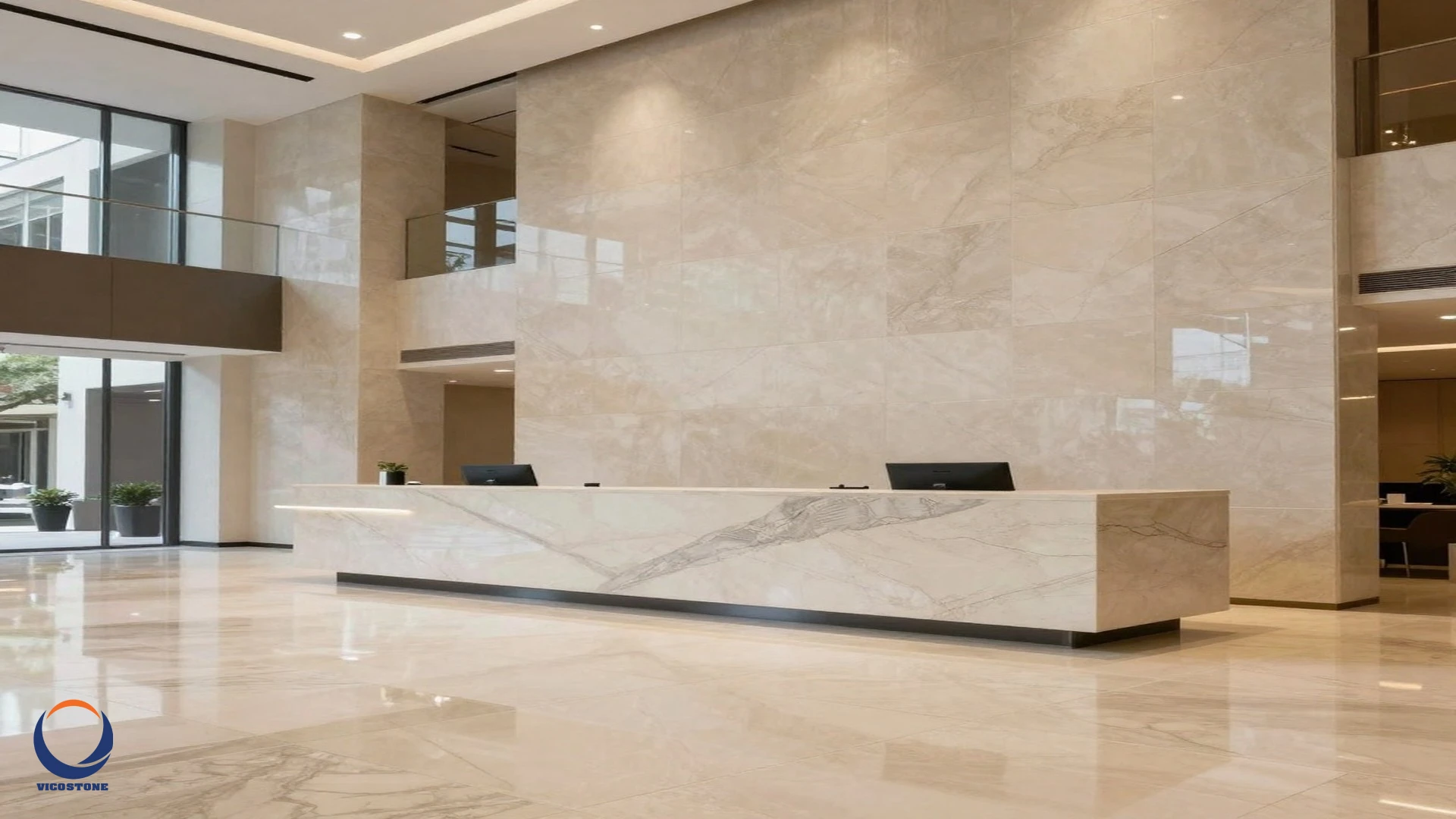
Engineered stone is not just for horizontal surfaces. Its application extends to vertical installations as well. It is an excellent choice for lobby wall cladding and flooring in commercial buildings [2]. The material's consistency ensures a seamless and elegant finish across large areas. New Stone offers premium engineered quartz solutions for walls and flooring [2]. This creates an elegant, contemporary atmosphere in central spaces. The Nano Ink Collection, for instance, redefines design limitations with advanced printing technology [2]. This allows for stunning visual effects that mimic natural stone with unparalleled precision.
Office spaces and corporate environments
Modern office designs prioritize both aesthetics and functionality. Engineered stone is perfect for reception desks, conference tables, and executive office surfaces. Its sophisticated appearance elevates the corporate image. Its durability withstands daily wear and tear. The low maintenance aspect is also highly valued in busy office settings. This minimizes disruption for cleaning and upkeep. EON Tech solutions often integrate such high-performance materials into their smart building designs.
Healthcare facilities
In healthcare, surfaces must meet stringent hygiene standards. Engineered stone's non-porous nature and resistance to bacteria make it an ideal choice. It can be used for laboratory countertops, patient room surfaces, and reception areas. Its easy-to-clean properties support infection control protocols. The material's durability also ensures longevity in a demanding environment. This contributes to a sterile and professional setting.
Educational institutions
Schools and universities require robust materials that can endure heavy use. Engineered stone is suitable for laboratory benches, cafeteria tables, and common area surfaces. Its resistance to stains and scratches makes it resilient against spills and student activities. The consistent quality and wide range of designs also contribute to creating stimulating and functional learning environments. This helps maintain a fresh and modern appearance for years.
Home bars and entertainment areas (commercial context)
For commercial establishments with bar areas, engineered stone quartz worktops are an excellent choice. Their superior fatigue limit and elegant appearance are highly valued [1]. They can withstand spills and stains from various beverages [1]. This makes them easy to clean and maintain. This ensures a pristine look even during peak hours. Such surfaces contribute to a sophisticated and inviting atmosphere for guests.
Design flexibility and aesthetic appeal
The aesthetic versatility of engineered stone is a significant draw for commercial developers. It offers an extensive range of colors, patterns, and finishes. This allows designers to achieve virtually any desired look. From replicating the timeless beauty of natural stone to creating unique, contemporary designs, engineered quartz provides unparalleled freedom [2]. The Natural Masterpiece Collection, for example, captures unique beauty formed under immense pressure and heat [2]. This ensures a distinctive element in any project. The ability to customize colors and patterns means developers can maintain brand consistency. They can also create distinctive environments that stand out. This flexibility extends to various design styles, from minimalist to classic [2]. This makes it a go-to material for architects and interior designers. It truly allows for the role of surface materials in contemporary architecture to shine.
Sustainability and efficient production
Modern commercial development increasingly emphasizes sustainable practices. Engineered stone manufacturers are adopting sustainable methods. These reduce waste and improve efficiency [1]. The long lifespan and low maintenance requirements of engineered stone also contribute to its sustainability profile. Less frequent replacement means less material consumption over time. Furthermore, the controlled manufacturing environment often results in less environmental impact compared to quarrying natural stone. This aligns with green building initiatives and corporate social responsibility goals [4].
Many manufacturers, such as Nova Stone Quartz Vietnam, operate integrated facilities. These facilities ensure efficient production and consistent quality [1]. Their large slab sizes, like 3500x2000mm super jumbo slabs, minimize seams and waste [1]. This further enhances project efficiency. Such production capabilities are vital for large-scale commercial projects. They ensure timely delivery and predictable execution.
Choosing the right partner for your project
Selecting a reliable supplier is crucial for commercial developers. Factors like manufacturing capacity, quality control, and supply chain efficiency are paramount. Companies like Nova Stone Quartz Vietnam are leading independent manufacturers. They specialize in high-capacity engineered quartz manufacturing and fabrication [1]. They focus on large-scale supermarket chains and commercial projects for the American market [1]. Their ability to provide tailored precision and seamless installation processes is invaluable [1]. Additionally, access to lower tariffs and AD/CVD duties-free imports for U.S. markets offers a significant competitive advantage [1]. This can impact project budgets and timelines.
A strong partnership ensures access to premium materials and expert fabrication services. This guarantees lasting performance and aesthetic integrity. Look for suppliers who prioritize timely communication and instant replies [1]. This is essential for smooth project management. The pre-fabricated and cut-to-size collections offered by some manufacturers also optimize installation time and ensure exceptional precision [2]. This streamlines the construction process. It reduces potential delays and costs.
The future of commercial surfaces
Engineered stone is poised for continued growth in the commercial sector. Its evolving design capabilities and enhanced performance attributes make it increasingly attractive. Innovations in manufacturing technology will likely introduce even more diverse patterns and textures [5]. This will further expand its application possibilities. As sustainability becomes a greater focus, engineered stone's eco-friendly aspects will also gain more prominence. Developers who embrace this versatile material will be well-positioned to create resilient, beautiful, and cost-effective commercial spaces for the future.
Conclusion
Engineered stone has firmly established itself as a superior material for commercial applications beyond kitchen countertops. Its unparalleled durability, low maintenance, hygiene benefits, and vast design flexibility make it an ideal choice for a multitude of environments. From the bustling hospitality industry to critical healthcare facilities, and from vibrant retail spaces to modern corporate offices, engineered stone provides a high-performance, aesthetically pleasing, and sustainable solution. Commercial developers can confidently specify this material to deliver projects that meet the highest standards of quality, functionality, and design excellence.
More Information
- Engineered Stone: A composite material made from crushed stone (typically quartz) bound together by an adhesive (usually polymer resin), offering enhanced durability and design versatility compared to natural stone.
- Non-Porous Surface: A surface that does not have tiny holes or gaps, preventing liquids, bacteria, and mold from penetrating, making it highly hygienic and stain-resistant.
- Mohs Hardness Scale: A qualitative ordinal scale characterizing scratch resistance of various minerals through the ability of harder material to scratch softer material, with 10 being the hardest (diamond).
- AD/CVD Duties: Anti-dumping and countervailing duties are tariffs imposed by governments to protect domestic industries from unfair competition from imported goods that are priced below market value or subsidized.
- Fabrication: The process of manufacturing or constructing something, especially a complex product, from standardized parts. In engineered stone, it refers to cutting, shaping, and finishing slabs for installation.