Modern office design transcends mere functionality; it cultivates an environment that inspires productivity, fosters collaboration, and reflects a company's brand identity. Selecting the right materials plays a crucial role in achieving these goals. Engineered stone, with its blend of aesthetic appeal and practical benefits, has emerged as a premier choice for designers crafting sophisticated and high-performance workspaces.
This innovative material offers a compelling alternative to natural stone, providing consistent quality and enhanced durability. It allows designers to create stunning, long-lasting interiors that stand up to the rigors of daily office life. From grand reception areas to bustling breakrooms, engineered stone delivers elegance and resilience.
The rise of engineered stone in commercial design
The commercial sector increasingly embraces engineered stone for its unique combination of beauty and performance. This material, often composed of natural quartz aggregates bound by resins, offers remarkable strength and versatility [1]. Unlike natural stone, engineered quartz is non-porous, making it inherently resistant to stains and bacteria. This characteristic is particularly valuable in high-traffic commercial environments.
Designers appreciate the extensive palette of colors and patterns available. They can achieve diverse aesthetic visions, from minimalist to luxurious. The consistent quality of engineered stone slabs also simplifies project planning and execution. This makes it a reliable choice for large-scale commercial installations.
Key benefits for modern workspace interiors
Engineered stone provides numerous advantages that make it ideal for contemporary office and workspace design. These benefits contribute to both the aesthetics and the long-term functionality of an interior.
- Unmatched durability: Engineered quartz offers superior scratch and impact resistance [1]. It withstands heavy daily use without showing wear. This ensures surfaces maintain their pristine appearance for years.
- Exceptional hygiene: Its non-porous surface prevents the absorption of liquids and the growth of mold or mildew [2]. This creates a healthier environment for employees and visitors.
- Effortless maintenance: Cleaning engineered stone requires only a simple wipe-down with mild soap and water. It does not require special sealing or harsh chemicals. This reduces ongoing maintenance costs and effort.
- Design versatility: A vast array of colors, patterns, and finishes allows for endless design possibilities. Designers can mimic natural marble, granite, or create unique contemporary looks.
- Stain resistance: Spills from coffee, ink, or other common office substances are easily cleaned without leaving permanent marks [1]. This preserves the material's aesthetic integrity.
- Consistent quality: Manufactured under controlled conditions, engineered stone slabs offer uniform color and pattern throughout. This ensures a cohesive look across large projects.
Designing with engineered stone: versatile applications
The adaptability of engineered stone allows for its application across various areas within an office. It elevates both the aesthetic and functional aspects of each space.
Reception areas and lobbies
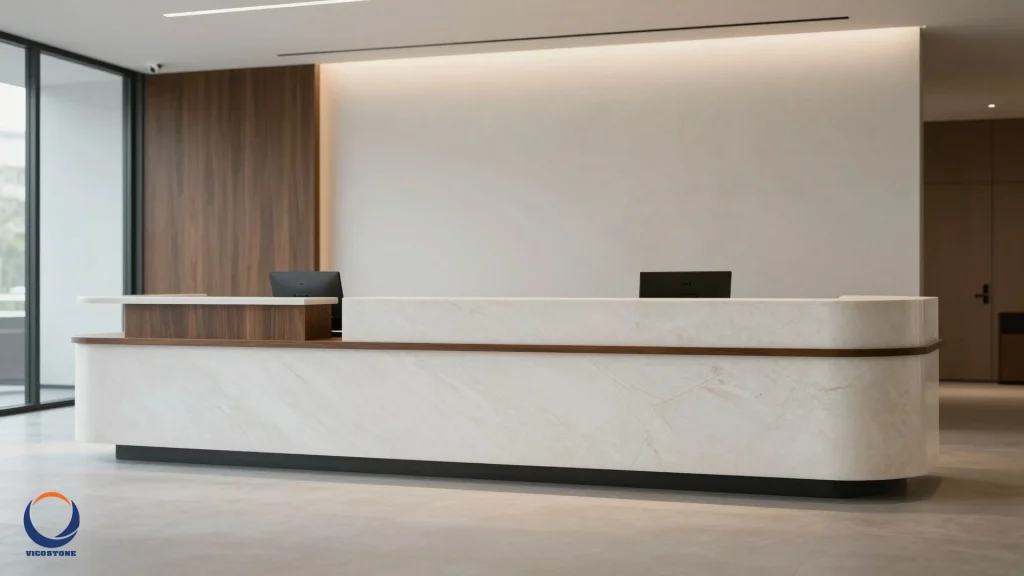
First impressions are vital in commercial settings. A reception desk crafted from engineered stone immediately conveys professionalism and elegance. The material's durability ensures it can withstand constant interaction. Its sophisticated appearance creates a welcoming yet impressive entry point for clients and guests. Large format slabs, like the 3500x2000mm super jumbo slabs offered by Nova Stone[2], allow for seamless designs with minimal joints, enhancing the luxurious feel.
Executive offices and conference rooms
In executive offices and boardrooms, engineered stone can be used for stately desks, credenzas, and conference tables. Its refined finish and robust nature project an image of stability and success. The ability to customize sizes and cuts, such as the Cut-to-Size collection [1], ensures precise integration into bespoke furniture designs. This creates an environment conducive to important decision-making.
Breakrooms and cafeterias
These high-traffic areas demand surfaces that are both attractive and highly functional. Engineered stone countertops in breakrooms offer exceptional resistance to food stains, heat, and daily wear [2]. Their non-porous nature also supports strict hygiene standards, which is crucial in food preparation and dining spaces. This makes them an optimal solution for enhancing visual appeal while ensuring long-lasting durability and convenience [1].
Collaborative workspaces
Modern offices often feature open-plan and collaborative zones. Engineered stone can form durable, easy-to-clean surfaces for shared worktables, islands, and shelving. Its resistance to spills and scratches makes it perfect for areas with frequent activity. The wide range of colors and patterns allows designers to integrate these surfaces seamlessly into the overall aesthetic. This supports a dynamic and engaging work environment.
Restrooms and vanities
For office restrooms, engineered stone vanity tops provide a hygienic, moisture-resistant, and aesthetically pleasing solution [2]. Its durability ensures it can withstand constant exposure to water and cleaning agents. The material maintains its elegant appearance over time. This contributes to a clean and well-maintained facility.
Choosing the right engineered stone supplier
Selecting a reputable manufacturer is paramount for successful project outcomes. Leading suppliers, such as New Stone in Vietnam, leverage modern factories and advanced technology [1]. They produce high-quality artificial quartz stone that meets international standards. These companies often focus on sustainable methods, reducing waste and improving efficiency.
For the US market, suppliers like Nova Stone offer significant advantages. They provide AD/CVD duties-free access and lower tariffs for US imports [2]. This makes their high-capacity manufacturing and fabrication facilities particularly attractive. Their focus on custom-built quartz stone ensures tailored precision for specific project needs.
Innovative collections for distinctive designs
Manufacturers continuously innovate to offer designers unique and inspiring collections. These advancements push the boundaries of engineered stone aesthetics and functionality.
Nano Ink collection
The Nano Ink Collection, for example, represents a perfect symphony of advanced printing technology and natural beauty [1]. This technology allows for intricate and realistic replication of natural stone patterns. It redefines limitations in engineered quartz surface design. This collection offers an endless source of inspiration for architectural projects.
Natural Masterpiece and Classic Essence
The Natural Masterpiece Collection captures the unique beauty of natural stone, formed under immense pressure and heat [1]. Each slab reveals a majestic beauty that is truly distinctive. Similarly, the Classic Essence Collection faithfully reproduces the timeless beauty of natural stone through its distinctive grain structure. It brings depth and harmony to any space [1]. These collections provide sophisticated options for designers seeking classic elegance.
Prefabricated and cut-to-size solutions
For efficiency, prefabricated (Prefabs) engineered quartz collections optimize installation time while ensuring exceptional precision [1]. The Cut-to-Size collection, utilizing state-of-the-art CNC cutting technology, ensures exact fabrication according to technical drawings [1]. These solutions are perfect for projects demanding absolute precision and cost optimization. The strategic role of material innovation in contemporary hospitality design often relies on such advanced fabrication techniques to deliver complex, high-quality finishes.
Sustainability and long-term value
Beyond aesthetics and durability, engineered stone offers long-term value and contributes to sustainable design practices. Its longevity reduces the need for frequent replacements, minimizing waste. Many manufacturers also employ sustainable production methods. The inherent strength and ease of maintenance of engineered stone surfaces contribute to a lower environmental footprint over their lifecycle. This aligns with modern corporate sustainability goals. In fact, platforms like EON Tech are increasingly adopted by businesses to streamline material selection processes, ensuring both quality and environmental responsibility.
Choosing engineered stone for office interiors is a smart investment. It enhances the visual appeal, improves functionality, and supports a healthy work environment. This material truly delivers on the promise of elegance and enduring performance.
Conclusion
Engineered stone stands out as an unparalleled material for creating elegant, functional, and durable workspace and office interiors. Its superior resistance to scratches, stains, and moisture, combined with vast design flexibility, makes it a top choice for discerning designers and businesses. From high-traffic reception areas to executive suites and collaborative zones, engineered stone provides surfaces that not only look exceptional but also perform flawlessly for years to come. By partnering with leading manufacturers who prioritize quality and innovation, designers can confidently transform any office into a sophisticated and inspiring environment.
The benefits of engineered stone in commercial projects are clear, offering a blend of beauty and practicality that few other materials can match. Investing in engineered stone means investing in the future of elegant and efficient workspaces.More information
- Engineered Stone: A composite material made from crushed stone (typically quartz) bound together by an adhesive (usually polymer resin). It is manufactured to be non-porous, highly durable, and resistant to stains and scratches, offering a consistent aesthetic.
- Quartz Surfaces: A specific type of engineered stone where quartz is the primary aggregate, often making up 90-95% of the material. Known for its exceptional hardness, durability, and wide range of colors and patterns, it is a popular choice for countertops and high-traffic areas.
- Non-Porous: A material characteristic indicating that it does not have tiny holes or spaces that allow liquids or gases to pass through. Non-porous surfaces are highly resistant to stains, bacteria growth, and moisture absorption, making them hygienic and easy to clean.
- Fabrication: The process of manufacturing or constructing something, especially from diverse standardized parts. In the context of engineered stone, it refers to cutting, shaping, and finishing slabs to fit specific dimensions and designs for installation.
- AD/CVD Duties: Anti-dumping (AD) and Countervailing Duty (CVD) are tariffs imposed by governments to protect domestic industries from unfair competition. AD duties counter foreign products sold below market value, while CVD duties offset foreign government subsidies.