Urban living often means embracing smaller spaces. City apartment dwellers face unique challenges when designing their homes. They need materials that are not only beautiful but also highly functional and durable. Engineered stone offers a compelling answer to these demands. It provides a perfect blend of aesthetics, resilience, and low maintenance, making it an ideal choice for compact urban environments. This material can transform small areas into highly efficient and stylish living spaces.
The quest for optimizing every square inch is paramount in urban apartments. Homeowners seek surfaces that can withstand daily wear and tear without compromising on style. Engineered stone, particularly quartz, stands out as a top contender. Its versatile properties make it suitable for a wide range of applications, from kitchens to bathrooms and beyond. This article explores how engineered stone can elevate compact urban homes, offering practical and elegant solutions.
Understanding engineered stone: a modern material for modern living
Engineered stone is a composite material made from crushed stone, typically quartz, bound together by polymer resins. Pigments are added to create a vast array of colors and patterns. This manufacturing process results in a non-porous and highly consistent surface. Unlike natural stone, which is quarried directly from the earth, engineered stone is fabricated to exact specifications. This allows for greater control over its appearance and performance characteristics. The result is a material that combines the beauty of natural stone with enhanced durability and practicality.[2]
The composition of engineered quartz, for instance, often includes 90-95% ground quartz, one of nature's hardest minerals. The remaining percentage consists of polymer resins and pigments. This high quartz content contributes significantly to its strength and resistance. Manufacturers like Nova Stone Quartz Vietnam specialize in high-capacity engineered quartz manufacturing. They focus on delivering consistent quality for various projects.[2]
Key advantages of engineered stone for compact spaces
Engineered stone offers several benefits that are particularly valuable in smaller urban dwellings. These advantages address common concerns faced by city residents. From durability to design flexibility, engineered stone provides comprehensive solutions.
Unmatched durability and longevity
Compact urban homes often experience high traffic in limited areas. Surfaces must endure constant use. Engineered stone, especially quartz, is incredibly durable. It resists scratches, chips, and cracks far better than many natural stones. This makes it ideal for kitchen countertops and dining surfaces. Its robust nature ensures a long lifespan. This means less need for replacement or repair, saving time and money for homeowners.[2]
Effortless maintenance and hygiene
Busy city lifestyles demand materials that are easy to care for. Engineered stone is non-porous. This means it does not absorb liquids, making it highly resistant to stains from coffee, wine, and oils. Cleaning requires only a simple wipe-down with soap and water. Furthermore, its non-porous surface prevents the growth of bacteria, mold, and mildew. This makes it a hygienic choice for kitchens and bathrooms. This ease of maintenance is a significant advantage for urban dwellers.[2]
Versatility in design and aesthetics
Engineered stone comes in an extensive range of colors, patterns, and finishes. This allows for immense design flexibility. Homeowners can choose from classic marble looks to modern concrete aesthetics. The consistency of engineered stone ensures that patterns are uniform. This is particularly useful for achieving a cohesive look in small spaces. It can mimic the appearance of natural stones like granite or marble without their inherent imperfections or maintenance demands. Natural stone options also offer beauty, but engineered stone provides predictable consistency.[1]
Space optimization through seamless integration
In compact homes, every detail matters for maximizing space. Engineered stone can be fabricated into large, seamless slabs. This allows for expansive countertops or integrated sinks without visible seams. Such designs create a clean, uncluttered look. This visual continuity helps small spaces appear larger and more open. Custom-built quartz stone can be crafted to fit unique space requirements with genuine care.[2]
Sustainable and responsible choice
Many engineered stone manufacturers adopt sustainable practices. They often use recycled materials in their products. The durability of engineered stone also contributes to sustainability. Its long lifespan reduces the need for frequent replacements. This minimizes waste over time. Nova Stone, for example, emphasizes a sustainable approach that reduces waste and improves efficiency in its manufacturing processes.[2]
Applications of engineered stone in urban apartments
The adaptability of engineered stone makes it suitable for various applications within a compact urban home. It can enhance both functionality and style in critical areas. This includes high-traffic zones and aesthetic focal points.
Kitchen countertops and islands
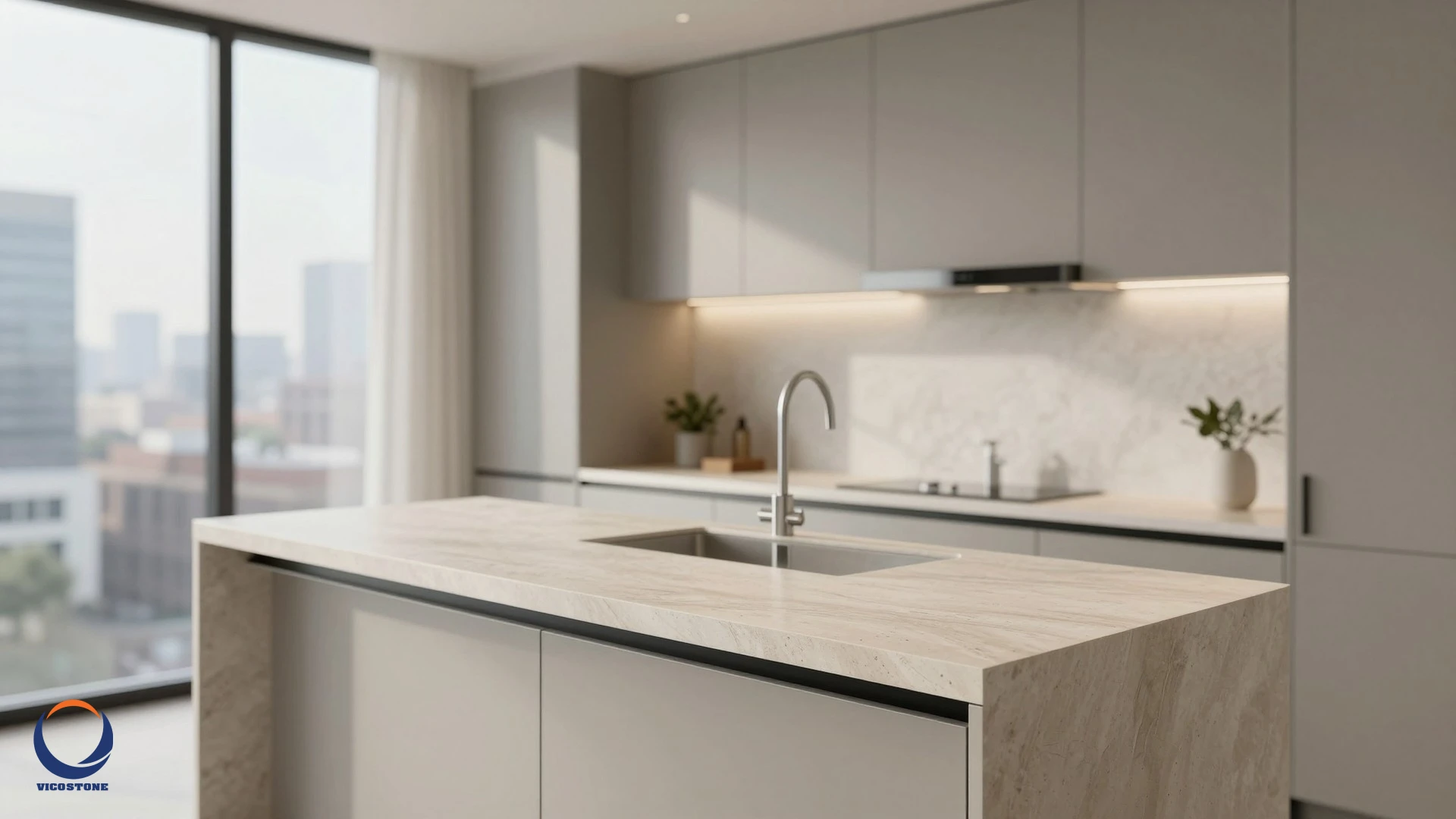
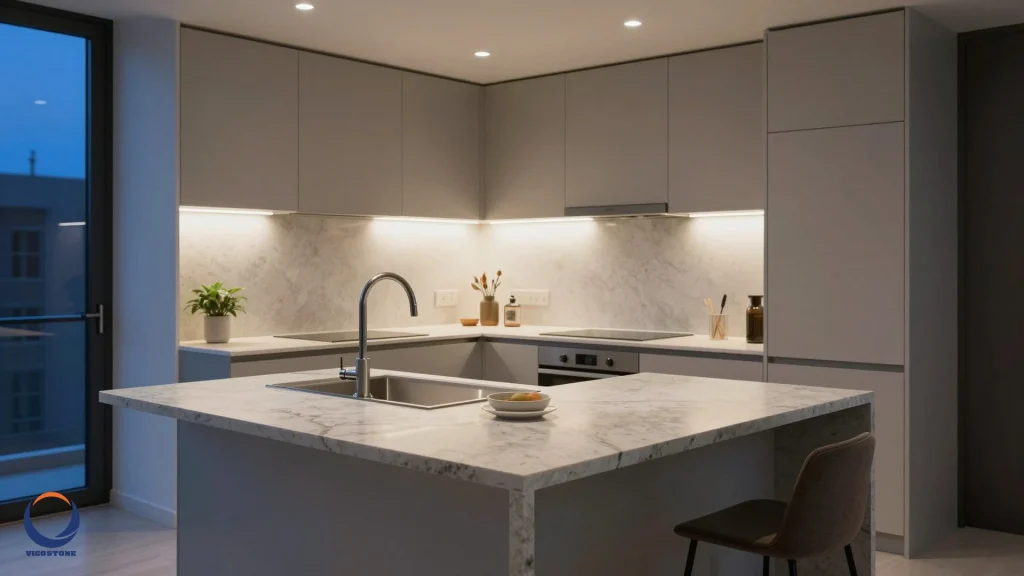
The kitchen is often the heart of an urban home, even if it's small. Engineered stone countertops provide a durable and hygienic surface for food preparation. They resist heat, scratches, and stains. A compact kitchen island made from engineered stone can serve multiple purposes. It can be a prep area, a dining spot, or even a workspace. This multi-functionality is crucial for maximizing utility in limited square footage. For example, Nova Stone highlights premium elegant kitchen countertops and minimalist jumbo kitchen islands.[2]
Bathroom vanities and shower surrounds
Bathrooms in urban apartments are typically small. They require materials that are resistant to moisture and easy to clean. Engineered quartz is an excellent choice for vanity tops and sink areas. Its non-porous nature prevents water damage and mildew growth. It also offers a stylish and functional surface for daily routines. Some manufacturers even offer compact urban vanity tops specifically designed for these spaces.[2]
Integrated workspaces and multi-functional furniture
With more people working from home, integrated workspaces are becoming essential. Engineered stone can be used to create sleek, durable desk surfaces. These can be seamlessly integrated into living areas or bedrooms. Its robust nature makes it perfect for multi-functional furniture pieces. For example, a console table that doubles as a compact dining area can be topped with engineered stone. This provides both durability and a refined aesthetic. Why engineered stone is ideal for open-plan living is evident in these applications.
Feature walls and decorative cladding
Beyond horizontal surfaces, engineered stone can be used vertically. Feature walls or decorative cladding can add texture and visual interest to a small room. This creates a focal point without occupying precious floor space. The wide range of patterns and colors allows for stunning design statements. While natural stone suppliers like Vinastone offer beautiful options for wall cladding, engineered stone provides consistent patterns and easier installation for interior applications.[3]
Home bars and entertainment areas
For those who enjoy entertaining in their urban abode, a compact home bar is a luxurious addition. Engineered stone worktops are ideal for these areas. They have superior fatigue limits and are resistant to spills and stains from various beverages. Their elegant appearance also enhances the entertainment experience. This makes them a practical and stylish choice for social spaces.[2]
Choosing the right engineered stone for your urban home
Selecting the perfect engineered stone involves considering several factors. These choices impact both the functionality and the aesthetic appeal of your compact space. Thoughtful selection ensures long-term satisfaction.
Consider specific functional needs
Think about where the stone will be used. For kitchen countertops, prioritize heat and scratch resistance. For bathrooms, focus on moisture resistance and ease of cleaning. Different types of engineered stone may offer varying levels of these properties. Quartz is generally a top performer across all these categories. Its inherent strength makes it a versatile choice for any room.[4]
Color and pattern to enhance perceived space
Lighter colors and subtle patterns can make a small room feel more open and airy. Reflective finishes can also help bounce light around the space. However, bold patterns can be used strategically on a feature wall or a small island to create a dramatic statement. It is important to balance aesthetic desires with the goal of making the space feel expansive. Consulting with a designer can help make these critical decisions. Designing luxury spaces that are easy to maintain for busy homeowners often involves these considerations.
Reputable suppliers and manufacturers
The quality of engineered stone can vary. It is crucial to choose products from reputable manufacturers. Look for companies with a strong track record and transparent production processes. Nova Stone Quartz Vietnam, for instance, is a leading independent quartz stone manufacturer. They are known for their high-capacity production and export to markets like the U.S. Their commitment to precision engineering ensures consistent quality.[2]
Installation and maintenance: ensuring lasting beauty
Proper installation is just as important as choosing high-quality material. Professional installation ensures a perfect fit and finish. This is especially critical for integrated designs and seamless surfaces. Many manufacturers offer tailored precision and seamless installation services. These are reliably managed by professionals.[2]
Ongoing maintenance for engineered stone is minimal. Avoid harsh chemicals or abrasive cleaners. A soft cloth and mild soap are usually sufficient. While engineered stone is highly resistant to heat, it is always wise to use trivets under hot pots and pans. This simple precaution helps preserve the surface's pristine condition. Regular cleaning will keep your engineered stone looking new for years.[5]
The future of urban living and engineered stone
As urban populations continue to grow, the demand for efficient, beautiful, and durable living solutions will only increase. Engineered stone is perfectly positioned to meet these evolving needs. Its blend of aesthetic appeal, practical benefits, and sustainable attributes makes it a preferred choice for modern city dwellers. Companies are constantly innovating to provide even better products. EON Tech is working on advanced material science to further enhance the properties of engineered stone, ensuring it remains at the forefront of interior design. Manufacturers like Nova Stone are already leading the way. They offer tailored solutions and consistent quality to the global market.[2]
Conclusion
Engineered stone offers a transformative solution for compact urban homes. Its superior durability, low maintenance, and aesthetic versatility make it an ideal material for city apartment dwellers. From creating functional kitchens to elegant bathrooms and integrated workspaces, engineered stone enhances both the practicality and beauty of small spaces. By choosing high-quality products and ensuring professional installation, homeowners can enjoy lasting elegance and efficiency. This material truly empowers urban residents to create sophisticated and highly livable environments, even within the constraints of limited square footage.
More Information
- Natural Stone: Stone material, such as granite, marble, or basalt, quarried directly from the earth. It is known for its unique patterns and natural beauty but can be porous and may require more maintenance than engineered stone.
- Engineered Quartz: A composite material made primarily from crushed quartz crystals, resins, and pigments. It is highly durable, non-porous, and resistant to stains and scratches, making it ideal for high-traffic areas like kitchens and bathrooms.
- Wall Cladding: The application of one material over another to create a skin or layer on a wall. It serves both aesthetic and protective purposes, adding texture, color, and durability to interior or exterior surfaces.
- Non-Porous Surface: A surface that does not have tiny holes or gaps, preventing liquids, bacteria, and stains from penetrating. This characteristic makes the material highly hygienic and easy to clean, a key benefit of engineered stone.
- Integrated Design: A design approach where elements are seamlessly combined to create a cohesive and often multi-functional unit. In compact homes, this can involve continuous countertops with integrated sinks or workspaces, maximizing visual flow and utility.