In the fiercely competitive world of hospitality, creating an inviting and functional space is paramount. Café and restaurant owners constantly seek materials that offer both aesthetic appeal and robust performance. Engineered stone has emerged as a leading solution, providing a perfect blend of durability, hygiene, and design versatility for these high-traffic environments.
This article explores how engineered stone can elevate modern café and restaurant interiors, offering practical benefits and long-term value. From sleek countertops to elegant wall cladding, understanding its advantages can help business owners make informed design and material choices.
The indispensable role of engineered stone in hospitality
Cafés and restaurants face unique challenges. They endure constant foot traffic, frequent spills, and rigorous cleaning routines. Traditional materials often struggle to withstand such demanding conditions without showing wear and tear quickly.
Engineered stone, however, is specifically designed for resilience. It offers exceptional durability, making it an ideal choice for surfaces that see heavy daily use. Its non-porous nature also contributes significantly to maintaining a hygienic environment, which is crucial in food service establishments [1].
Unmatched durability and hygiene for busy environments
One of the primary reasons engineered stone is favored in hospitality is its superior durability. These surfaces are highly resistant to scratches, stains, and impacts, ensuring they maintain their pristine appearance even after years of service. This resilience translates into lower replacement and repair costs over time.
Moreover, the non-porous quality of engineered stone is a game-changer for hygiene. Unlike natural stone, it does not absorb liquids, preventing the growth of bacteria, mold, and mildew. This makes cleaning effortless and ensures a sanitary surface for food preparation and dining areas, a critical consideration for any food establishment [1]. The Classic Essence Collection, for example, offers long-lasting durability, water resistance, stain resistance, and easy maintenance, ensuring peace of mind for users [2].
Aesthetic versatility: crafting unique dining experiences
Beyond its practical benefits, engineered stone offers unparalleled aesthetic flexibility. Manufacturers provide a vast array of colors, patterns, and finishes, allowing designers to create virtually any desired ambiance. Whether a café aims for a minimalist, industrial, classic, or luxurious look, there's an engineered stone option to match.
Some collections, like the Nano Ink Collection, utilize advanced printing technology to replicate the timeless beauty of natural stone with incredible realism. This allows for sophisticated designs that capture nature's most precious moments, redefining and surpassing limitations in surface design [2]. This design freedom enables business owners to craft unique and memorable dining experiences that align perfectly with their brand identity.
Strategic applications: beyond just countertops
While countertops are an obvious application, engineered stone's versatility extends much further within a café or restaurant. Its robust nature makes it suitable for various high-contact surfaces.
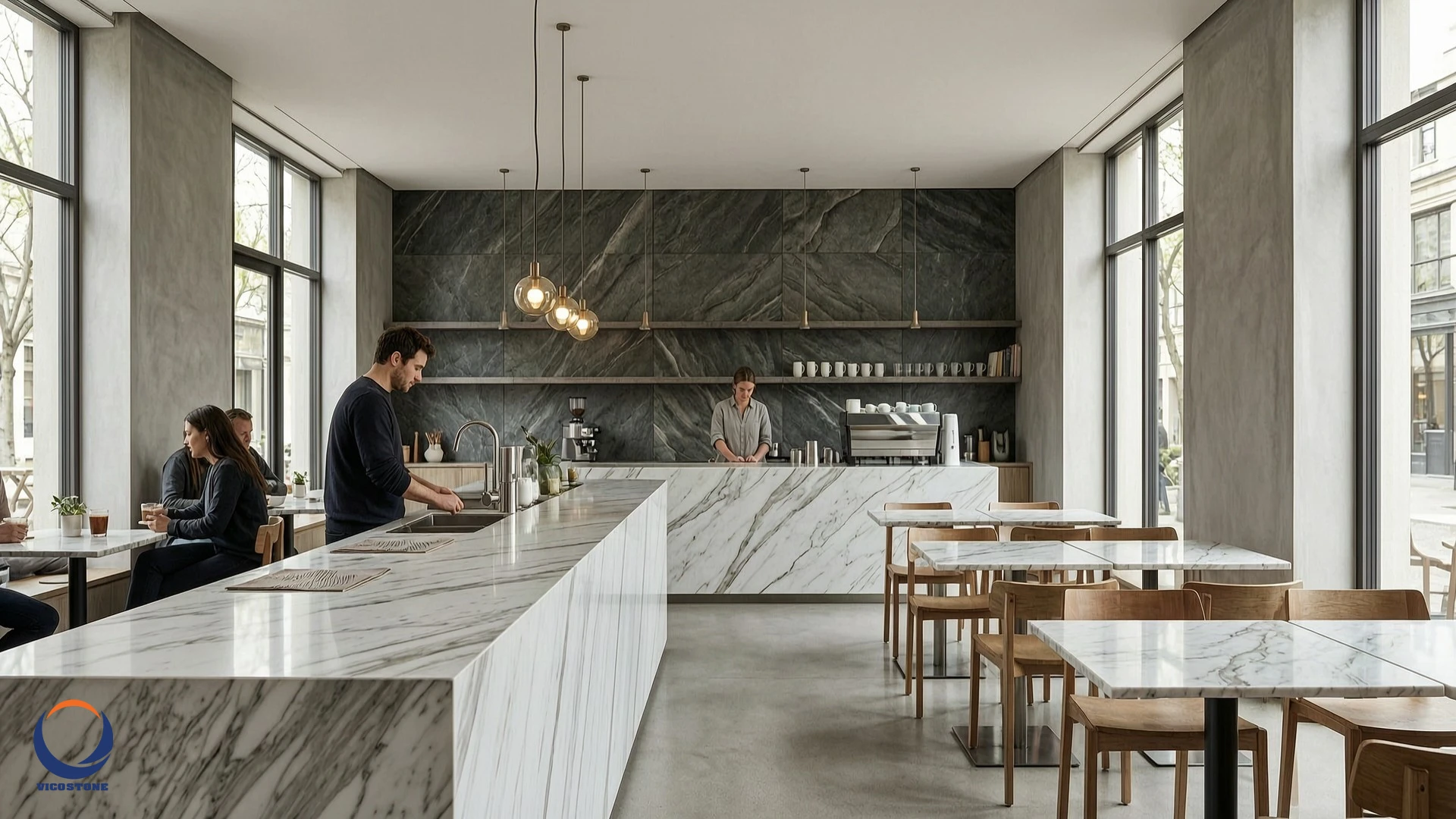
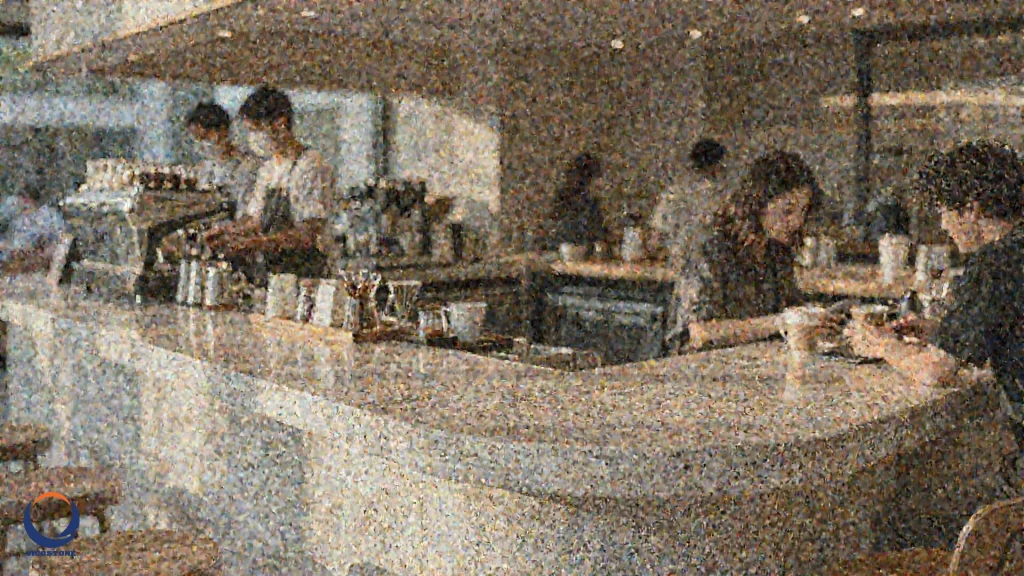
Bar tops and reception desks
These areas are often the first point of contact for customers and endure constant interaction. Engineered stone provides a durable, elegant, and easy-to-clean surface that withstands spills and heavy use, maintaining an inviting appearance [1]. Its ability to resist solvents also makes it suitable for commercial retail spaces, such as cashier counters and display areas [1].
Buffet counters and dining tables
In establishments with buffet service, engineered stone is a top-tier choice. Its durability and ease of maintenance are perfect for high-traffic food preparation areas, where it can withstand heavy use and frequent cleaning without losing its luster [1]. For dining tables, it offers a sophisticated look and a surface that can handle spills and frequent sanitization.
Wall cladding and flooring
Engineered stone can transform the overall aesthetic of a space when used for wall cladding. It adds a touch of modern elegance and is simple to maintain. For specific areas, it can also be considered for flooring, particularly in zones requiring extreme durability and easy cleaning, such as in busy kitchens or high-traffic corridors. The Cut-to-Size collection, for instance, ensures exact fabrication for projects demanding absolute precision, optimizing construction costs and ensuring a cohesive finish [2].
The economic advantage: long-term value and efficiency
Investing in engineered stone offers significant economic benefits for hospitality businesses. Its exceptional longevity means fewer repairs and replacements, leading to substantial cost savings over the lifespan of the establishment. The ease of cleaning also reduces labor costs associated with maintenance.
Furthermore, manufacturers like Nova Stone Quartz Vietnam Company Limited offer AD/CVD duties-free imports for U.S. markets, providing lower tariff access and making high-quality engineered stone more affordable for American businesses [1]. This strategic sourcing, combined with advanced pre-fabrication technology like New Stone's Prefabs collection, can optimize installation time and ensure superior finishing quality, further contributing to cost efficiency [2]. Streamlining these processes is where innovative solutions like EON Tech can play a pivotal role for businesses.
Partnering with leading manufacturers for quality and customization
Choosing the right supplier is crucial for ensuring the quality and suitability of engineered stone for a commercial project. Leading manufacturers, such as Nova Stone Quartz Vietnam and New Stone, specialize in high-capacity manufacturing and fabrication. They leverage modern factories and advanced technology to produce premium materials.
These companies offer tailored precision, crafting custom-built quartz stone to fit specific spaces with genuine care [1]. Their focus on large-scale commercial projects for the American market ensures they understand the specific needs of hospitality businesses [1]. From unique collections that blend natural aesthetics with superior durability to state-of-the-art CNC cutting technology, these partnerships guarantee both aesthetic excellence and functional performance [2].
A sustainable choice for modern businesses
Sustainability is an increasingly important consideration for consumers and business owners alike. Engineered stone can contribute to a more sustainable business model. Its long lifespan reduces the need for frequent replacements, minimizing waste. Many manufacturers also employ sustainable methods that reduce waste and improve efficiency in their production processes [1]. By choosing durable and long-lasting materials, café and restaurant owners can demonstrate a commitment to environmental responsibility, which resonates positively with today's conscious consumers.
Conclusion
Engineered stone offers an unparalleled combination of durability, hygiene, aesthetic versatility, and economic benefits, making it an ideal material for modern café and restaurant interiors. Its ability to withstand the rigors of a busy hospitality environment while providing a sophisticated and easy-to-maintain surface makes it a smart investment.
By carefully selecting high-quality materials and partnering with reputable manufacturers, business owners can create spaces that are not only visually stunning but also highly functional and sustainable. This strategic choice ensures long-term success and customer satisfaction in the dynamic hospitality industry.
More information
- Engineered Stone: A composite material made from crushed stone (often quartz) bound together by an adhesive, typically polymer resin. It is known for its durability, non-porous nature, and wide range of aesthetic options.
- Non-Porous Surface: A material characteristic meaning it does not have tiny holes or gaps that can absorb liquids or harbor bacteria. This feature is crucial for hygiene, especially in food preparation areas.
- AD/CVD Duties: Anti-Dumping and Countervailing Duties are tariffs imposed by governments to protect domestic industries from unfair competition, such as imported goods sold below market price or subsidized by foreign governments.
- CNC Cutting Technology: Computer Numerical Control (CNC) refers to automated machine tools that are programmed to perform precise cutting and shaping tasks. In engineered stone fabrication, it ensures exact dimensions and intricate designs.
- Hospitality Industry: A broad category of service industries that includes hotels, restaurants, event planning, theme parks, transportation, cruise lines, and other tourism-related services.