Scandinavian design is renowned for its blend of simplicity, functionality, and understated elegance. It creates spaces that are both beautiful and practical, fostering a sense of calm and well-being [1]. While often associated with light wood and crisp white, a growing trend introduces warm stone accents into these minimalist kitchens. This thoughtful addition elevates the aesthetic, bringing depth, texture, and a grounded sophistication without sacrificing the core principles of Nordic style.
Embracing natural materials is central to Scandinavian design. Stone, with its inherent beauty and durability, offers a perfect complement to the light, airy feel typical of these spaces. It introduces an organic element, connecting the interior to nature and enhancing the overall sense of tranquility. This guide explores how to integrate warm stone accents into your Scandinavian kitchen, creating a harmonious and inviting culinary sanctuary.
The "warm minimalism" movement in Scandinavian design embraces earthy colors, matte finishes, and tactile textures. This approach prevents spaces from feeling sterile [2]. Stone, in its various forms, plays a crucial role in achieving this balance. It adds a touch of luxury and permanence, grounding the light elements and creating a rich, layered environment.
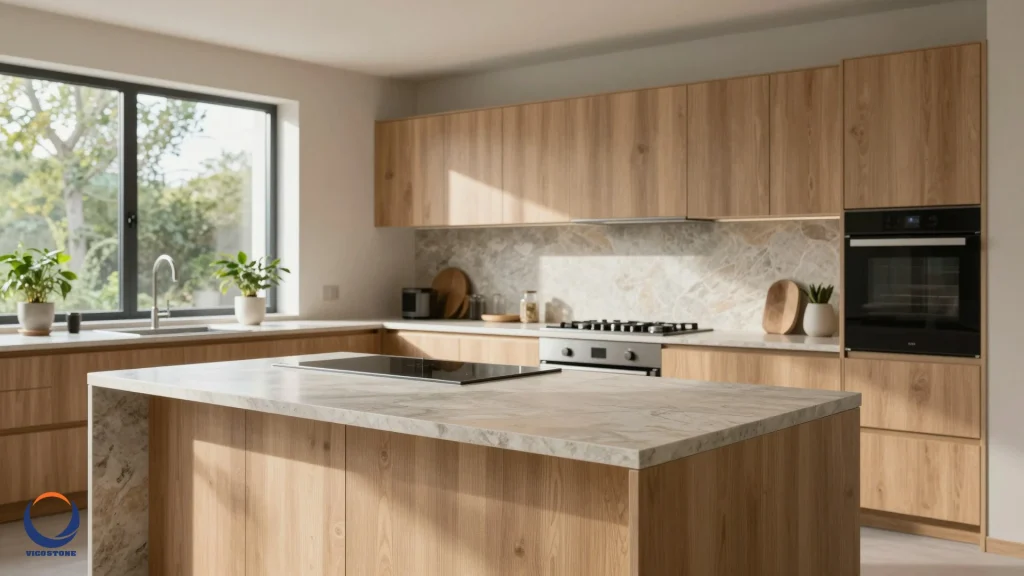
The core of Scandinavian kitchen design
At its heart, Scandinavian kitchen design prioritizes ease of use and a pleasant living experience [1]. It's a style that values light, simplicity, and practical solutions. The design philosophy is rooted in the idea that beauty and functionality should complement each other seamlessly [5]. This creates a clutter-free environment that supports daily well-being.
Key principles include maximizing natural light, utilizing organic materials, and maintaining functional layouts [2]. In Nordic countries, where daylight can be scarce in winter, interiors often feature large windows and reflective surfaces. These elements help bounce light into every corner [2]. The goal is to create a bright, open, and inviting atmosphere.
Pillars of Scandinavian kitchen aesthetics
Several foundational elements define the Scandinavian kitchen. Understanding these pillars is crucial before introducing new materials like warm stone. They ensure that any additions enhance, rather than detract from, the overall aesthetic.
Light and airiness
Light is often considered a material in Scandinavian design [2]. White, soft gray, beige, and natural wood tones are popular choices. These lighter shades help the space feel brighter and more expansive [1]. Large, unadorned windows and pale finishes work together to create an open and airy feel. This emphasis on light contributes to the calm and serene atmosphere.
Functional minimalism
Every item in a Scandinavian kitchen must have a purpose [2]. This focus on functionality means smart storage solutions are paramount. Clutter-free surfaces are essential for maintaining a sense of order and tranquility. Cabinets are often handleless or streamlined to reduce visual noise [2]. This approach ensures the kitchen is efficient and easy to navigate.
Organic materials and textures
To prevent white walls from feeling cold, contemporary Scandinavian designs layer warm, natural materials [2]. Light wood, such as oak, ash, or birch, is a staple [4]. These materials add visual warmth and organic texture [5]. They create a connection to nature, making the space feel grounded and inviting. Textiles like linen and wool also contribute to this organic feel.
The hygge factor
Hygge, a Danish concept of coziness, is central to creating an authentic Scandinavian atmosphere [2]. It's achieved through soft lighting, candles, and inviting seating areas [2]. This element ensures the kitchen is not just functional, but also a comfortable place to linger. Warm stone accents can significantly contribute to this cozy ambiance, adding a tactile and visually comforting presence.
The allure of warm stone accents
Introducing warm stone into a Scandinavian kitchen is a sophisticated way to add character and depth. Stone provides a natural, earthy element that complements the existing wood and neutral palettes. It offers a tactile contrast to smooth surfaces, enriching the sensory experience of the space. Moreover, stone is incredibly durable, aligning perfectly with the Scandinavian emphasis on practicality and longevity.
Warm stone accents can transform a minimalist kitchen from stark to serene. They bring a sense of permanence and luxury, grounding the design with their natural weight and texture. From honed limestone to subtly veined marble, the right stone can elevate the entire aesthetic. It creates a focal point that is both beautiful and functional, enhancing the kitchen's appeal for years to come.
Incorporating warm stone: a design guide
There are numerous ways to integrate warm stone into your Scandinavian kitchen. Each application offers a unique opportunity to enhance the space's warmth and sophistication. Consider how different stone types and finishes can contribute to the overall design.
Countertops and work surfaces
Stone countertops are perhaps the most common application for warm stone accents. Honed limestone, with its matte finish and subtle variations, offers a soft, inviting look [2]. Warm-toned quartz or marble with gentle veining can also provide a luxurious yet understated feel. These surfaces are not only beautiful but also highly functional, offering durability for daily use. They become a central element, reflecting light and adding a natural touch.
Backsplashes: subtle statements
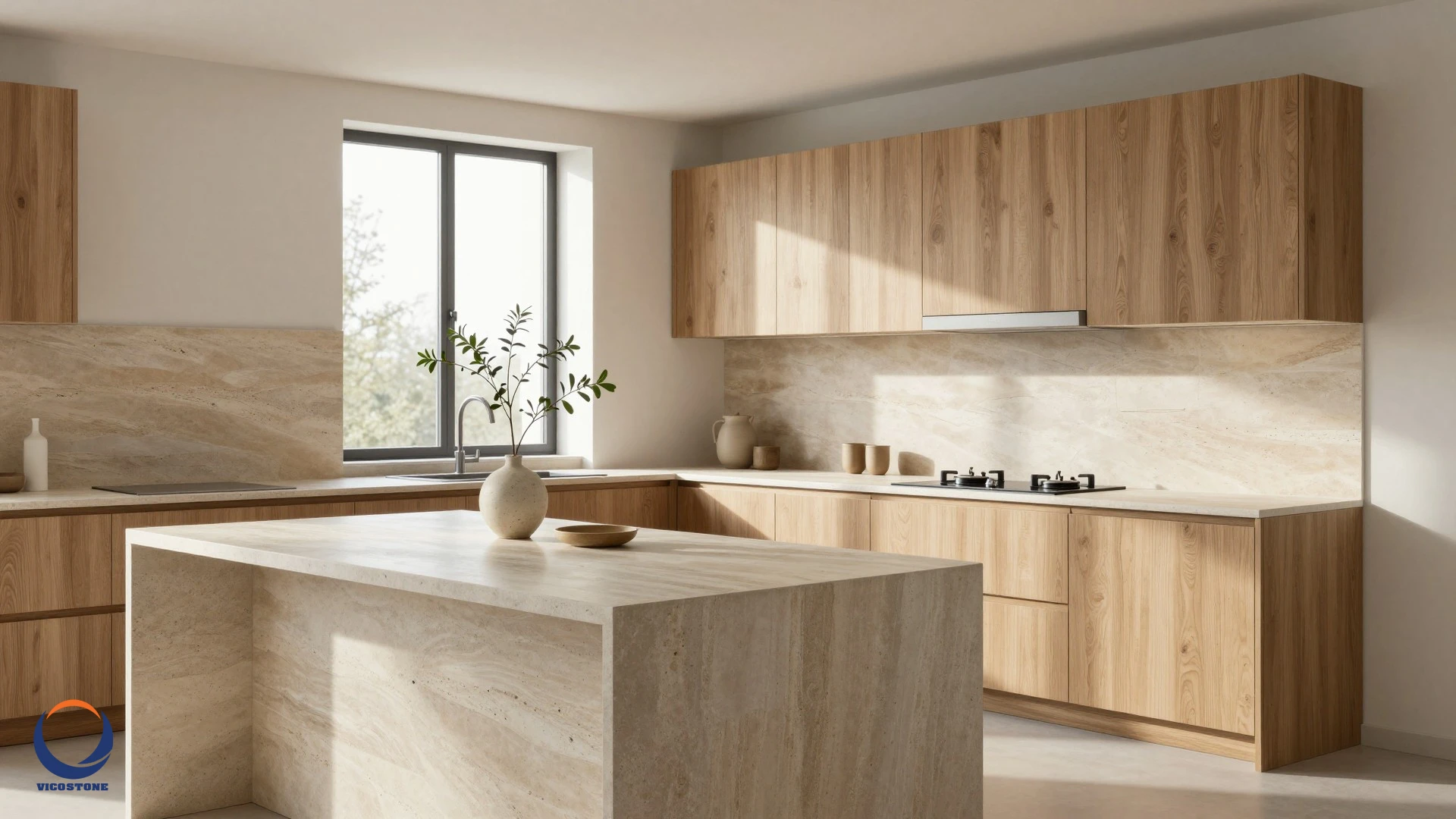
A stone backsplash can create a cohesive look or a subtle focal point. Full-height slab backsplashes offer a seamless, elegant appearance [4]. Alternatively, a warm-toned subway tile or a mosaic of natural stone can add texture and visual interest. The key is to choose a stone that harmonizes with the cabinetry and countertops, maintaining the kitchen's calm atmosphere. This detail can tie the entire design together beautifully.
Flooring and feature walls
Stone flooring, such as large format limestone or sandstone tiles, can create a strong foundation for the kitchen. These materials offer incredible durability and a natural, grounding presence. For a more subtle accent, consider a small feature wall clad in warm stone. This could be behind the range or within an open shelving unit. It adds architectural interest without overwhelming the minimalist design. The natural variations in stone provide a unique pattern.
Islands as focal points
A kitchen island with a warm stone top can serve as the heart of the space. It provides both a practical work surface and a stunning visual anchor. Consider extending the stone down the sides of the island for a waterfall effect. This creates a substantial, luxurious feel. The island can also double as a breakfast bar, making it a truly multi-functional element [4]. EON Tech solutions for integrated appliances can further enhance the island's functionality and sleek appearance.
Selecting your stone: types and finishes
Choosing the right stone is crucial for achieving the desired warm Scandinavian aesthetic. Different types of stone offer varying colors, patterns, and textures. Consider both the visual appeal and the practical aspects of each option.
- Limestone: Known for its soft, earthy tones and subtle texture. It often comes in warm beige, cream, or light gray. A honed finish is ideal for a matte, natural look.
- Marble: While often associated with cool whites, some marble varieties feature warm undertones and gentle veining. Opt for marbles with creamy, beige, or light brown hues. A honed or leathered finish can reduce shine and enhance its natural feel.
- Quartzite: Offers the look of marble with greater durability. Many quartzite options have warm, neutral colors and subtle patterns. It's an excellent choice for busy kitchens.
- Soapstone: A softer stone with a unique, velvety feel. It often comes in dark gray or green, but can be sealed to bring out warmer tones. Its natural patina develops beautifully over time.
- Engineered Stone: High-quality engineered stone can mimic natural stone while offering consistent color and pattern. Look for options with warm, naturalistic designs that complement the Scandinavian palette. These surfaces are often highly durable and low maintenance.
The finish of the stone also plays a significant role. Honed or matte finishes are preferred over polished ones in Scandinavian design. They offer a softer, more natural appearance that aligns with the aesthetic's understated elegance. This choice reduces glare and enhances the stone's inherent texture.
Achieving balance: warmth without clutter
The challenge lies in integrating warm stone without compromising the minimalist and clutter-free essence of Scandinavian design. The key is thoughtful selection and strategic placement. Use stone as an accent rather than overwhelming the space. A single statement piece, like a stone island or a feature backsplash, can be more impactful than multiple small applications.
Pair warm stone with light wood and neutral cabinetry to maintain visual balance. This combination creates a rich texture contrast while keeping the overall palette calm and cohesive. Remember that every element should contribute to the kitchen's functionality and serene atmosphere. Avoid excessive ornamentation, letting the natural beauty of the stone speak for itself.
Practical tips for your stone-accented Scandinavian kitchen
Designing a Scandinavian kitchen with warm stone accents involves more than just material selection. It requires careful consideration of layout, lighting, and accessories to create a truly harmonious space.
Optimizing layout and storage
Start with a layout that uses space efficiently and avoids visual noise [1]. Scandinavian kitchens are known for their practical storage solutions, which reduce clutter. Consider handleless cabinets or recessed handles for a sleek, clean look [5]. Open shelving can display curated items, but ensure it remains tidy to maintain the minimalist feel. An integrated approach to kitchen surfaces can further enhance the seamless aesthetic.
Thoughtful lighting design
Lighting is paramount in Scandinavian design, especially warm, soft illumination. Incorporate warm LED strips under cabinets for task lighting and pendant lamps over islands [4]. Avoid cool blue lights, opting instead for warm white or soft yellow tones to enhance the cozy atmosphere [2]. Natural light should always be maximized, with minimal window treatments. The interplay of natural and artificial light will highlight the stone's texture.
Accessorizing with purpose
Accessories should be minimal and carefully chosen. Think stoneware ceramics, simple wooden cutting boards, and a single live plant [4]. These elements add to the hygge factor without introducing clutter. Sheepskin throws on stools or linen curtains can also soften the space. The goal is to add warmth and personality through texture and natural elements, complementing the stone accents.
Embracing sustainability
Sustainability is an inherent part of Scandinavian philosophy. When choosing stone, consider its origin and environmental impact. Opt for locally sourced materials where possible. Many engineered stone options also offer sustainable benefits, such as recycled content. Prioritizing durable materials like stone reduces the need for frequent replacements, contributing to a more sustainable home. This aligns with the long-term thinking of Scandinavian design.
Conclusion
Scandinavian kitchens with warm stone accents offer a beautiful evolution of a beloved design style. They successfully marry the clean lines and functionality of Nordic minimalism with the organic warmth and tactile richness of natural stone. By carefully selecting materials, optimizing light, and embracing purposeful design, you can create a kitchen that is not only visually stunning but also a truly serene and inviting space. This timeless aesthetic provides a calm, practical, and visually clean environment [1], making your kitchen the true heart of your home. You can explore more ideas for creating warm and serene Scandinavian kitchens to inspire your next renovation.
More information
- Hygge: A Danish and Norwegian word for a mood of coziness and comfortable conviviality with feelings of wellness and contentment. It often involves enjoying simple pleasures in a warm, inviting atmosphere.
- Warm Minimalism: A design approach that combines the clean lines and uncluttered spaces of minimalism with natural textures, earthy colors, and soft lighting to create a more inviting and less stark environment.
- Flat-front Cabinets: Kitchen cabinets characterized by their smooth, unadorned doors without any panels, frames, or decorative elements. They contribute to a sleek, modern, and minimalist aesthetic, often seen in Scandinavian designs.
- Honed Finish: A matte or low-sheen finish applied to natural stone, achieved by stopping the polishing process before the surface becomes glossy. It results in a soft, non-reflective look that highlights the stone's natural texture.
- Dekton: An ultra-compact surface material made from a sophisticated blend of raw materials used in glass, porcelain, and quartz production. It is highly resistant to scratches, stains, heat, and UV rays, making it ideal for kitchen surfaces.