Bathroom design has evolved significantly. Today, these spaces are not just functional; they are sanctuaries of style and relaxation. As designers strive to create modern, elegant, and highly functional bathrooms, the choice of materials becomes paramount. Engineered stone surfaces have emerged as a leading contender, perfectly aligning with the demands of contemporary aesthetics and performance [4].
This material offers a unique blend of durability, hygiene, and design flexibility. It provides solutions that natural stone often cannot match, making it a favorite for both residential and commercial projects. Understanding why engineered stone is so popular can help designers make informed choices for their next bathroom renovation.
What exactly is engineered stone?
Unlike natural stone, which is quarried directly from the earth, engineered stone is a meticulously crafted composite material [2]. It typically consists of 90-95% natural quartz crystals, blended with polymer resins and pigments under intense pressure and heat. This process creates a surface that inherits quartz's inherent strength while offering design versatility that natural stone often lacks [2].
The result is a non-porous, highly durable, and low-maintenance material. It mimics the beauty of natural stone without its common downsides. These include issues like staining, etching, and the need for frequent sealing [4]. This makes engineered stone an ideal choice for the demanding environment of a modern bathroom.
Meeting the demands of modern bathroom design
Modern bathroom designs place higher demands on materials than traditional layouts. Beyond appearance, surfaces must perform reliably in environments where moisture, temperature changes, and daily use are constant [3]. Engineered quartz offers a controlled balance between durability and visual consistency. Its non-porous structure helps prevent moisture absorption, making it highly suitable for bathroom applications where water exposure is unavoidable [3].
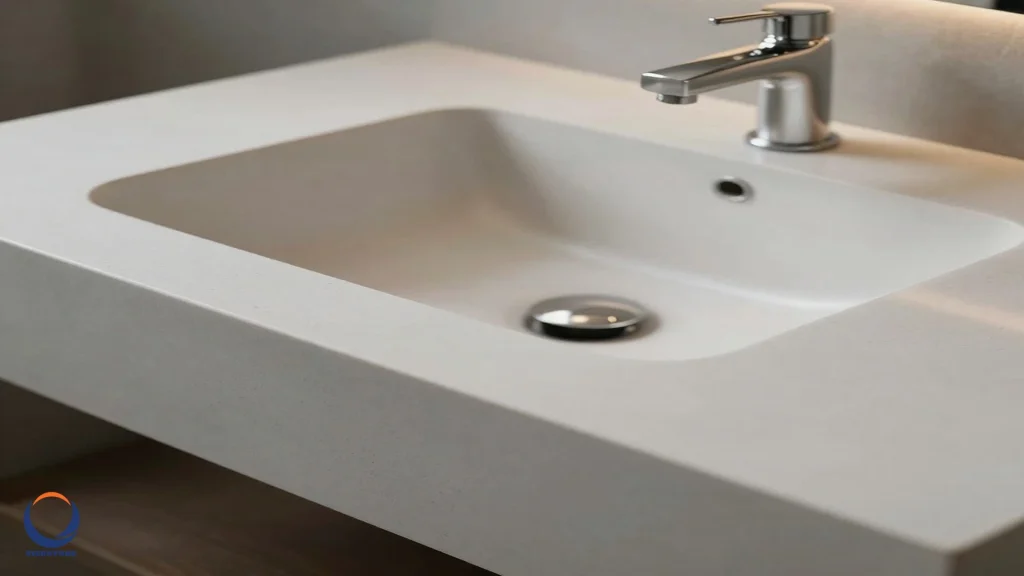
From a design perspective, engineered stone integrates easily into contemporary bathroom layouts. It works well with streamlined vanities, minimal edge profiles, and integrated sink designs. This avoids unnecessary visual complexity [3]. The predictable color and pattern results also support the clean lines and restrained palettes common in modern aesthetics. This ensures a clean, timeless bathroom aesthetic in residential settings.
Unmatched durability and resilience
One of the primary reasons designers favor engineered stone is its superior durability. Quartz is one of nature's hardest minerals, so these surfaces resist scratches, chips, and cracks better than most alternatives [2]. They are built to withstand daily bathroom routines with remarkable resilience. This makes them ideal for high-traffic areas, ensuring lasting performance [1].
This inherent strength means homeowners will not need to "baby" their bathroom surfaces. Engineered stone maintains its pristine look for years, even with constant use. Its robust nature makes it a practical choice for families and busy households. It stands up to the rigors of daily life without showing wear and tear.
Superior hygiene and easy maintenance
Hygiene is crucial in bathroom environments. Engineered stone excels here due to its non-porous nature [4]. Unlike porous natural stones, it does not absorb liquids. This prevents the growth of mold, mildew, and bacteria, making it a safe and hygienic choice for vanity tops and sink areas [2].
The absence of crevices, especially with seamless integrated basins, eliminates prime real estate for grime. A quick wipe-down keeps surfaces pristine; there are no grimy seams to scrub [2]. Engineered stone also requires no regular sealing, unlike marble or granite [4]. For cleaning, designers should recommend pH-neutral cleaners and prompt wiping of spills. This helps prevent potential staining and maintains the surface's luster [2].
Aesthetic versatility and design freedom
The design flexibility of engineered stone is another significant draw for contemporary bathrooms. It offers an almost limitless array of aesthetic options. Designers can choose from materials mimicking marble veins to bold solid colors or subtle concrete effects [2]. This wide range of engineered stone colors and patterns allows for creative expression [4].
The ability to customize integrated basins is a key advantage. These can be tailored to different depths, shapes, and drain placements, creating a truly bespoke look. Furthermore, modern trends embrace ultra-thin profiles and waterfall edges. Engineered stone can be fabricated to achieve these sleek, minimalist aesthetics, enhancing the luxurious feel of a space seamlessly[4].
Engineered stone in modern vanity layouts
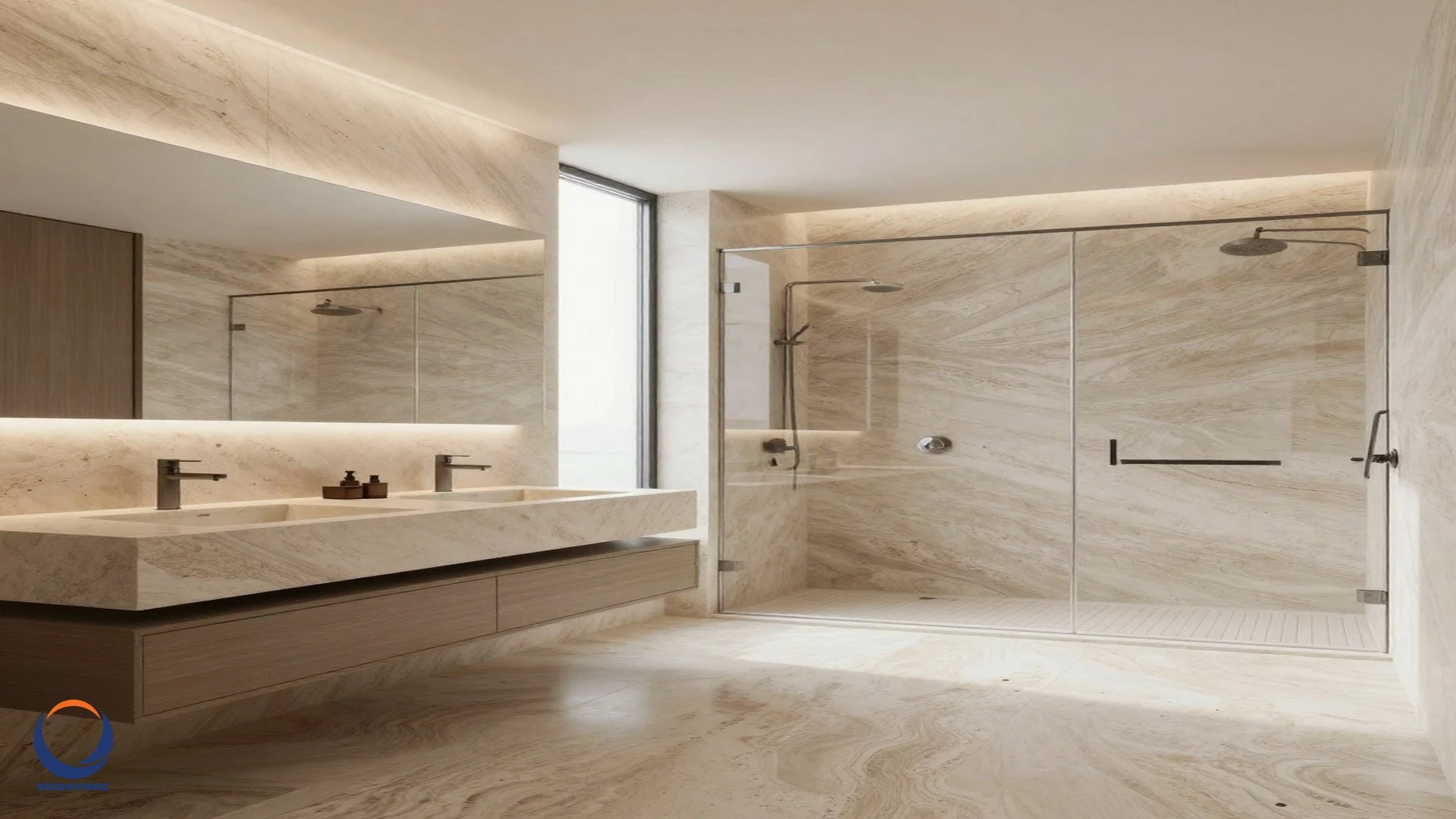
In modern bathroom design, the vanity is often the primary functional zone. Therefore, engineered quartz is most commonly specified as a vanity surface [3]. The countertop must handle daily use while maintaining a clean, structured appearance. This aligns perfectly with contemporary layouts. Engineered stone allows precise fabrication, making it well-suited for modern vanity designs that rely on tight tolerances and minimal detailing [3].
Integrated sinks, straight edges, and full-length backsplashes can be consistently produced. This allows engineered stone vanity tops to appear as a single, unified surface. They avoid looking like a collection of separate elements [3]. From a layout standpoint, engineered stone adapts well to both compact and large bathroom configurations. It provides the dimensional stability needed for slim profiles in floating vanity designs, all without compromising durability.
Expanding applications beyond vanities
While vanity tops are a primary application, engineered stone's versatility extends throughout the bathroom. Its moisture resistance makes it perfect for shower surrounds, offering a cohesive and luxurious look that is also easy to clean [4]. It can also be used for wall cladding, creating stunning feature walls or a uniform aesthetic across the entire room.
Beyond residential spaces, engineered stone is a top-tier choice for commercial projects. Its durability and ease of maintenance make it suitable for high-traffic areas in the hospitality industry. This includes hotels, resorts, and restaurants [1]. Reception desks, buffet counters, and high-end dining establishments benefit from its inviting and elegant appearance. Similarly, retail spaces use engineered stone for cashier counters and display areas due to its solvent resistance and easy-to-clean surface [1].
Sustainable and eco-friendly considerations
As sustainability becomes increasingly important, engineered stone offers appealing options. Many brands now offer eco-friendly countertop materials made with recycled content [4]. This supports sustainable interior design practices. Manufacturers like Nova Stone Quartz Vietnam focus on sustainable methods. These methods reduce waste and improve efficiency in their production processes [1].
Choosing engineered stone can contribute to green building initiatives. It provides a long-lasting material that minimizes the need for frequent replacement. This reduces overall environmental impact. The controlled manufacturing process also allows for greater consistency and less material waste compared to quarrying natural stone.
Important considerations for designers
While engineered stone offers numerous benefits, designers should be aware of a few considerations. Its substantial weight requires proper cabinet reinforcement. Installation is not a DIY-friendly job; professional fitting is essential to prevent cracks or stress damage [2]. Also, while resistant to scratches, engineered stone can be sensitive to direct heat. Hot styling tools or curling irons can damage the resin, so using trivets under hot items is crucial [2].
The premium quality of engineered stone often comes with a higher price tag than basic acrylic or ceramic options [2]. However, this initial investment is offset by its longevity and low maintenance, often outlasting cheaper alternatives. For designers seeking innovative solutions, platforms like EON Tech can provide valuable insights into material specifications and supplier networks, helping to streamline project planning. For more inspiration, exploring resources on creating a spa-inspired bathroom with engineered stone can be beneficial.
The future of bathroom design is here
Contemporary bathrooms demand materials that are not only beautiful but also highly functional and durable. Engineered stone surfaces meet these requirements with exceptional grace. Their unparalleled strength, hygienic properties, and vast design possibilities make them the preferred choice for discerning designers. They create spaces that are both stunning and sustainable.
From sleek vanity tops with integrated sinks to expansive shower surrounds, engineered stone elevates the modern bathroom experience. It ensures longevity and ease of care. As design trends continue to emphasize clean lines and practical elegance, engineered stone will undoubtedly remain at the forefront of innovative bathroom solutions for years to come.
More Information
- Engineered Stone: A composite material made from crushed natural stone (usually quartz), bound together by polymer resins and pigments. It is known for its durability, non-porosity, and wide range of aesthetic options.
- Integrated Sink: A sink basin that is seamlessly molded or fabricated directly into the countertop material, creating a continuous surface without visible seams or edges between the sink and counter.
- Non-Porous Surface: A material characteristic meaning it does not have tiny holes or gaps that can absorb liquids. This prevents the growth of bacteria, mold, and mildew, making it highly hygienic and stain-resistant.
- Quartz Crystals: A hard, crystalline mineral composed of silicon and oxygen atoms. It is a primary component of engineered stone, contributing to its exceptional strength, scratch resistance, and durability.
- Vanity Top: The countertop surface installed on a bathroom vanity cabinet, typically featuring a sink cutout or an integrated sink. It serves as a primary functional and aesthetic element in the bathroom.