The landscape of modern condominium development is continuously evolving. Today's developers face increasing pressure to deliver projects that are not only aesthetically pleasing but also durable, cost-effective, and sustainable. In this competitive environment, material selection plays a pivotal role in meeting these multifaceted demands. Consequently, a significant shift is occurring in the industry, with more developers turning to engineered stone as their material of choice for condominium projects.
Engineered stone, a composite material made from crushed stone bound together by an adhesive, offers a compelling combination of beauty and performance. Its growing popularity reflects a broader industry trend towards innovative solutions that address both design aspirations and practical construction challenges. This article explores the key reasons behind this increasing adoption, highlighting the benefits that make engineered stone an indispensable material for contemporary condominium development.
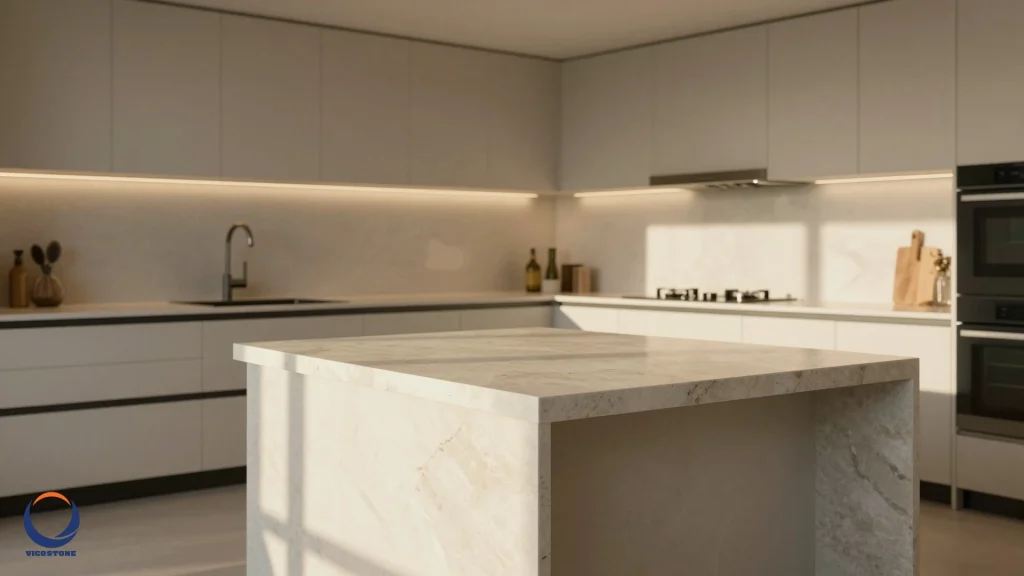
The evolving landscape of condominium development
Modern condominium buyers have elevated expectations. They seek sophisticated designs, high-quality finishes, and spaces that promise longevity and ease of maintenance. Developers must therefore choose materials that align with these desires while also managing project budgets and timelines efficiently. The focus has shifted towards materials that offer a blend of luxury, practicality, and long-term value.
Furthermore, sustainability and health considerations are becoming non-negotiable. Developers are increasingly held accountable for the environmental impact of their projects and the indoor air quality of their units. This drives the demand for materials that are not only beautiful but also responsibly sourced and safe for residents. The market demands a material that can deliver on all these fronts.
Understanding engineered stone: a modern marvel
Engineered stone is not merely a substitute for natural stone; it represents a technological advancement in surface materials. It is typically composed of 90-95% natural quartz aggregates, resins, and pigments. This composition is then compressed under high pressure and heat, resulting in a dense, non-porous slab.
Sintered stone, a specific type of engineered stone, takes this a step further. It is manufactured using advanced technology that mimics the natural formation of igneous rocks. Mineral particles are subjected to extreme heat (over 1200°C) and pressure, fusing them together without the need for resins. This process creates an incredibly durable and inert material [2]. Unlike natural stone, which is quarried directly from the earth, engineered stone offers a controlled manufacturing process, allowing for consistent quality and specific performance characteristics.
Unparalleled aesthetics and design versatility
One of the primary drivers for developers choosing engineered stone is its exceptional aesthetic appeal and flexibility. It allows for creative freedom that traditional materials often cannot match.
Replicating natural beauty with enhanced consistency
Engineered stone excels at mimicking the luxurious appearance of rare natural stones like Calacatta marble or the robust character of granite. Advanced digital printing technology enables manufacturers to create intricate veining patterns and a wide array of colors that are virtually indistinguishable from their natural counterparts [2]. This means developers can achieve high-end looks without the inherent inconsistencies, flaws, or high costs associated with natural slabs.
The consistency in color and pattern across multiple slabs is a significant advantage for large condominium projects. It ensures a uniform aesthetic throughout numerous units and common areas, simplifying design specifications and procurement. Furthermore, engineered stone is available in various finishes, including polished, matte, textured, and semi-polished, catering to diverse design preferences and architectural styles.
Broad application across condominium spaces
The versatility of engineered stone extends to its application. It can be utilized in almost any area within a condominium, from kitchens and bathrooms to living spaces and exterior facades. Developers appreciate its ability to create seamless surfaces and minimize grout lines, thanks to the availability of impressive large formats, such as 1600x3200mm slabs [2]. This contributes to a sleek, modern, and expansive feel, which is highly desirable in urban living spaces.
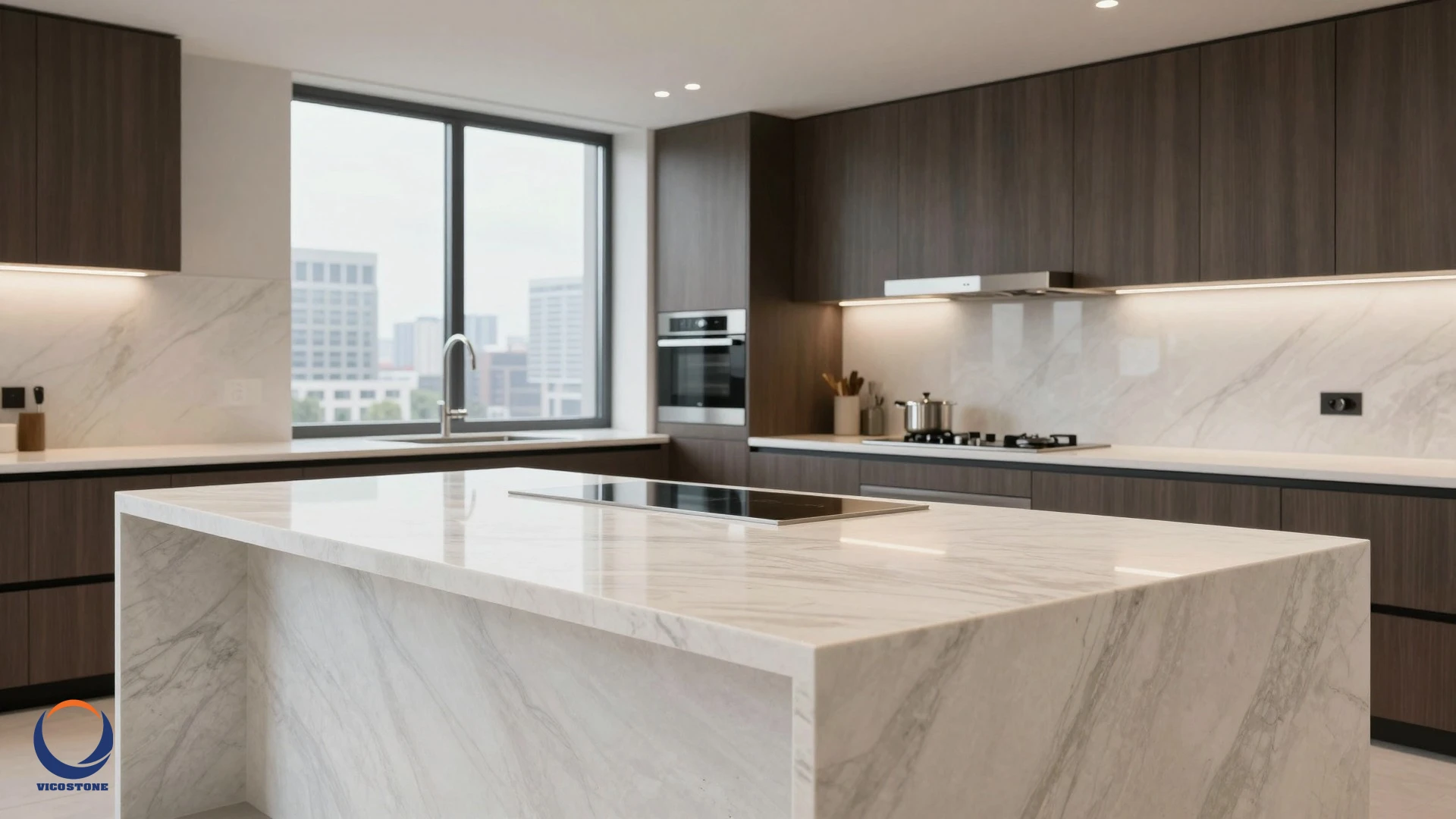
Its varying thicknesses, from as thin as 3mm to robust 20mm, allow for diverse applications. It is ideal for kitchen countertops, islands, and backsplashes, as well as bathroom vanities, shower walls, and flooring. Engineered stone can also be used for interior wall cladding, reception counters, and even custom furniture pieces, providing a cohesive design language throughout the entire building. For example, developers can create engineered stone for elegant workspace and office interiors within a condominium's shared amenities.
Durability and performance that lasts
Beyond aesthetics, engineered stone offers superior performance characteristics that translate into long-term value for both developers and homeowners. This durability is a critical factor in high-traffic condominium environments.
Superior resistance to stains, scratches, and impacts
Unlike many natural stones, engineered stone is non-porous. This inherent quality makes it highly resistant to stains from common household spills like coffee, wine, and oil. Its extremely low water absorption rate, typically less than 0.05% for sintered stone, means that liquids cannot penetrate the surface [2]. This significantly reduces the risk of bacterial growth and mold, ensuring a clean and hygienic living environment, which is paramount in residential settings.
Engineered stone also boasts high resistance to scratches, chips, and impacts, making it an ideal choice for busy kitchens and bathrooms. Its robust nature means it can withstand the rigors of daily use without showing signs of wear, thereby reducing the need for frequent maintenance or costly repairs. This translates to lower ownership costs for residents and fewer warranty claims for developers.
Color fastness and UV stability
One of the challenges with some traditional materials, especially for exterior or sun-exposed interior applications, is color fading due to UV radiation. Engineered stone, particularly sintered stone, addresses this concern effectively. The high-temperature firing process used in its manufacturing creates a special structure with absolute UV resistance [2]. This ensures that the color and patterns of the material remain vibrant and true to their original beauty for decades, even in areas with direct sunlight exposure or harsh climates. This long-term color stability is a significant advantage for maintaining the perceived value and aesthetic integrity of condominium units over time.
Economic advantages and project efficiency
For real estate developers, the financial viability and efficiency of a project are paramount. Engineered stone offers several economic benefits that contribute to better project outcomes.
Cost-effectiveness over the project lifecycle
While the initial cost of engineered stone might be comparable to or slightly higher than some natural stones, its long-term cost-effectiveness is undeniable. Its exceptional durability and low maintenance requirements mean significantly reduced expenses for cleaning, sealing, and repairs over the lifespan of the condominium. This lower total cost of ownership is an attractive selling point for potential buyers and a benefit for property management.
Furthermore, the high durability of engineered stone means fewer replacements are needed, contributing to sustainability and cost savings. This material choice supports the creation of designing luxury spaces that are easy to maintain for busy homeowners, adding to its appeal.
Streamlined procurement and consistent supply
The manufacturing process of engineered stone ensures a consistent product. Developers can order large quantities with confidence, knowing that each slab will match in color, pattern, and quality. This eliminates the variability often encountered with natural stone, which can lead to delays and additional costs if matching pieces are difficult to source. The reliability of supply and consistency of product streamline the procurement process for large-scale condominium projects.
Moreover, using large-format engineered stone can help optimize construction schedules. Larger slabs mean fewer cuts and less labor during installation, potentially reducing construction time and associated costs compared to using smaller natural stone tiles [2]. This efficiency is crucial for meeting tight project deadlines and controlling budgets.
Sustainability and health considerations
As environmental awareness grows, developers are increasingly seeking materials that align with sustainable building practices and promote healthy living environments. Engineered stone offers advantages in both these areas.
Eco-friendly production and material composition
The production of engineered stone often involves the use of recycled materials, such as reclaimed glass or mirror fragments, contributing to a circular economy. The manufacturing process can be more controlled and efficient than traditional quarrying, potentially reducing waste. While the concept of land and its intrinsic value is deeply rooted in cultures like the Māori, where 'whenua' signifies both land and placenta, emphasizing a profound, nurturing relationship rather than mere ownership [1], modern material choices like engineered stone aim to minimize impact on these natural resources. Information about land, including its environmental aspects, is crucial for responsible development [3].
Government regulations, such as Vietnam's Law on Geology and Minerals 2024, are also pushing for stricter environmental impact assessments and eco-friendly technologies in the mining and stone sectors [5]. This regulatory environment further encourages the adoption of manufactured materials that offer better environmental controls.
Promoting healthier indoor environments
The non-porous nature of engineered stone is a significant health benefit. It prevents the absorption of liquids and the proliferation of bacteria, mold, and mildew, contributing to superior indoor air quality. This is particularly important in residential settings where hygiene and health are top priorities for residents.
Furthermore, the industry is seeing a rise in silica-free engineered stone options. This innovation addresses concerns about crystalline silica exposure during fabrication, making it a safer choice for both workers and end-users. These advancements align with modern wellness trends and provide developers with materials that support healthy living spaces.
The market trend: a global shift
The increasing adoption of engineered stone is not an isolated phenomenon; it reflects a global market trend. The Vietnam stone market, for instance, is experiencing significant growth, with engineered and artificial stone projected to be the fastest-growing segment [4]. This market is expected to expand from USD 1.39 billion in 2024 to USD 2.275 billion by 2030, with engineered/artificial stone growing at a CAGR of 14.2% [4]. This growth is driven by the booming construction sector, rising demand for decorative stones, and extensive infrastructure projects [5].
This shift indicates a clear preference among developers and consumers for materials that offer a blend of aesthetic appeal, high performance, and sustainability. The focus on value-added products and premium interior surfaces is reshaping profit pools within the stone market, favoring investments in processing lines and finishing technology over quarry volume alone [4]. Companies like EON Tech are at the forefront of leveraging such market insights to deliver innovative solutions.
Conclusion
The decision to choose engineered stone for condominium projects is a strategic one, driven by a confluence of factors. Its ability to deliver stunning aesthetics, unmatched durability, and significant design flexibility makes it a frontrunner in modern material selection. Developers can achieve luxurious finishes that resonate with discerning buyers, while also ensuring long-term performance and reduced maintenance costs.
Moreover, engineered stone aligns with contemporary demands for sustainability and healthier living environments, offering solutions that are both eco-conscious and promote well-being. As the real estate market continues to evolve, the advantages of engineered stone position it as an essential material for developers aiming to create high-quality, desirable, and future-proof condominium spaces.
More information
- Tangata whenua: A New Zealand Māori term meaning 'people of the land'. It refers to a specific group with historical claims to a district or broadly to the Māori people whose ancestors have occupied the land for generations, viewing the land as a mother rather than property.
- Sintered stone: An advanced type of engineered stone created by subjecting mineral particles to extreme heat and pressure, fusing them together. This process results in an incredibly dense, non-porous, UV-resistant, and highly durable material that can replicate natural stone aesthetics.
- Whenua: A Māori word meaning both 'land' and 'placenta'. It signifies a deep, nurturing connection between people and the land, where the land is regarded as a source of life and sustenance, much like a mother.
- Engineered stone market CAGR: Compound Annual Growth Rate. This metric indicates the average annual growth rate of the engineered stone market over a specified period, reflecting its rapid expansion and increasing adoption in the construction industry.
- Non-porous surface: A material characteristic where the surface lacks pores or tiny openings, preventing the absorption of liquids, stains, and the growth of bacteria or mold. This property is a key advantage of engineered stone for hygiene and easy maintenance.