Choosing materials for your home is a significant decision. For first-time homeowners, selecting the right surfaces can feel overwhelming. The kitchen, for instance, is often called the heart of the home. Here, design truly meets function [1]. Similarly, bathrooms and other living spaces demand materials that are both beautiful and practical.
When it comes to countertops, flooring, and wall finishes, two popular options dominate the market: natural stone and engineered stone. Both offer stunning aesthetics and robust performance. However, they possess distinct characteristics. Understanding these differences is crucial for making an informed choice [1].
This guide will explore the fundamental distinctions between natural and engineered stone. We will cover their origins, appearance, durability, maintenance, cost, and environmental impact. By the end, you will have a clearer picture of which material best suits your lifestyle and design preferences.
Understanding the core distinction: origin and composition
The most fundamental difference between these materials lies in their formation. This distinction influences every other characteristic they possess [1]. Knowing where they come from helps explain why they behave so differently in your home [5].
Natural stone: nature's masterpiece
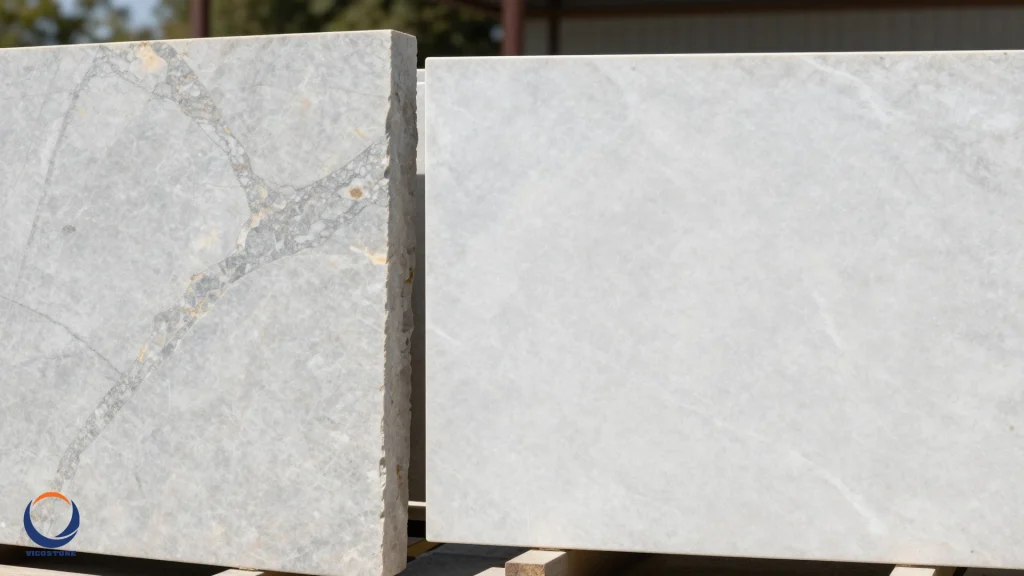
Natural stone is a product of geological processes. It forms over millions of years deep within the earth [3]. Materials like granite, marble, limestone, quartzite, and travertine are all quarried directly from the earth [4]. Large blocks are extracted, then sliced into slabs, polished, and finished. No additives are used in this process [1].
Each slab of natural stone is 100% natural. Its unique colors, veining, and textures are entirely unreplicable. The mineral composition and structural density are determined by ancient geological events [5]. This makes every piece a unique work of art.
Engineered stone: human innovation
In contrast, engineered stone is man-made or manufactured [1]. It combines natural elements with advanced technology [2]. This material typically consists of 90-95% crushed natural minerals. Quartz is a common aggregate, but feldspar and granite particles are also used [4].
These crushed minerals are then bound together. High-grade polymer resins, pigments, and other polymers make up the remaining 5-10% [1][2]. The mixture is compacted under intense heat and pressure. This creates a dense, uniform slab [5]. Quartz stone, sintered stone, and ultra-compact surfaces fall into this category [4]. EON Tech is continuously pushing the boundaries of material science in this field, developing new compositions for enhanced performance.
Appearance and visual consistency
The visual appeal of a surface material is often the primary deciding factor. Both natural and engineered stone offer beauty. However, they achieve it in very different ways [5].
Natural stone: unique and unpredictable beauty
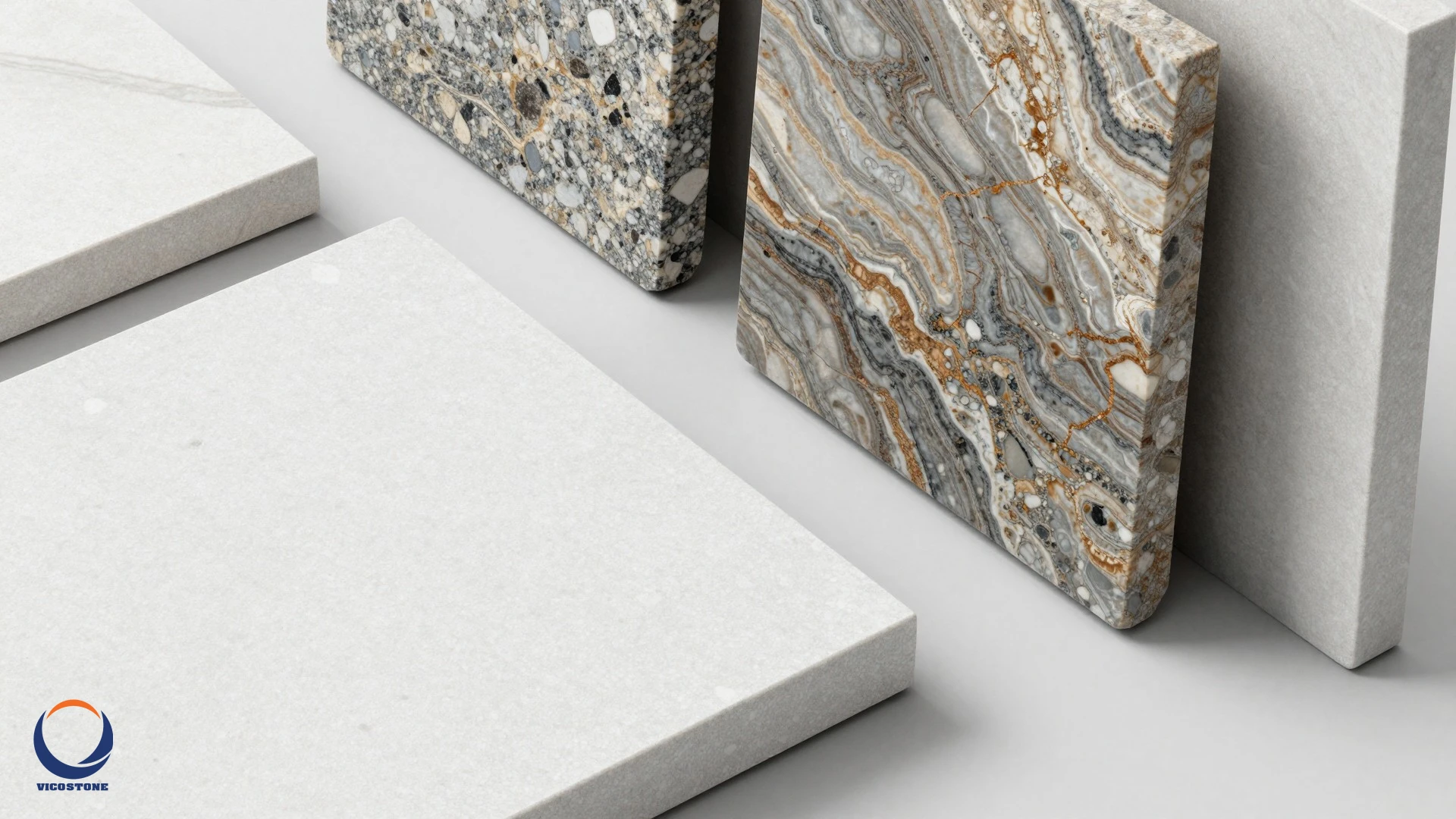
No two slabs of natural stone are ever exactly alike [1]. Whether you choose the dramatic veining of white marble or the deep mineral deposits of exotic granite, your surface will be one-of-a-kind [5]. This natural irregularity is highly prized by designers and homeowners. It offers a sense of authenticity and luxury [4].
However, this uniqueness can present challenges. For very large installations, matching patterns between slabs can be difficult. The lack of continuity might be a concern for some projects [1]. Yet, for many, this variability is precisely what makes natural stone so appealing.
Engineered stone: controlled and consistent aesthetics
Engineered stone is manufactured for control [4]. Its production process is highly regulated. This means engineered stone offers uniform color and texture [1]. It is much easier to match across large surfaces. This consistency is ideal for modern, minimalist designs. It suits homeowners seeking clean lines and minimal variation [1].
Advanced manufacturing techniques allow engineered quartz to mimic natural stone. It can replicate the complex veining of luxury marbles with impressive accuracy [5]. This provides a high-end look without the specific maintenance demands of porous natural stone. The predictability of engineered stone is a significant advantage for many projects.
Durability and strength
Both material types are known for their robustness. Yet, their resilience to daily wear and tear differs significantly. Understanding these differences helps in choosing the right material for specific applications [5].
Natural stone: varying hardness and resilience
Natural stone's durability varies widely depending on the type. For example, granite is one of the hardest natural stones. It is highly resistant to heat and scratches [1]. Quartzite also boasts exceptional hardness, often comparable to granite [3].
On the other hand, marble is softer and more porous. It can be prone to etching from acidic substances like lemon juice or wine [1]. Most natural stones are also porous. They require sealing to prevent stains and moisture absorption [1]. Natural fissures and impurities can sometimes affect localized durability [2].
Engineered stone: enhanced resistance and non-porosity
Engineered stones are designed for superior performance. Thanks to their resin binders and controlled manufacturing, they are typically non-porous [1]. This makes them highly resistant to staining, scratches, and impact [1]. The high quartz content in engineered quartz contributes to its excellent scratch resistance [2].
Their uniform structure minimizes the risk of cracking. This makes them ideal for kitchen countertops and bathroom vanities [1]. Some engineered materials, like sintered stone, even offer superior resistance to UV light. This makes them suitable for outdoor use as well [1]. The non-porous nature also means they are hygienic and safe for food contact [2].
Maintenance and care requirements
The effort required to keep your surfaces looking pristine is a significant factor. Both materials need care, but the type and frequency differ greatly.
Natural stone: sealing and specific cleaning
Natural stone often demands more specific care. Many types, especially marble, limestone, and some granites, are porous. They require regular sealing to protect against stains and moisture penetration [1]. This sealing typically needs to be reapplied periodically, sometimes annually, depending on usage and stone type.
Natural stone is sensitive to acidic substances. Spills like wine, citrus juices, or vinegar can etch the surface. This leaves dull spots. Harsh chemical cleaners can also damage the finish. Therefore, natural stone requires pH-neutral cleaners and prompt cleanup of spills. This careful maintenance preserves its natural beauty.
Engineered stone: low maintenance and easy cleaning
Engineered stone is celebrated for its low maintenance requirements. Its non-porous surface means it does not need sealing [2]. This significantly reduces the long-term effort and cost of upkeep. Cleaning is straightforward and simple.
Most spills can be wiped away with mild soap and water. Engineered stone is highly stain-resistant. It stands up well to everyday kitchen and bathroom activities. This ease of care makes it a popular choice for busy households. It offers beauty without the demanding maintenance schedule.
Cost considerations for homeowners
Budget plays a crucial role in any home renovation project. Both natural and engineered stone represent significant investments. However, their pricing structures and long-term costs can vary.
Natural stone: variable pricing and installation
The cost of natural stone can fluctuate widely. This depends on the stone type, its rarity, and its origin. Exotic marbles or granites sourced from distant quarries will naturally be more expensive. The unique patterns and limited availability contribute to their premium price point. Installation can also be more complex. This is due to the inherent variations in each slab. This may lead to higher fabrication costs. However, many consider the authenticity and timeless appeal of natural stone to be worth the investment. It can also enhance the resale value of a home.
Engineered stone: predictable pricing and long-term value
Engineered stone generally offers more predictable pricing. While high-end quartz can be comparable to some natural stones, there's often a wider range of price points. This allows for greater budget flexibility. The manufacturing process ensures consistency. This can simplify fabrication and potentially reduce installation costs. Furthermore, the low maintenance requirements of engineered stone translate into long-term savings. There is no need for regular sealing or specialized cleaning products. This makes it a cost-effective choice over the lifespan of the material.
Environmental impact and sustainability
For many first-time homeowners, sustainability is a growing concern. Both natural and engineered stone have environmental footprints. These are important to consider.
Natural stone: a natural but resource-intensive process
Natural stone is, by definition, a natural resource. It is extracted from the earth. Quarrying operations can have environmental impacts. These include habitat disruption and energy consumption. However, natural stone is incredibly durable. It can last for centuries. It can also be recycled or repurposed at the end of its life. The transportation of heavy stone slabs from global quarries contributes to its carbon footprint. Yet, its inherent authenticity and longevity are often seen as sustainable attributes [4].
Engineered stone: manufacturing and material sourcing
Engineered stone utilizes crushed natural minerals. This can include recycled content. The manufacturing process, however, requires energy. It also uses synthetic binders. Concerns can arise regarding the environmental impact of these resins. However, many manufacturers are adopting more sustainable practices. They use recycled materials and reduce energy consumption. Local production of engineered stone can also reduce transportation impacts. Furthermore, its exceptional durability and low maintenance mean a longer product lifespan. This reduces the need for frequent replacement.
Applications: where each material shines
Understanding the best use cases for each material helps homeowners make practical decisions. Both natural and engineered stone excel in different environments.
Natural stone: luxury, character, and diverse applications
Natural stone is often chosen for its unparalleled luxury and unique character [4]. Marble is prized for high-end applications. Granite is ideal for high-traffic areas due to its durability [4]. Its diverse applications extend beyond countertops. Natural stone is used for flooring, wall cladding, and even sculptures [3]. Its ability to create a singular aesthetic statement is unmatched. For those seeking authenticity and a connection to nature, natural stone is the premier choice.
Engineered stone: versatility, hygiene, and modern design
Engineered stone is incredibly versatile. It is a top choice for kitchen countertops due to its non-porous surface and stain resistance [2]. It is also perfect for bathroom vanities, offering excellent water resistance [2]. Beyond residential use, it is widely applied in commercial settings. These include reception counters, bar counters, and hotel lobbies [2]. Its consistent patterns and wide color options make it adaptable to various design styles. From minimalist to luxurious, engineered stone provides expanded possibilities for modern interiors [2]. For large surfaces, engineered stone minimizes visible joints, creating a seamless and sophisticated look such as in flooring and staircases.
Making your decision: which one is right for you?
The choice between natural and engineered stone is deeply personal. It depends on your priorities, lifestyle, and aesthetic vision. There is no single "better" option. Instead, there is the right choice for your specific project.
Choose natural stone if:
- You value unique, unrepeatable patterns and natural authenticity [1].
- You appreciate the depth and character that only nature can create [4].
- You are prepared for the specific maintenance requirements, such as regular sealing [1].
- You seek a timeless material that develops a unique patina over time.
- Your budget allows for potential variations in cost and installation complexity.
Choose engineered stone if:
- You prioritize consistency in color and pattern across large surfaces [1].
- You desire a low-maintenance material that is highly resistant to stains and scratches [2].
- You prefer a non-porous, hygienic surface, especially for kitchen countertops [2].
- You are looking for a wide range of predictable designs, including those that mimic natural stone [5].
- Your lifestyle demands durability and ease of care without compromise.
Consider your daily habits. Think about how much time you are willing to dedicate to maintenance. Reflect on the aesthetic you wish to achieve. For example, if you are interested in modern surfaces that redefine scale, you might explore options like super jumbo slabs. Ultimately, your decision should align with your personal needs and long-term vision for your home. You can find more detailed comparisons and insights into these materials by exploring resources like this comprehensive guide on natural versus engineered stone.
Conclusion
Both natural stone and engineered stone are exceptional choices for first-time homeowners. They offer beauty, durability, and value. The key lies in understanding their fundamental differences [1]. Natural stone provides unmatched authenticity and unique character. Engineered stone offers predictable consistency and superior low-maintenance performance. The top differences between natural stone and engineered stone truly highlight their distinct advantages.
By carefully weighing these factors, you can confidently select the material. This choice will not only enhance your home's aesthetic but also suit your practical needs for years to come. Do not hesitate to consult with professionals. They can provide tailored advice for your specific project. For those interested in the future of surface design, exploring topics like silica-free engineered stone might offer additional insights.
More information
- Natural stone: Material quarried directly from the earth, such as granite, marble, or quartzite. It is 100% natural, with unique patterns and variations formed over millions of years by geological processes.
- Engineered stone: A man-made composite material typically consisting of 90-95% crushed natural minerals (like quartz) bound together with polymer resins and pigments. It offers consistent patterns and enhanced durability.
- Porosity: The measure of void spaces in a material. Porous materials, like many natural stones, can absorb liquids and require sealing to prevent staining. Non-porous materials, like engineered stone, resist liquid absorption.
- Etching: Damage to a stone surface, typically marble, caused by acidic substances. It results in dull spots or surface corrosion, altering the stone's finish. Engineered stone is generally more resistant to etching.
- Sintered stone: A type of engineered stone made from natural minerals compacted under extreme heat and pressure, without resins. It offers exceptional durability, scratch, heat, and UV resistance, often used for demanding applications.