Choosing the perfect surface for your home is a significant decision. It impacts not only the aesthetics but also the functionality and longevity of your space. Among the most popular contenders, engineered stone and natural marble stand out, each offering distinct advantages and characteristics [2].
Many homeowners find themselves at a crossroads, weighing the timeless elegance of marble against the modern practicality of engineered stone. Both materials promise beauty and functionality, yet they deliver in remarkably different ways [2]. This comprehensive guide will help you navigate this choice, ensuring your surfaces align perfectly with your lifestyle, design preferences, and practical needs for years to come.
We will delve into their composition, performance under daily use, maintenance requirements, and overall cost. By understanding these key differences, you can confidently select the ideal material for your kitchen, bathroom, or any other area in your home.
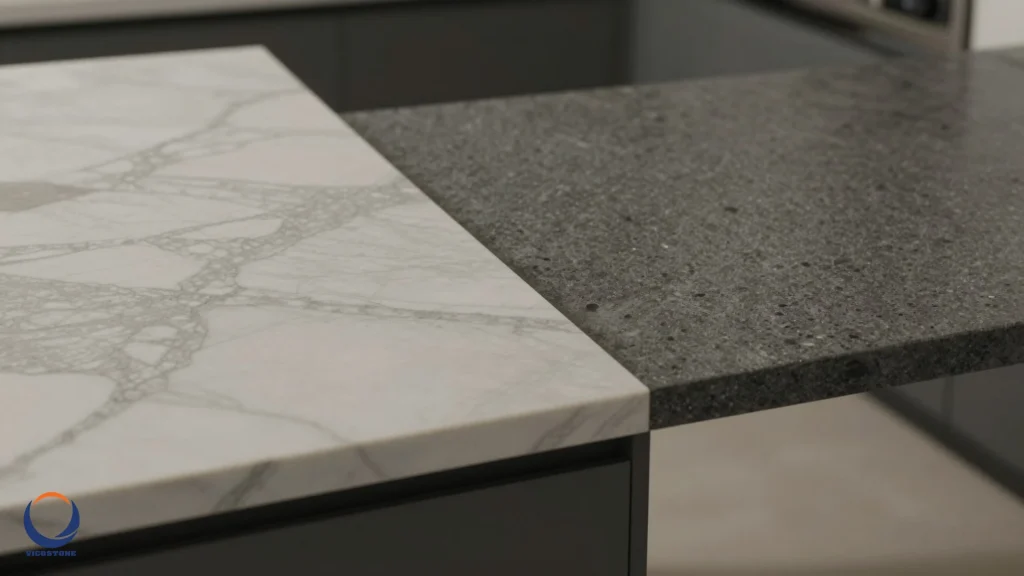
Understanding the nature of the materials
The fundamental differences between engineered stone and natural marble stem from their origins. One is a product of millions of years of geological processes, while the other is a testament to human ingenuity.
Natural marble: earth's timeless artwork
Natural marble is a metamorphic rock, formed over millions of years when limestone undergoes intense heat and pressure deep within the earth [2]. This geological transformation creates its distinctive swirls and veins, which are mineral impurities like clay, silt, and iron oxides [2]. Every slab of marble tells a unique geological story, making each piece an unparalleled work of art [2]. No two marble slabs are ever identical, adding to its charm and allure [1].
Its natural formation means it's quarried directly from the earth and processed mechanically, without chemical alteration [5]. This authenticity is a core part of its appeal. Marble has been a symbol of luxury and sophistication for centuries, gracing iconic architecture and sculptures worldwide.
Engineered stone: human ingenuity meets natural beauty
Engineered stone, often referred to as quartz surfaces, is a manufactured product. It typically combines about 90-95% crushed natural quartz minerals or other aggregates with 5-10% polymer resins and pigments [2]. This mixture is then molded into slabs under intense heat and pressure, creating a durable and consistent surface [2].
The controlled manufacturing process allows for remarkable consistency in patterns, colors, and textures [1]. This makes it ideal for projects requiring multiple slabs to match perfectly. Engineered stone offers a uniform appearance that many homeowners prefer for a clean, modern aesthetic [4].
Head-to-head comparison of key features
When evaluating these two popular materials, several factors come into play. Understanding these differences is crucial for making an informed decision that suits your specific needs.
Appearance and design variety
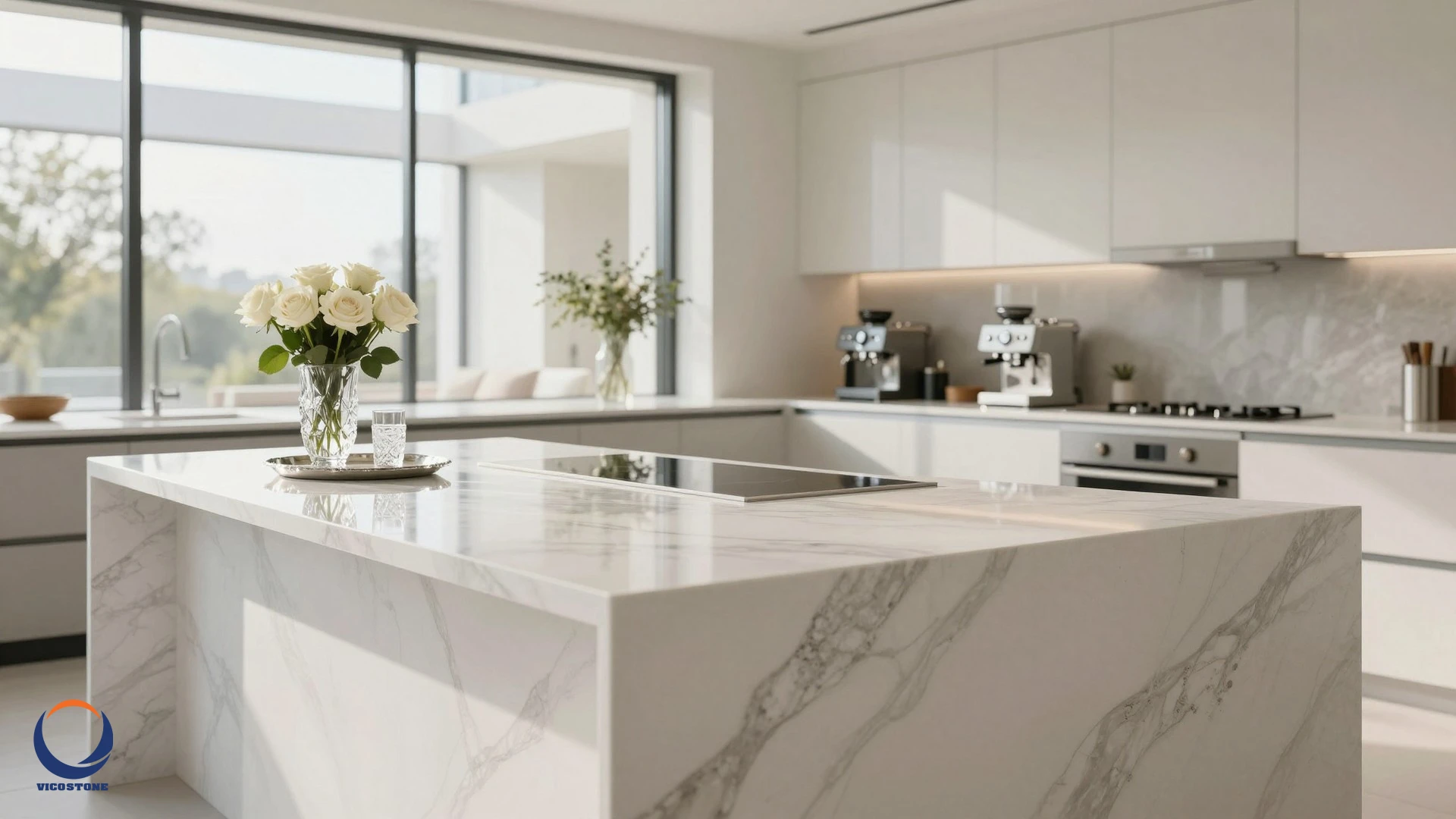
The aesthetic appeal is often the first consideration for many. Marble is celebrated for its unique veining and natural variations, offering an organic artistry that cannot be replicated [2]. Each slab possesses a distinct personality, making it a highly sought-after material for luxurious spaces [4]. Its translucent quality can also add depth to its appearance.
Engineered stone, conversely, provides consistent patterning and uniform coloration [2]. This consistency is a major advantage for those seeking a predictable look across large installations. While it can mimic natural stone, it lacks the inherent organic variations of marble [4]. However, the wide range of available colors and patterns in engineered stone allows for customized finishes, enhancing versatility for contemporary designs [3].
Durability and strength
Durability is a critical factor, especially for high-traffic areas like kitchens. Engineered stone offers superior durability, being highly resistant to scratches, stains, and impact [3]. Its non-porous nature makes it highly resistant to spills from wine, coffee, or oil, preventing permanent stains [1]. It is much tougher than marble, making it a low-maintenance option [4].
Marble, being a softer stone, is more prone to scratches and etching [4]. Acidic substances like lemon juice or vinegar can easily etch its surface [1]. While it offers moderate durability, it is more vulnerable to damage over time [3]. For long-lasting, low-maintenance surfaces, engineered stone provides a more resilient alternative [3].
Maintenance and cleaning requirements
The level of care required varies significantly between the two materials. Engineered stone is renowned for its low maintenance. Its non-porous surface means it does not require periodic sealing, saving both time and money [1]. A simple wipe with soap and water is usually sufficient to keep it looking new [1]. This non-porous quality also prevents the harboring of bacteria or mold, making it ideal for kitchens [2].
Marble, conversely, demands more attention. Its porous nature necessitates regular sealing to guard against stains and water damage [1]. Spills, especially acidic ones, need immediate cleanup to prevent etching [2]. Cleaning marble requires pH-neutral solutions, as harsh cleaners can dull its surface [1]. If you prefer a low-maintenance lifestyle, engineered stone is ideal [1].
Heat resistance
Heat tolerance is another important consideration, particularly for kitchen countertops. Marble generally handles heat better than engineered stone [1]. It performs well around stovetops and fireplaces, though trivets are still recommended to prevent thermal shock [2]. Its natural formation gives it excellent heat tolerance [2].
Engineered stone, while tough, is sensitive to extreme heat. The resins used in its composition can discolor or scorch if hot pots are placed directly on the surface [2]. Therefore, using trivets is essential to protect engineered stone countertops from heat damage [1].
Cost considerations
Budget often plays a significant role in renovation decisions. Both engineered stone and marble cover a range of price points, but generally, marble tends to be more expensive due to its natural origins and unique qualities [4]. The rarity and specific veining patterns can significantly influence marble's price.
Engineered stone is typically more affordable, making it a cost-effective alternative [4]. While initial installation costs might be similar, the lower maintenance requirements of engineered stone can also contribute to lower long-term upkeep expenses. It's important to consider both the upfront cost and the ongoing maintenance when budgeting for your surfaces.
Environmental impact
For environmentally conscious consumers, the impact of material choice is increasingly relevant. As a natural stone, marble is considered eco-friendly, though its extraction can be energy-intensive [4]. The quarrying process and transportation contribute to its carbon footprint. However, the material itself is a natural resource.
Engineered stone's environmental impact is more complex. Its production involves resins and can be energy-intensive [4]. However, some varieties incorporate recycled materials, offering a more sustainable option [4]. The durability and long lifespan of engineered stone can also contribute to sustainability by reducing the need for frequent replacement. Furthermore, advancements in manufacturing, like those seen with EON Tech, are continually striving to reduce the carbon footprint of engineered materials.
Best uses and applications
Considering where each material performs best can guide your decision. Engineered stone's superior durability and low maintenance make it an excellent choice for high-traffic areas. Kitchen countertops, bathroom vanities, and commercial spaces benefit from its resilience to scratches and stains [1]. Its non-porous surface is also ideal for areas requiring high hygiene standards.
Marble, with its unmatched aesthetic, is perfect for spaces where its beauty can be admired and protected. It is a classic choice for luxurious interiors [1]. Bathrooms, fireplace surrounds, decorative accents, and less-used kitchen islands are common applications where marble can maintain its beauty for years [1]. While it can be used in kitchens, its maintenance needs require a dedicated approach.
Making the right choice for your lifestyle
Your decision ultimately hinges on what you prioritize most in your living space. There isn't a universally "better" material; there's only the best fit for you.
For the low-maintenance homeowner
If you lead a busy lifestyle and prefer surfaces that require minimal upkeep, engineered stone is likely your ideal choice. Its resistance to stains, scratches, and the absence of sealing requirements make it incredibly practical. You can enjoy beautiful surfaces without the constant worry of damage or extensive cleaning routines.
For the luxury seeker and design enthusiast
If you crave unparalleled natural beauty, unique artistry, and a timeless aesthetic, marble is the way to go. Its luxurious appeal and the fact that no two slabs are alike offer a level of sophistication that engineered stone, despite its mimicry, cannot fully replicate. The patina it develops over time tells a story, adding character to your home [2]. For those who appreciate authenticity and are willing to invest in its care, marble is an unmatched statement.
Considering budget and long-term value
While engineered stone often has a lower upfront cost, consider the long-term value. Marble, despite its higher initial price and maintenance, can significantly increase a home's resale value due to its luxury status. Engineered stone offers excellent durability and longevity with minimal care, providing great value over its lifespan. For more insights into durable materials, you might explore engineered stone vs. marble for countertops.
Expert tips for buyers
Before making your final decision, consider these expert tips. Always obtain samples of both materials to see how they look in your home's lighting. Test their resistance to common spills and everyday wear if possible.
Think about the specific area where the surface will be installed. A high-traffic kitchen counter might benefit more from engineered stone, while a guest bathroom vanity could showcase marble's elegance without excessive wear. It's also wise to consult with experienced fabricators and installers who can provide insights into the practicalities of each material.
Finally, factor in your tolerance for maintenance. If the thought of regular sealing and immediate spill cleanup stresses you, engineered stone will offer more peace of mind. If you view maintenance as part of preserving a natural masterpiece, marble will reward you with its enduring beauty. Understanding the real difference between marble slabs and engineered stone is key.
Conclusion
The choice between engineered stone and marble is a deeply personal one. Both materials offer compelling advantages, catering to different priorities and lifestyles. Engineered stone excels in durability, consistency, and low maintenance, making it a pragmatic choice for busy households and modern aesthetics. Natural marble, on the other hand, provides unmatched elegance, unique character, and a timeless appeal for those who value authenticity and are prepared for its specific care requirements.
By carefully weighing the factors of appearance, durability, maintenance, heat resistance, cost, and environmental impact, you can confidently select the surface that not only enhances your home's beauty but also perfectly complements your way of life. For further reading on surface material choices, consider this in-depth comparison of performance or explore what makes engineered stone different from natural stone?.
More information
- Non-porous: A material quality indicating that it has no pores or openings, preventing liquids and bacteria from penetrating its surface. This characteristic makes a material highly stain-resistant and hygienic, often eliminating the need for sealing.
- Etching: Surface damage that occurs when acidic substances come into contact with certain materials, particularly natural stones like marble. It appears as dull spots or marks where the acid has corroded the stone's finish, altering its texture.
- Patina: A soft, lustrous surface appearance that develops on certain materials, especially natural stone or metal, over time due to age, wear, and exposure. For marble, it can include subtle changes in color or texture that tell a story of its use.
- Polymer resins: Synthetic or natural organic compounds that are typically viscous liquids or solids capable of being molded. In engineered stone, they act as a binding agent, holding crushed minerals together to form a solid, durable slab.
- Metamorphic rock: A type of rock that has been changed by extreme heat, pressure, or chemical processes. Marble is a metamorphic rock formed from limestone, undergoing a transformation that alters its mineral structure and appearance.