Many homeowners and designers are drawn to the undeniable allure of dark cabinetry. These deep tones bring depth, structure, and a strong sense of intention to any space, particularly the kitchen, which is often considered the heart of the home [1]. However, some might hesitate, fearing that dark colors could make a room feel small or gloomy. With the right design approach, dark cabinetry can instead create a sophisticated, warm, and incredibly inviting atmosphere [2].
The key to unlocking this potential lies in thoughtful material pairing. Engineered stone, with its remarkable durability, versatility, and aesthetic range, offers an ideal counterpart to the richness of dark cabinets. This article will guide you through the principles and practical tips for seamlessly integrating dark cabinetry with engineered stone, ensuring a harmonious and stunning result.
Achieving a harmonious design involves a delicate balance between aesthetics and practicality [3]. By combining the inherent beauty of engineered stone with the functional design of dark cabinets, you can create a kitchen that is not only visually appealing but also highly functional and enduring.
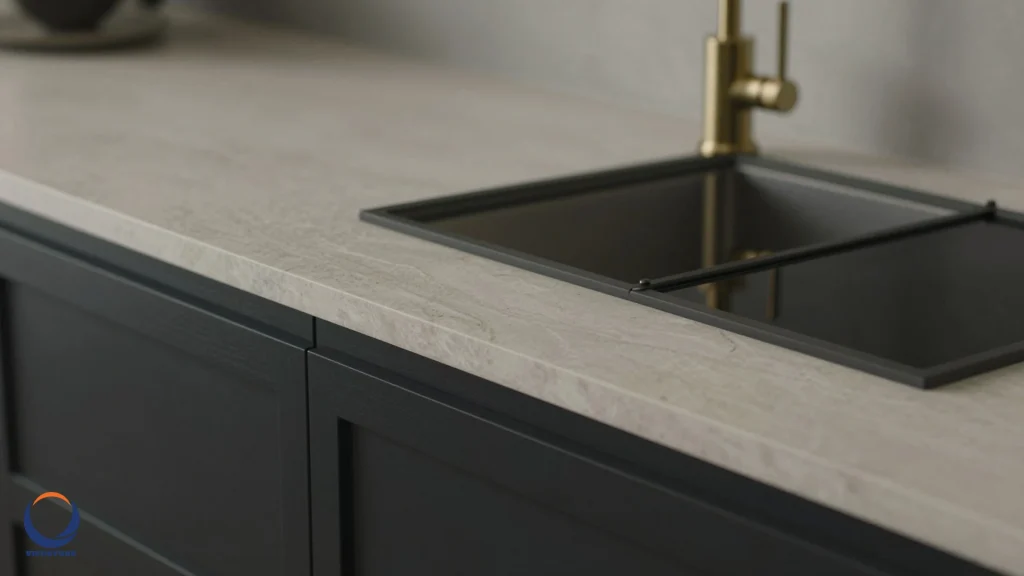
The enduring appeal of dark cabinetry
Dark cabinetry is a powerful design choice. It anchors a space, providing a strong visual foundation. Whether you prefer modern layouts or classic craftsmanship, dark wood adapts beautifully to various design directions [1]. Its ability to add richness makes it a favorite for those seeking a luxurious and refined interior.
Beyond aesthetics, dark cabinets offer practical benefits. They can conceal minor scuffs and marks more effectively than lighter alternatives. Furthermore, they provide a dramatic backdrop that allows other design elements, such as hardware or lighting, to truly pop. This creates a sense of drama and sophistication that is hard to achieve with lighter palettes.
Why engineered stone is the perfect partner
Engineered stone, such as quartz, has revolutionized surface design. It combines the beauty of natural stone with enhanced performance characteristics. Unlike natural stones like marble or granite, engineered stone is non-porous, making it highly resistant to stains, scratches, and bacteria. This makes it an ideal choice for busy kitchens.
The manufacturing process allows for a vast array of colors, patterns, and finishes, from pristine whites and subtle grays to dramatic blacks and vibrant hues. This versatility means you can find an engineered stone that perfectly complements any shade or style of dark cabinetry. Its consistent quality and predictable appearance also make it easier to plan and execute a cohesive design.
Foundational principles for harmonious pairing
Creating a successful pairing between dark cabinetry and engineered stone begins with understanding core design principles. These guidelines ensure your choices work together seamlessly.
Color coordination: the foundation of harmony
Color is paramount when integrating stone and cabinetry [3]. You must consider how their colors will interact. The goal is to ensure they complement each other, avoiding any clashes.
- Monochromatic schemes: For a serene and cohesive look, choose an engineered stone with subtle veining or texture. This adds depth without overwhelming the cabinets. Pairing dark gray cabinets with a soft gray engineered quartz, for instance, creates a sophisticated, unified feel [3].
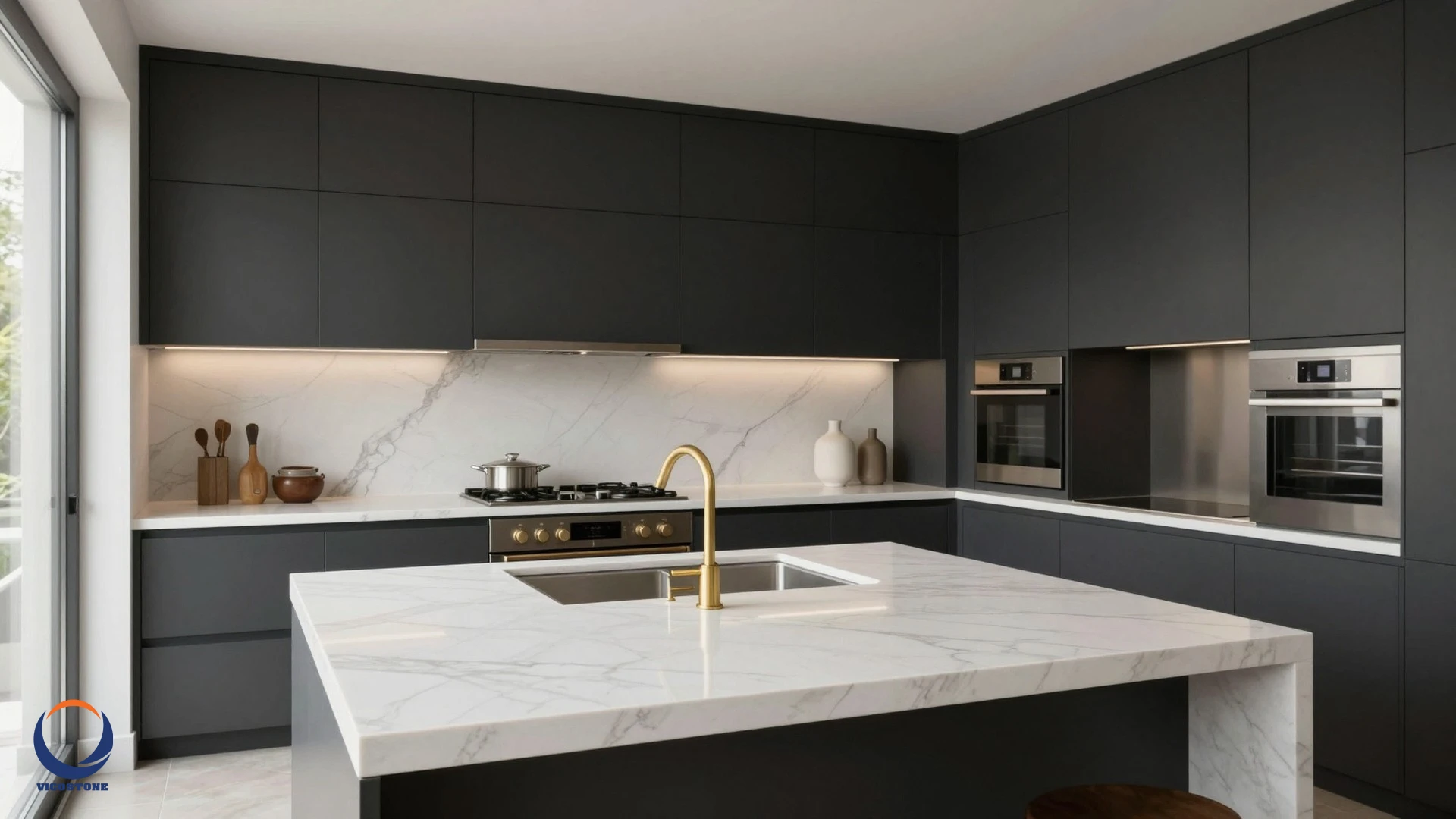
- Contrasting palettes: A more dynamic look can be achieved with contrasting colors. Dark cabinets paired with light engineered stone countertops create a striking visual impact. This contrast adds character and interest, preventing the space from feeling too heavy [3].
Texture and finish: adding depth and dimension
Texture plays a crucial role in creating a harmonious design [3]. The textures of your stone and cabinetry should complement each other, adding visual depth.
- Matte versus polished: A polished engineered stone surface offers a sleek, reflective quality. When paired with matte-finished dark cabinets, it creates an elegant contrast. This adds visual interest without overwhelming the space. Conversely, a honed or leathered engineered stone finish combined with high-gloss dark cabinets can create a modern, sophisticated aesthetic [3].
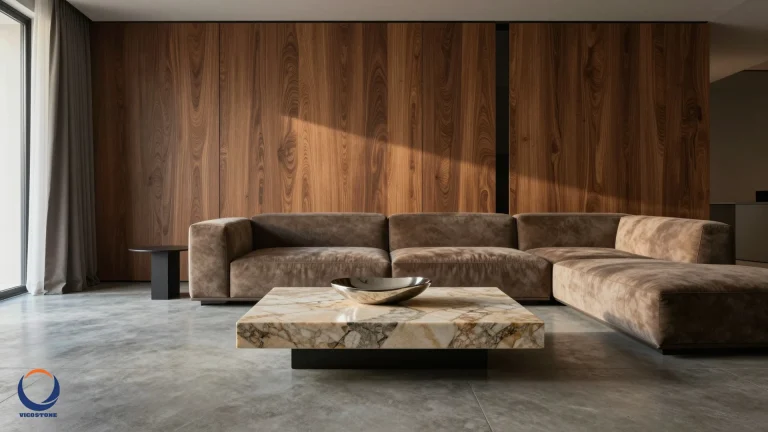
- Smooth versus textured: Engineered stone typically offers a smooth, uniform surface. This pairs beautifully with dark cabinets that feature natural wood grain, such as walnut or dark oak, adding warmth and organic texture [2]. Similarly, dark cabinets with subtle textured panels can create a clean, modern profile [1].
The critical role of lighting
Lighting is essential, especially in spaces with dark elements. It prevents the room from feeling too enclosed or gloomy [2]. Proper lighting enhances both the stone and cabinetry, bringing out their best qualities.
- Natural light: Maximize natural light wherever possible. Large windows or skylights can soften dark cabinetry, making the space feel more open and inviting [1].
- Layered artificial lighting: Incorporate multiple light sources. Under-cabinet lighting highlights beautiful engineered stone countertops, while pendant lights can create a focal point above an island [4]. Dimmable LED lights allow you to set the mood for different occasions.
Strategic pairings: concepts and ideas
Let's explore specific ways to pair dark cabinetry with engineered stone, drawing inspiration from successful designs.
Classic contrast: dark cabinets with light engineered stone
This is a timeless and highly effective combination. Matte black cabinetry paired with light granite or quartz countertops strikes a perfect contrast [2]. The light engineered stone reflects light, preventing the room from feeling too closed in. A light quartz island provides strong contrast against deep wood cabinetry, creating a refined and practical workspace [1].
This pairing offers balance and brightness. It ensures that even with dark cabinets, the kitchen remains airy and welcoming. Consider white, off-white, or light gray engineered quartz for this approach. The subtle veining often found in engineered stone can mimic natural marble, adding a touch of luxury.
Rich and moody: dark cabinets with dark engineered stone
For those seeking a dramatic and immersive aesthetic, pairing dark cabinetry with dark engineered stone creates a powerful statement. Deep wood cabinetry combined with a dramatic dark engineered stone delivers a layered, upscale aesthetic [1]. This combination adds significant depth and a strong visual presence.
For example, walnut or dark oak cabinets can be fused with deep slate or soapstone-look engineered quartz countertops [2]. This combination adds natural warmth and depth, ideal for open kitchens where materials become part of the visual story. An architectural dark wood kitchen can be elevated by a dramatic black engineered stone island [1]. To prevent this from feeling too overwhelming, ensure ample lighting and perhaps incorporate reflective surfaces or lighter accents elsewhere.
Adding warmth and character
Even with dark cabinetry and stone, you can infuse warmth and personality into the space.
- Wood grain and engineered stone: The natural grain of dark wood cabinets adds warmth and character. When combined with the consistent finish of engineered stone, it creates a balanced design.
- Metallic accents: Gold, brass, or matte black hardware instantly elevates dark cabinets [2]. The subtle shine provides contrast without overpowering the design, creating a sophisticated and timeless look [2]. Matte black accents and sculptural lighting also bring structure and contrast [1].
- Color accents: Don't shy away from introducing pops of color. Burnt orange cabinetry paired with rich dark wood surfaces creates a bold yet refined concept [1]. Deep green cabinetry introduces an earthy elegance, especially when paired with brass or gold fixtures [2].
Design considerations for optimal results
Beyond the primary pairing, several other elements contribute to a cohesive design.
Space and scale
Many homeowners worry dark tones will make a space feel smaller. While this can be true, strategic design can mitigate it. In compact kitchens, balancing dark cabinetry with pale countertops and natural light can make the space feel approachable and functional [1]. Open shelving and thoughtful lighting also keep smaller spaces feeling open without sacrificing storage [1].
For larger kitchens, dark cabinetry and engineered stone can create a grand, enveloping feel. Consider using dark feature walls or textured wallpaper to add depth and drama, especially in smaller areas where a single accent wall can add sophistication [2].
Functionality and workflow
The integration of engineered stone and cabinetry should enhance the kitchen’s functionality [3]. A well-designed kitchen considers the workflow, ensuring efficient movement. The classic "work triangle" (sink, stove, refrigerator) should be optimized, with countertops and storage arranged to support easy access [3].
Engineered stone's durability makes it perfect for high-traffic areas like prep zones. Dark cabinetry can house integrated appliances, creating a streamlined and intentional design [1]. This thoughtful planning ensures beauty meets practicality.
Backsplashes and islands
These elements offer opportunities to reinforce your design choices or introduce complementary features.
- Statement islands: Make your island the centerpiece with a dark engineered stone surface. A dark island anchors the space and becomes a natural gathering point [2]. Alternatively, a light engineered stone island provides contrast against dark cabinetry [1].
- Backsplashes: A moody engineered stone backsplash, perhaps mimicking dark marble, instantly adds a luxurious touch. The natural veining creates visual interest, turning the backsplash into a design statement [2].
Flooring considerations
The floor completes the visual story. A dark tile floor, such as slate or charcoal porcelain, pairs beautifully with matte dark cabinetry [2]. This combination is durable and creates a refined modern aesthetic. If you prefer a lighter feel, consider dark floors with light upper cabinets, maintaining drama while keeping the room airy [2].
Tips for homeowners and designers
To ensure your project is a success, keep these practical tips in mind.
- Sample materials together: Always sample your engineered stone and cabinetry together. View them in natural light to see how they complement each other under various conditions [4]. This crucial step helps prevent costly mistakes.
- Consider the overall aesthetic: Think about the style you want to achieve. Dark cabinetry and engineered stone can fit into modern, classic, contemporary, or even Scandinavian-inspired designs [1]. The choice of hardware, lighting, and accessories will further define the style.
- Professional guidance: For complex designs or significant renovations, consider consulting an interior designer. Their expertise can help you navigate choices and ensure a cohesive outcome. Platforms like EON Tech can provide valuable resources for visualizing different material combinations.
- Durability and maintenance: Engineered stone is celebrated for its low maintenance. It requires no sealing and is easy to clean, making it a practical choice for busy households. This aligns perfectly with the desire for a beautiful yet functional space. You can learn more about why durability is essential in family kitchens.
- Accessorize thoughtfully: Elegant hardware on cabinets, such as brushed nickel or matte black handles, can enhance the overall aesthetic [4]. Incorporating natural elements like plants can also soften hard surfaces and add life to your design.
Conclusion
Pairing dark cabinetry with engineered stone is a design choice that promises sophistication, depth, and lasting style. By understanding the interplay of color, texture, and light, and by carefully considering your specific space and desired aesthetic, you can create a kitchen that is both stunning and highly functional. Whether you opt for bold contrasts or rich, moody tones, the combination of dark cabinets and versatile engineered stone offers endless possibilities for crafting a truly exceptional home. Embrace the drama and elegance, and transform your kitchen into a captivating heart of your home. For more insights into material choices, explore why texture and finish define modern interior experiences.
More Information
- Dark Wood Kitchens: Kitchen designs featuring cabinetry made from dark-toned wood, often chosen for their ability to add depth, structure, and a sense of luxury to a space. They adapt well to various design styles, from modern to classic.
- Engineered Stone: A man-made composite material typically made from crushed quartz, resins, and pigments. It is highly durable, non-porous, stain-resistant, and low-maintenance, making it a popular choice for countertops and other surfaces.
- Color Coordination: The process of selecting and arranging colors in a design to create a visually pleasing and harmonious effect. This involves considering complementary, contrasting, or monochromatic palettes to achieve a desired mood or style.
- Texture and Finish: The tactile quality and surface appearance of materials. Texture can be smooth, rough, matte, or polished, and plays a significant role in adding depth, dimension, and visual interest to an interior design scheme.
- Work Triangle: A classic kitchen design principle that refers to the triangular layout of the three main work areas: the refrigerator, the sink, and the stove. Optimizing this layout enhances efficiency and workflow in the kitchen.