The kitchen is often called the heart of the home. It is a place for cooking, gathering, and sharing precious moments [1]. Many homeowners desire a space that is both functional and beautiful. For fans of Japandi and minimal interiors, this means finding a balance. They seek simplicity without sacrificing comfort or elegance.
Minimalist design, at its core, focuses on reducing elements to their essentials [5]. However, this does not mean stark or cold. Modern minimalist kitchens can radiate warmth and luxury. They achieve this through thoughtful design choices. This article explores how to create such an inviting and sophisticated space.
Understanding warm minimalism
Minimalism emerged as an art movement in the post-World War II era [5]. It emphasizes simplicity and functionality. In interior design, it means clean lines, uncluttered spaces, and a focus on essential items. Yet, the perception of minimalism can sometimes be sterile. This is where "warm minimalism" comes in. It blends the core principles of minimalism with elements that evoke comfort and coziness.
Warm minimalism is about creating spaces that feel inviting. It uses textures, colors, and lighting to soften the edges. The goal is a serene environment. This approach allows for both peace and emotional connection [2]. It avoids excessive ornamentation. Instead, it highlights the beauty of materials and forms.
The foundation: natural materials
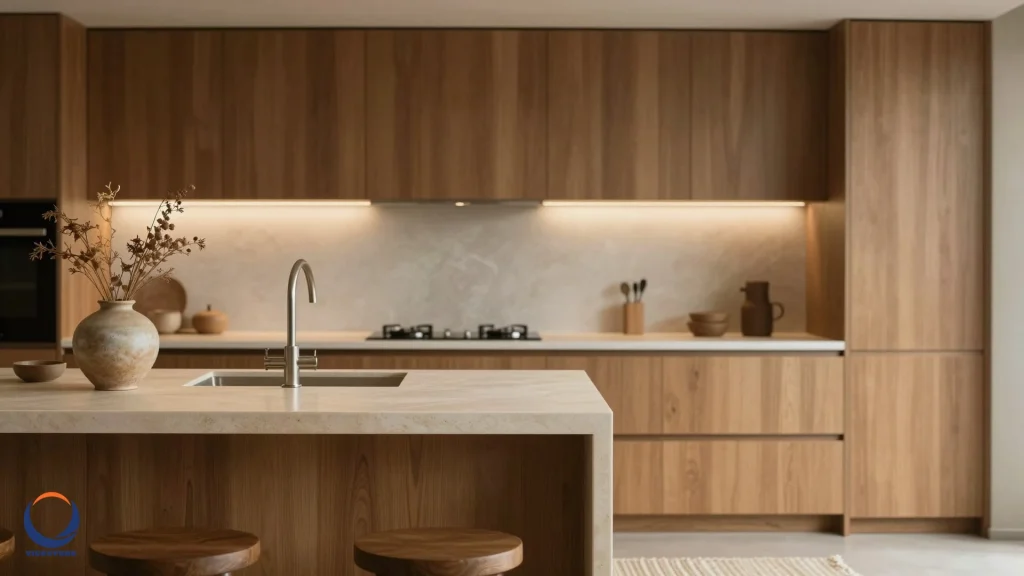
Natural materials are crucial for a warm minimalist kitchen. They introduce organic textures and subtle variations. These elements prevent a space from feeling too sterile. Wood is perhaps the most important material. It brings inherent warmth and character. Consider using wood for cabinetry, flooring, or open shelving. Light-toned woods like maple or birch offer a Scandinavian feel. Darker woods like walnut add a touch of drama and richness.
Stone is another excellent choice. It provides durability and a luxurious touch. Quartz countertops, for instance, offer a sleek, low-maintenance surface. They come in various patterns and colors. These can mimic natural stone beautifully. Engineered stone is a popular choice for its quality and longevity [1]. Materials like bamboo also contribute to a clean aesthetic and connection with nature [2]. Incorporating these natural elements creates a timeless space. It is both modern and respectful of the environment.
Choosing a calming color palette
The right color scheme is vital for a warm minimalist kitchen. Neutral colors form the backbone of this style [2]. Think whites, greys, and earthy tones. These colors create a sense of calm and spaciousness. However, to add warmth, choose neutrals with subtle undertones. For example, opt for off-white instead of stark white. Consider greys with a hint of beige or green. These shades can reflect the natural surroundings [2].
You can also introduce muted blues or soft greens. These colors evoke tranquility. They provide a gentle contrast without overwhelming the minimalist aesthetic. The key is to keep the palette cohesive. Avoid too many competing colors. A limited color scheme enhances the feeling of serenity and balance.
Mastering lighting for ambiance
Lighting plays a significant role in making a kitchen feel warm. Maximizing natural light is always a priority [1]. Large windows or skylights can flood the space with brightness. They create an airy and inviting atmosphere. Sheer curtains or blinds can diffuse harsh sunlight. This creates a softer glow. For artificial lighting, layering is essential. Combine different types of light sources for flexibility.
Warm-toned LED lights are ideal. They emit a cozy, yellow hue. Install dimmers on all light fixtures. This allows you to adjust the mood. Consider recessed lighting for general illumination. Add under-cabinet lighting for task areas. Pendant lights over an island can serve as a focal point. They also provide ambient light. Decorative lamps or sconces can introduce soft, atmospheric glow. This creates a welcoming environment.
Thoughtful layout and functionality
A minimalist kitchen thrives on an efficient and functional layout [2]. Every item should have its place. This helps eliminate clutter [3]. Open-plan layouts are popular. They allow for free-flowing movement and multifunctional use. Consider the "work triangle" concept. This places the sink, refrigerator, and stove in an accessible arrangement. It optimizes workflow. Good design ensures enough space for food preparation [1].
Clever storage solutions are paramount. Integrated appliances create a seamless look. Custom cabinetry can hide away small appliances. Deep drawers and pull-out pantries keep things organized. Floating shelves can display a few curated items. These elements combine to create a highly practical space. It remains visually calm and uncluttered.
High-quality materials and finishes
Luxury in a minimalist kitchen often comes from the quality of materials. Investing in durable, high-end finishes elevates the space. This is where "less is more" truly applies. Choose materials that are easy to clean and maintain [1]. For instance, quartz countertops are non-porous and stain-resistant. They offer both beauty and practicality. High-quality hardware for cabinets and drawers also makes a difference. Opt for subtle, sleek designs.
Consider the tactile experience of your surfaces. A smooth, matte finish on cabinets can feel sophisticated. A polished stone surface adds a touch of glamour. The longevity of these materials ensures lasting beauty. This prevents the need for frequent replacements. Such an approach aligns with sustainable living practices. It also contributes to the perceived luxury of the space. The advancements in manufacturing, such as those seen with EON Tech, allow for incredible durability and aesthetic versatility in modern materials.
Curated details and subtle luxury
In a minimalist kitchen, every detail counts. Since there is less to look at, each item becomes a focal point. This is an opportunity to introduce luxury through careful curation. Choose a few key decorative accessories. A beautiful ceramic vase or a unique piece of art can add character [1]. Fresh greenery or a small herb garden brings life to the space. These items should enhance, not clutter, the environment.
Think about the smaller elements too. High-quality linens, a designer faucet, or artisanal cutting boards. These items add subtle touches of luxury. They speak to discerning taste. The goal is to create visual interest without overwhelming the senses. Each piece should serve a purpose or bring joy. This approach ensures that the kitchen feels both warm and intentionally designed.
Seamless integration and hidden storage
A hallmark of luxurious minimalist design is seamless integration. Appliances blend into the cabinetry. This creates an uninterrupted flow. Panel-ready refrigerators and dishwashers disappear behind cabinet doors. Induction cooktops offer a sleek, flat surface. Downdraft ventilation systems can eliminate the need for bulky range hoods. This creates a clean and streamlined appearance. The kitchen feels more like a living space.
Hidden storage is another key component. Pantry doors can be flush with the wall. Drawers within drawers maximize space. This keeps countertops clear and tidy. It reduces visual noise. When everything has its designated spot, the kitchen maintains its serene aesthetic. This thoughtful planning contributes significantly to both functionality and luxury. It ensures that the space remains organized and beautiful.
Embracing the Japandi influence
For those who love Japandi interiors, the warm minimalist kitchen is a natural fit. Japandi blends Japanese minimalism with Scandinavian warmth. It emphasizes natural materials, craftsmanship, and functionality. This style celebrates simplicity and understated elegance. It values quality over quantity. The aesthetic often features light wood tones, neutral colors, and clean lines. It also incorporates soft textures and natural light. It promotes a sense of harmony and balance. This fusion creates spaces that are both serene and incredibly inviting. Consider incorporating elements like handcrafted ceramics or simple, elegant textiles. These choices enhance the Japandi feel.
Practical tips for your warm minimalist kitchen
Starting your journey to a warm minimalist kitchen can be exciting. Begin by decluttering your current space. Remove anything that doesn't serve a purpose or bring joy. Next, focus on your material palette. Prioritize natural wood, stone, and subtle textures. Invest in high-quality items that will last. This aligns with the minimalist philosophy of durability. Plan your layout carefully, ensuring optimal flow and storage. Consider consulting with an interior design studio. Firms like Minimalist Design specialize in creating modern, minimalistic interiors [4]. They can help tailor solutions to your unique needs.
Experiment with different lighting options. Pay attention to both natural and artificial light sources. Choose warm-toned bulbs. Incorporate dimmers for versatility. Finally, curate your decorative elements. Select a few meaningful pieces. These should add personality without creating visual chaos. Remember, the goal is to create a space that feels both luxurious and genuinely comfortable. For more insights on material choices, exploring resources like what makes engineered stone different from natural stone? can be very beneficial.
Conclusion
Creating a minimalist kitchen that feels warm and luxurious is an art. It requires intentional choices in materials, colors, and lighting. It is about embracing simplicity while prioritizing comfort and elegance. By focusing on natural elements, thoughtful design, and curated details, you can achieve this balance. Such a kitchen becomes more than just a place to cook. It transforms into a sanctuary. It is a space where memories are made. It offers a serene backdrop for everyday life. This approach brings peace, clarity, and balance to your home [2]. It truly embodies the spirit of modern living.
More Information
- Kitchen Design Elements: Key components that contribute to a beautiful and functional kitchen, including storage, material quality, layout, lighting, decoration, comfort, safety, and overall style. These elements ensure the space meets family needs and lifestyle preferences.
- Minimalist Modern Interior Design: An approach that emphasizes simplicity, open spaces, neutral tones, and multifunctional furniture. It often incorporates natural materials and local influences to create environments that evoke peace, clarity, and balance.
- Decluttering: The process of removing unnecessary items from a space to create a cleaner, more organized, and less visually overwhelming environment. It is a core principle of minimalist living, promoting focus on what is truly important.
- Interior Design Studio: A professional firm specializing in planning and designing interior spaces. Studios like Minimalist Design offer tailor-made solutions, focusing on aesthetics, functionality, and client needs across various project typologies.
- Minimalism (Art Movement): An art movement that emerged in the post-World War II era, emphasizing the reduction of art to its essentials. In broader terms, it refers to anything sparse or reduced to its fundamental components, focusing on the object itself.