In the expansive world of large-scale interior design and construction, success is rarely attributed to a single, flashy element. Instead, it emerges from a harmonious interplay of countless components, each contributing to the overall structural integrity, visual appeal, and functional performance of a space [1]. From towering commercial buildings to intricate hospitality environments and vast transportation interiors, the selection and application of materials play a pivotal role in achieving this delicate balance. Yet, one critical factor often goes underestimated: material consistency.
So, what exactly is the fundamental "why" behind this often-overlooked aspect [2]? Material consistency transcends mere initial appearance. It delves into how materials behave over time, how they react to varying environmental conditions, and how reliably they uphold the same standards across different production batches [1]. In projects where scale magnifies even the slightest discrepancies, consistency becomes the decisive factor between seamless execution and expensive, disruptive setbacks. Understanding this core principle is essential for architects and developers aiming for excellence.
Preserving design integrity at scale
When materials are applied across vast surfaces or repeated elements within a large interior project, uniformity becomes immediately apparent. Slight differences in color tone, texture, or finish can severely disrupt the intended aesthetic. This is especially true in environments like public spaces or transportation interiors where repetition is a fundamental design language [1]. Consistent materials are vital for maintaining a cohesive visual narrative from concept through to completion.
Design consistency relies heavily on both repetition and accuracy [3]. If materials change unexpectedly, the entire spatial language can shift, undermining the original vision. For example, a minor variation in stone finish, joinery veneer, or paint sheen might seem insignificant on its own. However, when replicated across an entire space, these inconsistencies become glaringly noticeable to occupants and visitors alike. This level of precision ensures the final installation accurately reflects what was approved during the sampling stage, minimizing unexpected batch variations [1].
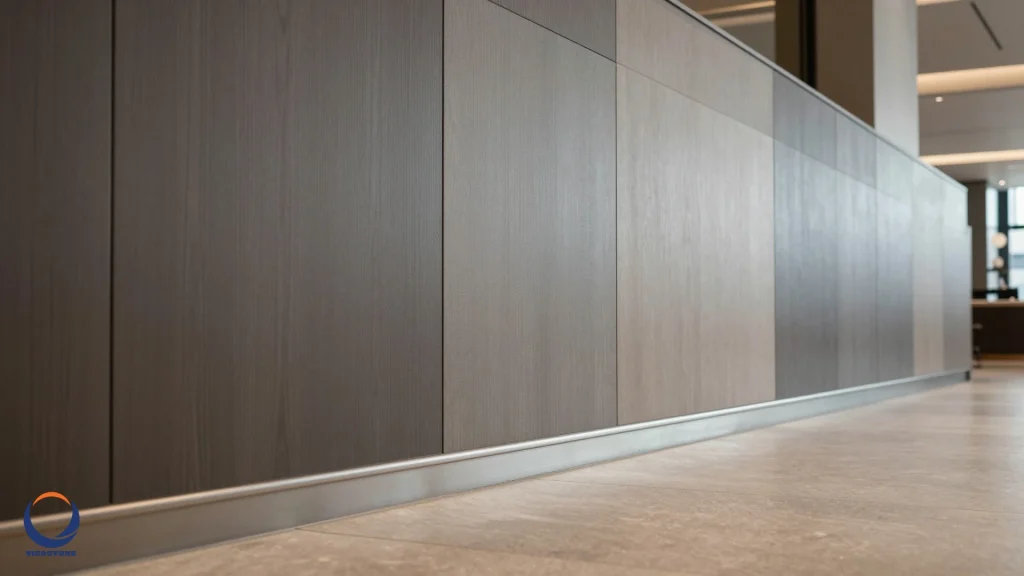
This meticulous attention to detail allows designers and project teams to execute their concepts with greater confidence and precision. It also ensures uniform finishes across multiple areas, accurate color matching under various lighting conditions, and consistent detailing and edge treatments [3]. Such consistency is particularly crucial in high-spec or large-scale projects where identical elements are prevalent.
Ensuring reliable performance over time
In high-use environments, materials are expected to perform consistently, not just at the outset, but throughout their entire lifecycle [1]. Variations in quality can lead to uneven wear, where certain sections deteriorate faster than others. This impacts both the appearance and the functionality of the space. Imagine a busy airport terminal where some floor tiles wear down significantly faster than others, creating an unsightly and potentially hazardous patchwork.
With stable material quality, performance becomes significantly more predictable. Each component responds similarly to usage, pressure, and environmental exposure. This results in a more uniform aging process across the entire installation [1]. This uniformity reduces the need for frequent and costly replacements. It also simplifies long-term maintenance, which is a major consideration in projects where durability is paramount. For instance, hospitality designers prefer durable engineered surfaces precisely for this reason.
The balance of aesthetics and functionality
A common pitfall in interior projects is prioritizing visual appeal over long-term performance [3]. While a material might look stunning initially, its inability to withstand daily wear and tear will quickly undermine the design. Strong material control ensures that every material is assessed for several key performance indicators:
- Durability and resistance to damage
- Ease of cleanability and maintenance requirements
- Suitability for anticipated traffic and usage levels
- Compatibility with site conditions and environmental factors
This is critically important in demanding environments such as healthcare facilities, corporate offices, and retail spaces, where materials endure constant use. A visually striking finish that fails under daily stress will detract from the design much faster than expected. Architects and developers must consider the full lifecycle of materials, not just their initial aesthetic impact. This holistic view is part of the importance of material innovation in contemporary homes and large commercial spaces.
Supporting efficiency through consistent production
Large-scale projects operate on tight timelines and demand highly coordinated execution. Inconsistent materials can introduce significant delays, requiring adjustments or extensive rework when specifications are not met. This is where consistency in material production becomes absolutely critical [1]. Materials manufactured through controlled processes and stable formulations deliver dependable results across different batches. This ensures alignment with project requirements in both quantity and quality.
For material providers, achieving this high level of consistency necessitates rigorous control over raw materials, precise color accuracy, and standardized finishing processes. When these controls are in place, materials can be applied confidently in large-scale projects. This supports both visual consistency and long-term performance, ultimately streamlining the construction process [1]. The ability to trust that each delivery will match the last is invaluable for maintaining project momentum.
The role of material control in construction
During the construction phase, materials transition from conceptual drawings to physical reality. This stage is where many projects lose clarity and suffer setbacks if robust material control systems are absent [3]. Effective material control in interior design during construction helps prevent several common and costly issues:
- Unauthorized substitutions that dilute the original design intent.
- Delays caused by incorrect, damaged, or unavailable materials.
- Cost overruns stemming from rework, replacements, or extended project schedules.
By locking material specifications early in the process and managing procurement closely, project teams can significantly reduce uncertainty on site. This proactive approach allows construction to proceed with fewer interruptions and fewer compromises to the design. It's a fundamental 'why' for meticulous planning and oversight [4].
What material control really means
Material control in interior design extends far beyond simply selecting finishes from a catalog. It encompasses the entire lifecycle of materials within a project. This includes how they are specified, sourced, approved, fabricated, and ultimately installed across the entire scope [3]. A comprehensive approach to material control involves:
- Selecting materials based on their proven performance characteristics, not solely on their appearance.
- Ensuring precise consistency between initial samples, detailed shop drawings, and the final installed product.
- Proactively managing lead times and material availability to prevent project bottlenecks.
- Verifying material compatibility with specific site conditions and intended usage requirements.
When material control is weak, design execution becomes fragmented and inconsistent. Conversely, when it is strong and well-implemented, the final outcome remains perfectly aligned with the original design vision [3]. This disciplined approach is a cornerstone of successful large-scale projects.
The advantage of in-house production
One highly effective method for maintaining stringent material control in interior design is through in-house joinery and fabrication. When materials are produced internally, there is direct oversight over every aspect. This includes quality, detailing, and adherence to timelines [3]. This approach offers several distinct advantages:
- Precise execution of custom details, ensuring every element meets exact specifications.
- Improved coordination and communication between design and fabrication teams.
- Faster response times to adjustments or unforeseen site changes, minimizing delays.
Instead of adapting the design to fit the limitations of external suppliers, materials can be precisely shaped and produced to perfectly serve the design intent. This level of integration, often facilitated by advanced platforms like EON Tech, empowers project teams to achieve unparalleled consistency and quality.
Navigating unique material choices with consistency
Even when a project aims for a distinctive aesthetic or incorporates culturally specific materials, the principle of consistency remains paramount. For example, in contemporary Vietnamese housing, there's a growing trend towards utilizing local materials like terracotta bricks, natural wood, ceramics, or lacquer to evoke a unique local identity [5]. While the choice of material itself might be unique, the consistent application of these materials across a large interior space is still crucial.
If a project uses traditionally inspired ceramic tiles, ensuring uniformity in color, glaze, size, and durability across thousands of tiles from different batches is essential. Without this consistency, the intended aesthetic impact of these unique materials can be lost, leading to a disjointed and unprofessional appearance. The challenge lies in balancing the desire for unique material expressions with the universal need for consistent quality and application in large-scale execution. Even traditional materials, when used in modern contexts, require modern quality control.
The architect's and developer's responsibility
Architects and developers bear significant responsibility for championing material consistency. They must:
- **Specify clearly:** Provide unambiguous material specifications, including acceptable tolerances for color, texture, and finish.
- **Vet suppliers thoroughly:** Choose suppliers with a proven track record of consistent quality and reliable production processes.
- **Implement robust quality control:** Establish clear protocols for inspecting material deliveries and conducting on-site checks.
- **Foster communication:** Ensure seamless communication between designers, contractors, and material suppliers to address any potential inconsistencies proactively.
By taking these steps, project leaders can mitigate risks and ensure that the final interior aligns perfectly with the envisioned design. This proactive approach saves time and money, and it protects the reputation of all parties involved.
The long-term impact of material consistency
The benefits of material consistency extend far beyond the immediate completion of a project. A consistently executed interior contributes significantly to the long-term value and usability of a property. It enhances the user experience, reduces operational costs, and reinforces the brand image or purpose of the space. For instance, an office environment with consistent, high-quality finishes conveys professionalism and attention to detail, positively impacting employee morale and client perceptions.
Furthermore, consistent material application simplifies future renovations or repairs. When materials are uniform, sourcing replacements or matching existing elements becomes much easier and less costly. This foresight in planning and execution is a hallmark of truly successful large-scale interior projects. It underscores the profound 'why' behind investing in meticulous material management from the very beginning.
Conclusion
In conclusion, material consistency is not merely a detail; it is a foundational pillar for successful large interior projects. It underpins design integrity, guarantees reliable long-term performance, and drives efficiency throughout the construction process. For architects and developers, understanding and prioritizing this aspect is crucial. It ensures that the grandeur and vision of their designs translate flawlessly into reality, creating spaces that are not only visually stunning but also durable, functional, and economically viable over their entire lifespan.
By meticulously controlling material selection, sourcing, and application, project teams can avoid costly pitfalls and deliver exceptional results. This commitment to consistency ultimately defines the quality and enduring legacy of any significant interior endeavor. It transforms ambitious concepts into tangible, lasting achievements.
More information
- Material Consistency: The property of materials maintaining uniform characteristics, such as color, texture, finish, and performance, across different production batches and over time, especially crucial in large-scale applications.
- The Why (as a noun): Refers to the reason or explanation behind a particular action, event, or situation, serving as a fundamental tool for inquiry and understanding in decision-making processes.
- Material Control: A comprehensive process in interior design that involves specifying, sourcing, approving, fabricating, and installing materials to ensure consistency, quality, and alignment with design intent throughout a project.
- Interrogative Adverb: A word like "why" used to ask questions about the reason or purpose for something, often initiating an inquiry into underlying motives or causes.
- Local Identity Materials: Building or finishing materials that are characteristic of a specific region or culture, often used to evoke a sense of place or heritage in architectural and interior design projects.