The world of interior design and construction is witnessing a significant shift. For decades, engineered stone, particularly quartz, dominated the market, prized for its durability, aesthetic versatility, and relatively lower cost [5]. However, a growing awareness of serious health risks associated with traditional quartz fabrication is now reshaping industry standards. This has led to an increasing global focus on silica-free countertops, positioning them as the future of healthy and sustainable design.
This article explores the reasons behind this surge in popularity. We will delve into the health concerns driving regulatory changes, differentiate between various material compositions, and highlight the innovative solutions emerging in the market. Understanding these developments is crucial for designers, contractors, and homeowners alike.
The move towards safer alternatives is not just a trend; it is a response to a critical public health issue. As a result, silica-free options are becoming a priority for many projects worldwide.
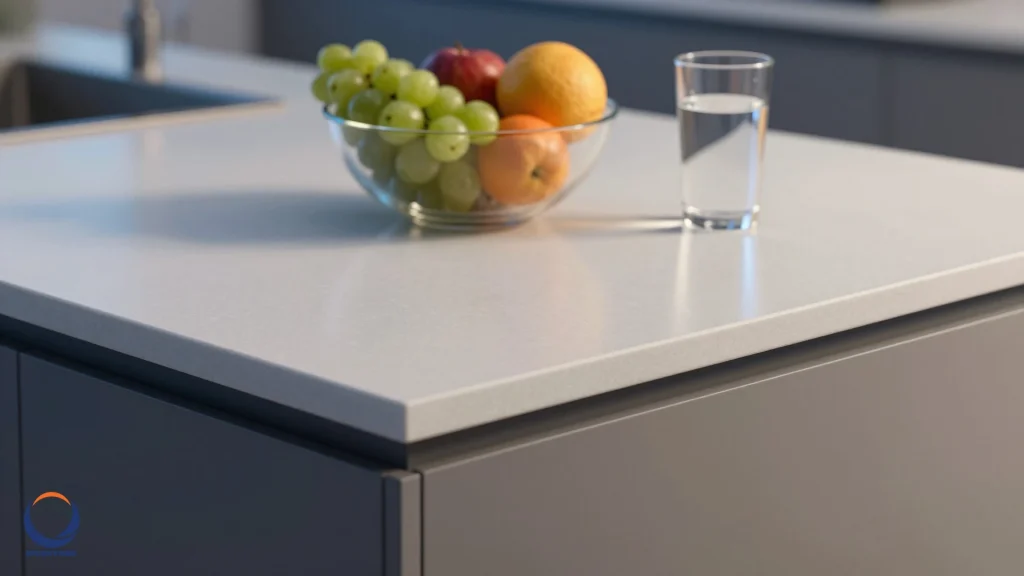
The silent threat: understanding crystalline silica and silicosis
Crystalline silica is a natural mineral. It is found abundantly in sand, rocks, and soil [4]. In engineered quartz, silica is the primary component. It gives the material its characteristic hardness and durability [4].
The dangers of respirable silica dust
While safe in its finished form, crystalline silica becomes hazardous during fabrication. Processes like cutting, grinding, and polishing release fine, respirable silica dust into the air [1]. Inhaling these tiny particles can lead to silicosis, a severe and often fatal lung disease [2]. This incurable condition scars the lungs, impairing their ability to function.
The silicosis crisis has become a global concern. Doctors have linked a dramatic increase in severe cases among young stonecutters to the widespread use of high-silica engineered stone [5]. Without proper safety controls, such as ventilation systems and wet cutting, workers face significant risks [4].
Global regulatory shift: a call for safer materials
Growing health concerns have prompted governments to take decisive action. This has led to new regulations and restrictions in key markets [1]. Australia, for instance, is at the forefront of this movement.
Australia's pioneering ban
Australia implemented a nationwide ban on engineered stone containing crystalline silica. This ban took effect on July 1, 2024 [1]. It covers all aspects, from production to import and installation [1]. This bold step was a direct response to a "tsunami" of silicosis cases among fabricators [2]. The ban specifically targets materials with high crystalline silica content, pushing the industry towards silica-free alternatives [2].
California's emergency measures
In the United States, California has also responded proactively. The state rolled out emergency safety rules for engineered stone fabrication [1]. It is currently considering a broader ban as silicosis cases continue to rise [2]. California's decisions are particularly impactful, given its status as one of the biggest quartz markets [1].
European and global responses
The United Kingdom and European Union countries are actively reviewing regulations. They are issuing warnings to fabricators, anticipating tighter rules soon [1]. This global shift means more buyers are now seeking low-silica or entirely silica-free surface materials [1]. Even countries like Vietnam, which currently lack bans, see manufacturers investing in safer production methods to meet international demand [1].
These regulatory changes underscore a critical point. Worker safety is no longer just a fabrication concern; it is a global legislative priority [2]. This has fundamentally altered the landscape for countertop materials.
Differentiating between low-silica and silica-free
As the market evolves, it is essential to understand the distinctions between different types of engineered stone. Not all alternatives offer the same level of safety.
Traditional quartz slabs
These typically contain 90% to 95% crushed natural quartz [1]. This high crystalline silica content is the core of the health concerns. While durable, their fabrication poses significant risks to workers [4].
Low-silica quartz slabs
Low-silica options contain reduced levels of crystalline silica. Often, this means less than 40% or even 10% [1]. This composition aims to mitigate the risk of harmful dust during cutting and grinding [1]. Companies like Cosentino, for example, now manufacture slabs with 40% crystalline silica or less [5]. However, it is crucial to recognize that "low-silica" is not "silica-free" [2]. While risk is reduced, it is not entirely eliminated [2]. For a "zero-risk" environment during fabrication, experts recommend truly silica-free mineral surfaces [2].
Silica-free surfaces
These materials are engineered to contain little to no crystalline silica [1]. They completely eliminate the danger associated with silica dust [2]. Silica-free options ensure exposure levels remain within or even below emerging regulatory limits [1]. This provides maximum safety for fabricators and installers. It also offers peace of mind for homeowners and designers. Understanding the science behind these materials is key to making informed choices.
The innovation behind silica-free countertops
The drive for safer materials has spurred significant innovation in surface technology. Manufacturers are developing advanced alternatives that do not compromise on performance or aesthetics.
What are these materials made of?
Silica-free countertops are crafted from various innovative materials. Each offers unique benefits:
- Porcelain slabs: These are created from refined clays and natural minerals. They are fired at extremely high temperatures, over 1200°C [2]. The result is a completely inert and non-porous material.
- Dekton (ultracompact surfaces): This sophisticated blend of raw materials is processed under immense pressure, up to 25,000 tons [2]. Dekton is 100% silica-free and often carbon-neutral [2].
- Sintered stone: Made from 100% natural minerals, sintered stone uses no resins or petroleum glues [2]. This makes it a very healthy choice for both indoor and outdoor applications.
These materials demonstrate that reduced silica content does not mean lower quality [1]. On the contrary, they represent a proactive response to market demands and technological advancements. Such innovation reflects a commitment to both safety and quality.
Addressing quality concerns
A common question arises: Does reducing silica compromise product quality? The answer is a resounding no [4]. Thanks to advanced manufacturing technologies, silica-free products meet and often exceed strict standards for hardness, durability, and resistance [4]. They offer strong durability, stain resistance, and elegant aesthetics, proving their worth in any design scheme [1].
Beyond safety: performance and aesthetic advantages
Choosing silica-free surfaces offers more than just health benefits. These innovative materials often outperform traditional options in various categories, making them a premium choice for discerning clients.
Superior durability and resistance
Silica-free countertops are engineered for exceptional performance. They offer remarkable durability and stain resistance, making them ideal for high-traffic areas like kitchens and commercial spaces [1]. Their robust nature ensures longevity and reduces the need for frequent replacement.
UV stability for outdoor applications
Unlike traditional quartz, which can yellow under prolonged UV exposure, many silica-free options like Dekton and porcelain are 100% UV stable [2]. This property makes them perfect for outdoor kitchens, patios, and other exterior applications where color retention is crucial.
Hygienic and non-porous properties
With zero porosity, materials like porcelain and sintered stone prevent bacterial growth [2]. This makes them exceptionally hygienic for environments such as bathrooms, shower walls, and kitchen surfaces. Their non-porous nature also simplifies cleaning and maintenance, contributing to a healthier living space. This aligns with the principles of the psychology of clean and minimal surfaces.
Heat-proof and smart tech integration
Many silica-free materials are fire-born and heat-proof [2]. This makes them ideal for architectural fireplaces and other applications requiring high heat resistance. Furthermore, their resin-free and silica-free composition makes them uniquely safe for integrated technologies. These include invisible induction cooktops like Invisacook, Invisacharge, and invisible touch switches [2]. Traditional quartz, with its heat-sensitive resins, cannot safely accommodate these innovations.
Design flexibility and aesthetic appeal
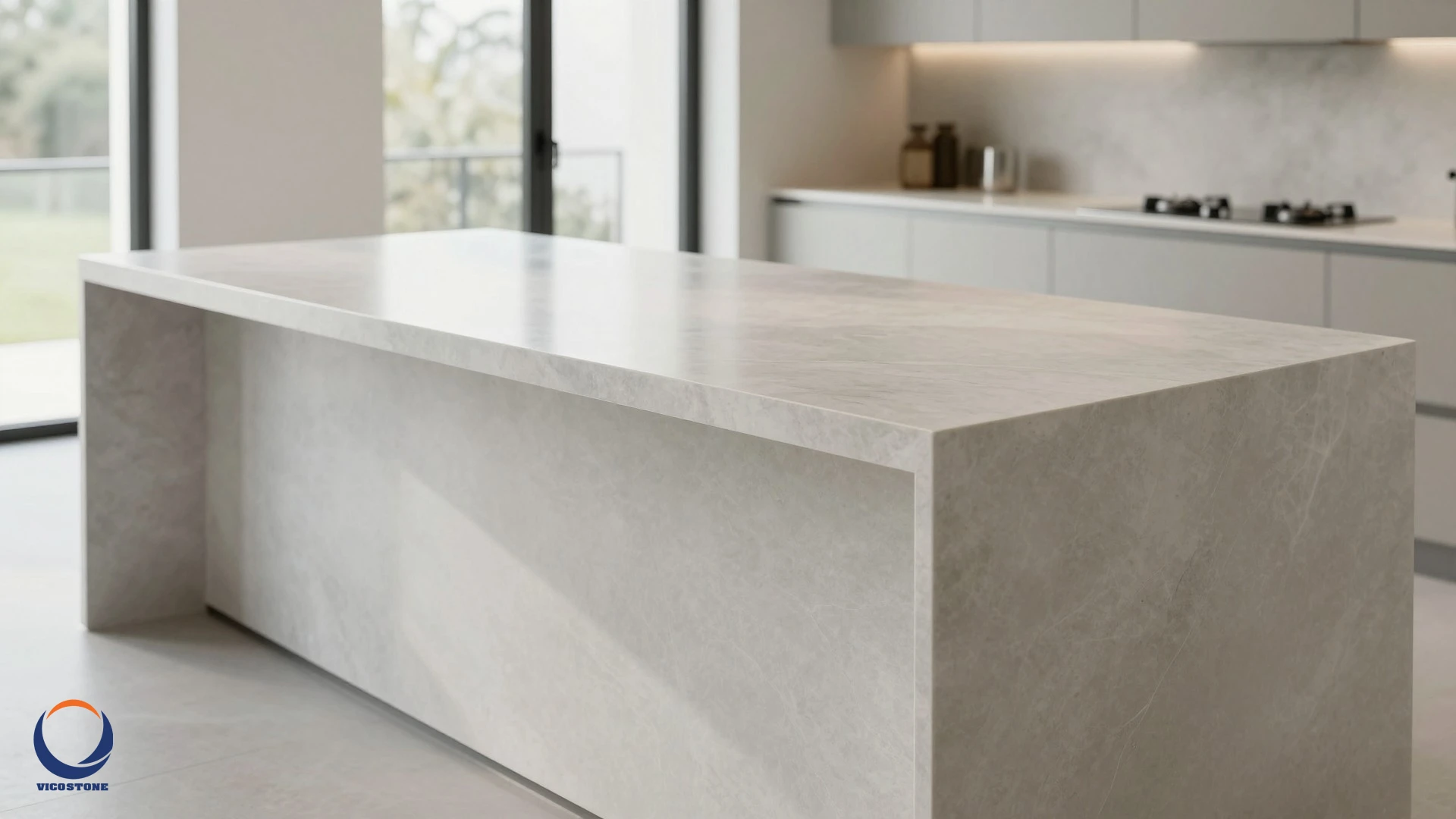
Silica-free countertops deliver the same visual flexibility that made engineered quartz popular [3]. They come in a wide array of colors, patterns, and finishes, allowing designers to achieve any aesthetic vision. From modern neutral colors to elegant marble-like veining, these materials offer diverse design possibilities. They are perfect for residential kitchens, multi-family housing, and commercial interiors, where consistent appearance and durable performance are essential [3]. This versatility means designers can create quiet luxury kitchens without compromising on safety or functionality.
The future of surfaces: a responsible choice
The global shift towards silica-free countertops represents a pivotal moment for the design and construction industries. It signifies a collective move towards greater responsibility, innovation, and well-being.
Manufacturer commitment to safety
Leading manufacturers are embracing this change with strong commitments to safer production. Companies like Lux Quartz Vietnam are investing in advanced methods and diversified product lines [1]. VinaQuartz, for example, has introduced products with controlled crystalline silica content below 50%, calling it "The Wave in Innovation" [4]. This commitment extends beyond aesthetics, focusing on protecting the skilled teams who bring designs to life [4]. The industry, including technology providers like EON Tech, is adapting to support these safer practices.
Ethical sourcing and production
The demand for silica-free materials encourages ethical sourcing and production practices. It ensures that the beauty of a countertop does not come at the cost of human health. This focus on responsibility starts at the source, influencing global supply chains and manufacturing standards [1]. For international buyers, this means seeking out manufacturers who prioritize safety and transparency.
Empowering consumers and designers
With the rise of silica-free options, consumers and designers are empowered to make informed choices. They can select materials that not only meet their aesthetic and performance needs but also align with their values for health and safety. This awareness drives market demand, further accelerating the adoption of these superior alternatives.
The movement towards silica-free countertops is more than just a regulatory response. It is a testament to innovation and a commitment to human well-being. These materials offer a compelling combination of safety, durability, and design flexibility. They are setting a new standard for surfaces in homes and commercial spaces worldwide.
Conclusion
The global attention on silica-free countertops is well-deserved. Driven by critical health concerns and progressive regulatory actions, these innovative materials offer a compelling solution. They eliminate the risks associated with crystalline silica while delivering superior performance and unmatched aesthetic versatility. From Australia's pioneering ban to California's emergency measures, the message is clear: worker safety and public health are paramount. As manufacturers continue to innovate, silica-free options like porcelain, Dekton, and sintered stone are becoming the preferred choice. They provide peace of mind, exceptional durability, and endless design possibilities. Embracing silica-free countertops means choosing a safer, healthier, and more sustainable future for interior design.
More Information
- Crystalline Silica: A natural mineral found in sand, rock, and soil. When inhaled as fine dust during fabrication, it can cause severe lung disease, particularly silicosis.
- Silicosis: An incurable and often fatal lung disease caused by the inhalation of respirable crystalline silica dust. It leads to scarring of the lungs and impaired respiratory function.
- Engineered Stone: A composite material made from crushed stone bound together by an adhesive, often resin. Traditional engineered quartz contains a high percentage of crystalline silica.
- Low-Silica Countertops: Engineered surfaces designed with a reduced content of crystalline silica, typically below 40% or 10%. While safer than traditional quartz, they do not entirely eliminate the risk of silica exposure.
- Silica-Free Surfaces: Countertop materials engineered to contain little to no crystalline silica. Examples include porcelain, Dekton (ultracompact surfaces), and sintered stone, offering complete elimination of silica-related health risks during fabrication.