The future of engineered stone in global architecture: A paradigm shift
09/06/2026 14:30
Introduction: The evolving landscape of architectural materials
The world of architecture and construction constantly seeks innovative materials. These materials must offer both aesthetic appeal and superior performance. Engineered stone has emerged as a frontrunner in this quest. It represents a significant advancement in building materials.
This material is rapidly redefining design possibilities across the globe. It combines the beauty of natural stone with enhanced durability and versatility. Consequently, engineered stone is becoming a preferred choice for architects and designers worldwide. Its rise signals a new era for sustainable and high-performance construction.
What is engineered stone? Understanding the innovation
Engineered stone refers to a composite material made from crushed stone, resins, and pigments. Sintered stone, a prominent type of engineered stone, exemplifies this innovation. It is manufactured using extreme pressure and high temperatures [1]. This process creates a dense, non-porous slab.
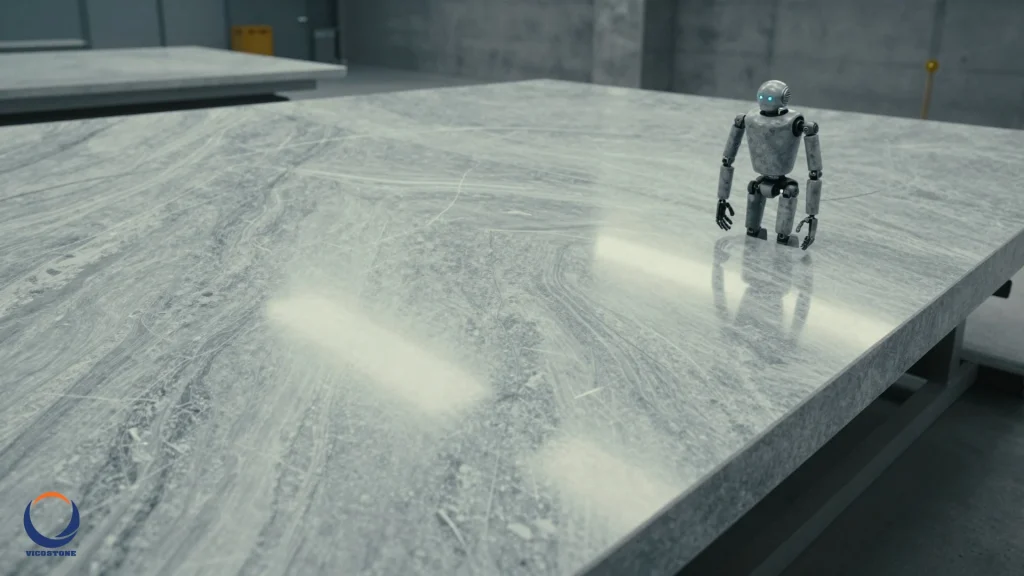
A large slab of sintered stone being polished in a modern factory, showcasing its smooth surface and intricate veining. — Image created by AI
Unlike natural stone, engineered stone eliminates inherent weaknesses like porosity or susceptibility to scratching [3]. It offers consistent quality and a wide range of design options. This makes it a highly adaptable material for various architectural applications. The manufacturing technology originated in Europe, particularly Italy and Spain, in the early 2000s [1].
The rise of engineered stone: A global perspective
Initially, engineered stone served a niche market, primarily luxury projects. However, continuous improvements in production technology and growing awareness of its benefits have driven its widespread adoption [1]. Today, it is a leading choice for high-end projects globally. Major production hubs include Europe (Italy, Spain), China, and India [1].
European manufacturers lead in technology, design, and quality, offering high-value products. China excels in large-scale production and competitive pricing. India leverages lower labor costs and domestic raw materials for export-focused production [1]. This global supply chain ensures accessibility and variety for architects and builders.
Engineered stone's unparalleled advantages in modern design
Engineered stone offers a compelling combination of aesthetic appeal, robust performance, and environmental benefits. These attributes make it highly desirable for contemporary architectural projects. Its versatility allows designers to push creative boundaries.
Aesthetic versatility and design freedom
One of engineered stone's most significant advantages is its ability to replicate diverse natural materials. It can mimic the intricate veining of Calacatta marble, the strength of granite, or the warmth of wood [3]. Advanced digital printing technology ensures each slab is a unique work of art. This provides endless variations in color, pattern, and surface effects. Options include polished, matte, textured, and semi-polished finishes [3]. This extensive range supports any design style, from minimalist to opulent.
Furthermore, engineered stone is available in impressive large formats, such as 1600x3200mm. These large slabs minimize grout lines, creating seamless and expansive surfaces [3]. Its availability in varying thicknesses, from as thin as 3mm to 20mm, offers incredible flexibility. This allows for innovative applications and custom designs. Architects gain unprecedented freedom to realize their most daring visions, unconstrained by traditional material limitations.
Superior durability and performance
Engineered stone is engineered for exceptional resilience. It boasts superior resistance to scratches, heat, and stains [1]. This makes it ideal for high-traffic areas and demanding environments. Its structure, formed by high-temperature firing, provides absolute UV resistance [3]. This ensures colors and patterns remain vibrant for decades, even in harsh climates.
The material's inert surface offers significant hygienic benefits. It has extremely low water absorption, typically less than 0.05% [3]. This property makes it highly resistant to stains, mold, and bacterial growth. Cleaning is effortless, ensuring a consistently clean and healthy living or working space. Such features are crucial for applications requiring stringent hygiene standards, like kitchens and healthcare facilities.
Sustainability and environmental responsibility
The production of engineered stone, especially sintered stone, often incorporates sustainable practices. Many manufacturers use readily available natural materials. They also focus on minimizing water and energy consumption during production [5]. For instance, some plants utilize clean fuel and significantly reduce electricity usage compared to traditional methods [5]. This commitment helps minimize greenhouse gas emissions and environmental costs.
Moreover, engineered stone is often 100% recyclable. It can be crushed and reused, effectively reducing waste [5]. It is also a safe material, free from harmful chemicals or surface treatments. Notably, some engineered stones do not contain free silica, addressing a key safety concern in the industry [5]. These environmental advantages align perfectly with the growing demand for sustainable architecture.
Applications across architectural domains
The versatility of engineered stone allows its application in virtually every part of a building. Its robust properties make it suitable for both internal and external use. This broad applicability enhances design consistency and material performance throughout a project.
Exterior applications
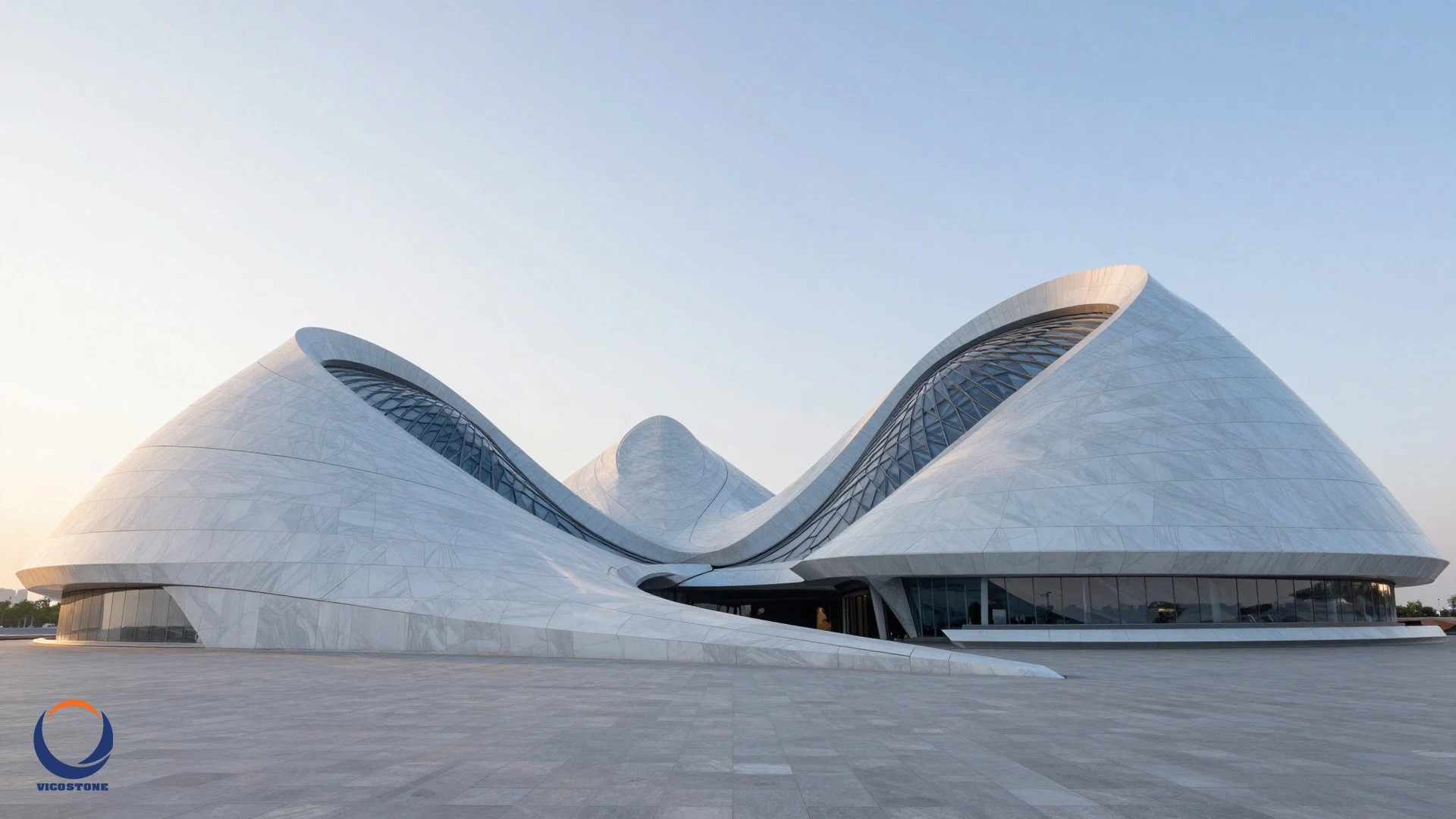
Engineered stone excels in exterior architectural elements. It is commonly used for building facades, ventilated facades, and gate cladding. Its resistance to UV rays ensures that exterior colors remain vibrant and unfaded over time [3]. This makes it a durable and aesthetically pleasing choice for external wall tiling. The material also withstands various weather conditions, maintaining its integrity and appearance.
Interior applications
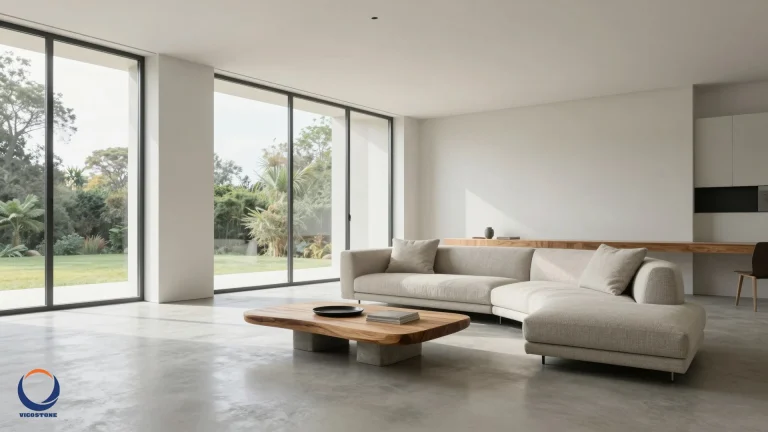
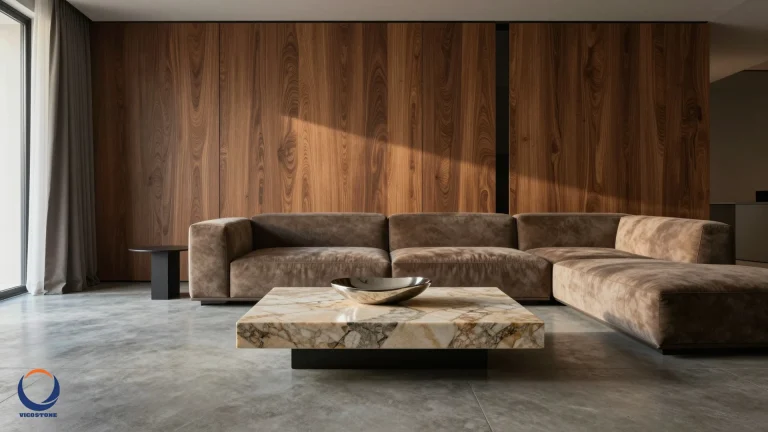
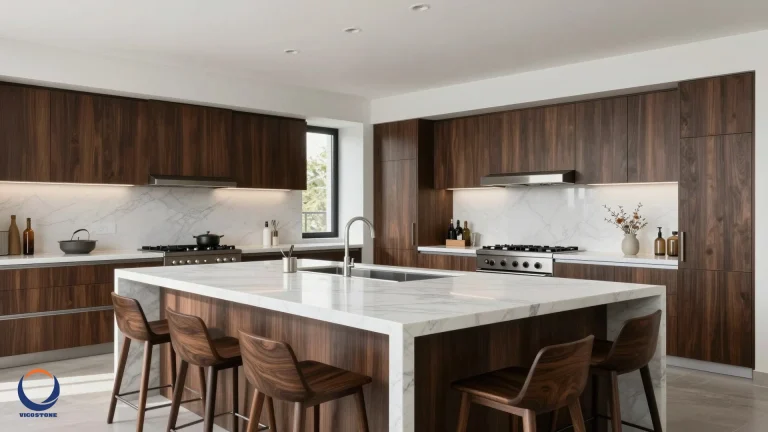
Inside buildings, engineered stone offers extensive design possibilities. It is a popular choice for flooring and wall cladding, even in demanding areas like bathrooms and wet zones [3]. Kitchen countertops, islands, dining tables, and bar tops benefit from its stain and scratch resistance. For commercial spaces, it creates elegant reception counters and durable surfaces. Furthermore, it can be crafted into unique furniture details and cabinet surfaces, providing cohesive interior aesthetics. For architects, understanding how engineered stone creates cohesive interior spaces is crucial.
The Vietnamese perspective: A rising player in the global market
Vietnam's stone market is experiencing significant growth, driven by a booming construction sector and increasing infrastructure projects [4]. The market is projected to expand from USD 1.39 billion in 2024 to USD 2.275 billion by 2030, with a forecast CAGR of 8.6% [2]. This growth is fueled by urbanization and substantial government investment in public works, including roads and bridges [4].
While construction aggregates remain the largest revenue block, engineered and artificial stone are rapidly gaining market share [2]. Engineered stone is the fastest-growing segment, projected to grow at a 14.2% CAGR from 2025-2030 [2]. This indicates a significant shift towards higher-value, value-added products. Vietnamese companies are investing heavily in modern production lines to meet this demand. They are also aiming to position "made in Vietnam" sintered stone for export to North America and Europe [1].
Companies like Viglacera are at the forefront of this innovation. They have introduced their Vasta Stone brand of sintered stone, produced locally [5]. This material is designed to replace traditional options while contributing to environmental preservation. Viglacera's investment highlights the importance of green building materials in Vietnam's construction trends [5]. The company's production plant uses clean fuel and is highly energy-efficient, further emphasizing its commitment to sustainability [5]. This strategic focus on advanced materials and sustainable practices, often facilitated by robust data analytics platforms like EON Tech, positions Vietnam as a key player in the future of engineered stone.
Challenges and future outlook
Despite its numerous benefits, engineered stone faces certain challenges. The initial cost can sometimes be higher than traditional materials, though this is often offset by long-term durability and reduced maintenance. Educating the market about the life-cycle cost benefits remains crucial.
The future of engineered stone looks promising. Continuous technological advancements will likely lead to even more innovative designs and improved performance characteristics. The growing global emphasis on sustainability will further drive its adoption. As architects and designers increasingly prioritize eco-friendly and high-performance materials, engineered stone is poised for continued expansion. It will play a pivotal role in shaping the aesthetics and functionality of future buildings.
Conclusion: Paving the way for sustainable and innovative architecture
Engineered stone has undeniably carved out a significant position in global architecture. Its blend of exquisite aesthetics, superior durability, and strong sustainability credentials makes it an ideal material for modern construction. From its European origins to its rapid global adoption, engineered stone continues to evolve. It offers architects and designers unprecedented creative freedom.
The material's ability to resist wear, maintain color, and ensure hygiene sets a new standard. Furthermore, its environmentally conscious production and recyclability align with global green building initiatives. Countries like Vietnam are emerging as key players, investing in advanced manufacturing to meet both domestic and international demand. As the industry moves towards more resilient and responsible building practices, engineered stone will remain a cornerstone. It will continue to pave the way for innovative and sustainable architectural marvels worldwide.
More Information
Sintered stone: A type of engineered stone produced by subjecting natural minerals to extremely high pressure and temperature, mimicking the natural stone formation process over millennia, resulting in a highly durable and non-porous material.
CAGR (Compound Annual Growth Rate): A measure of the average annual growth rate of an investment or market over a specified period longer than one year, assuming the profits are reinvested at the end of each year.
Digital printing technology: An advanced manufacturing process used in engineered stone production that allows for high-resolution, realistic replication of natural patterns, colors, and textures onto the stone surface, offering vast design versatility.
Construction aggregates: Granular materials like sand, gravel, and crushed stone, used in construction as a base or filler material in concrete, asphalt, and other building applications, forming the bulk of construction materials.
Free silica: Crystalline silica that is not chemically bound to other elements. Inhaling fine particles of free silica can cause serious lung diseases, making its absence in building materials a significant safety advantage.